Warning: Undefined variable $show_stats in /home/jdqespth/public_html/wp-content/plugins/stats/stats.php on line 1384

Steak and Potatoes

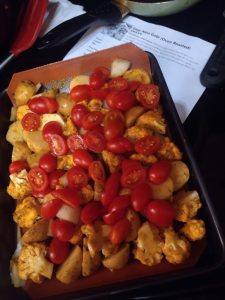
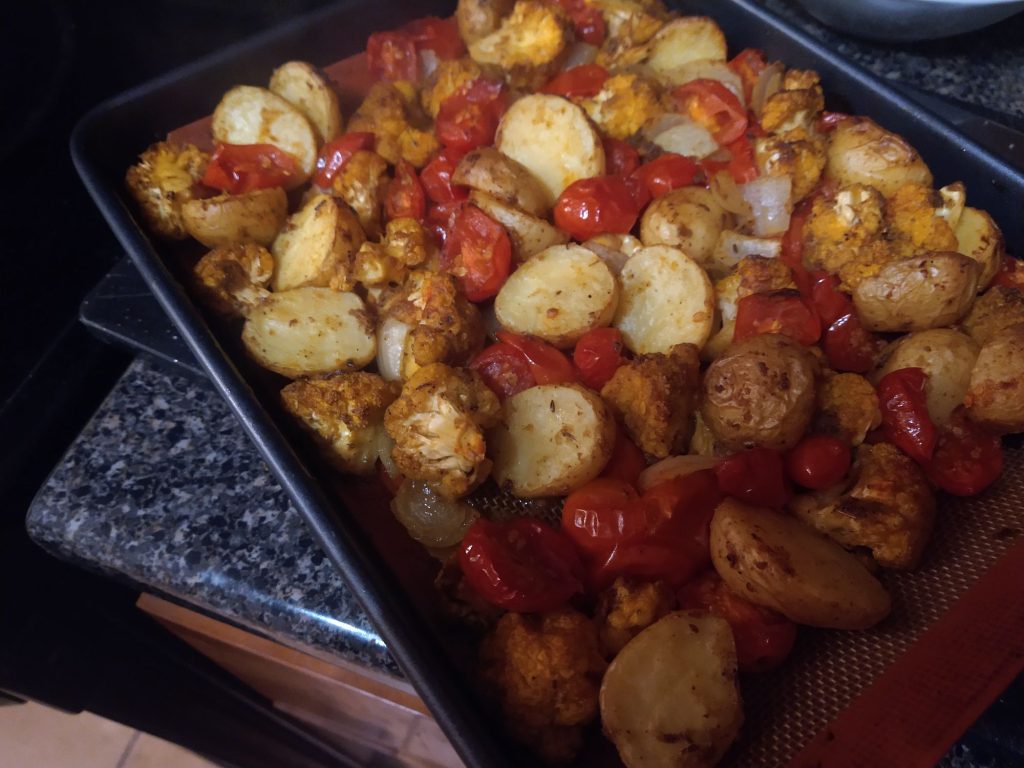
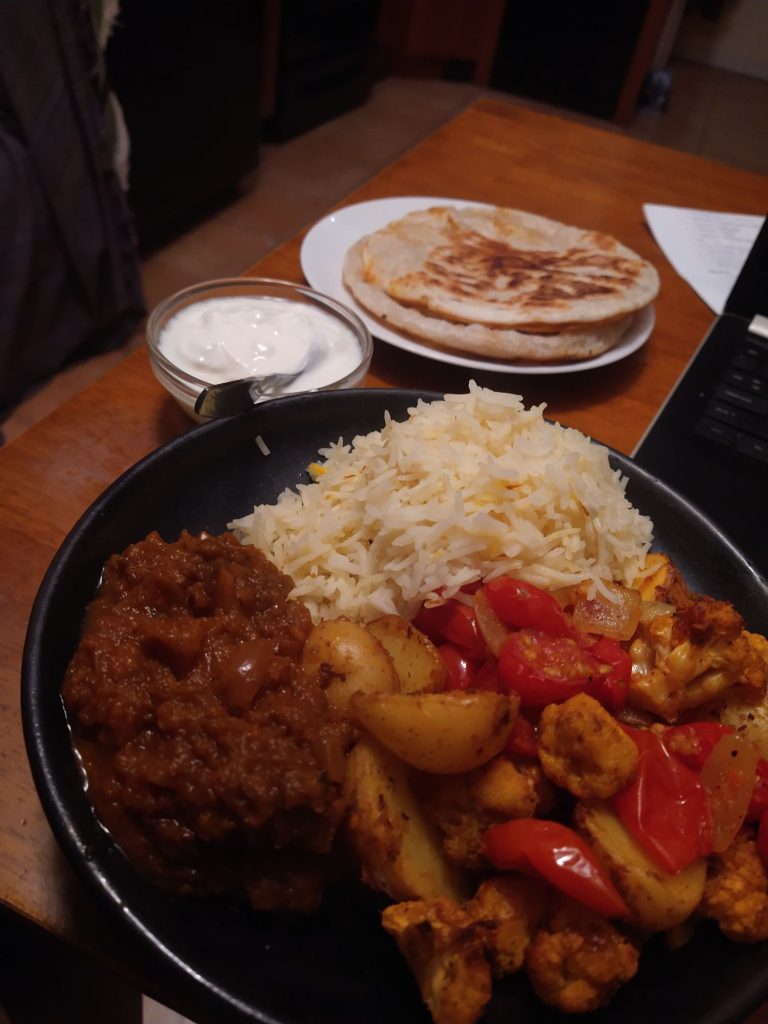
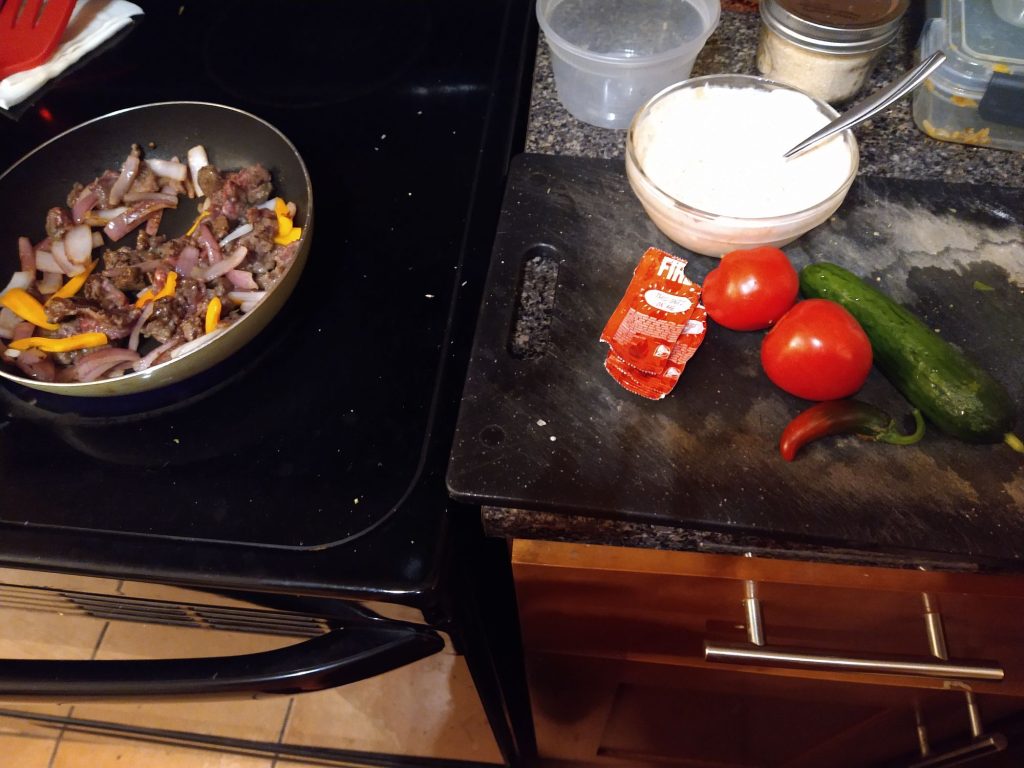
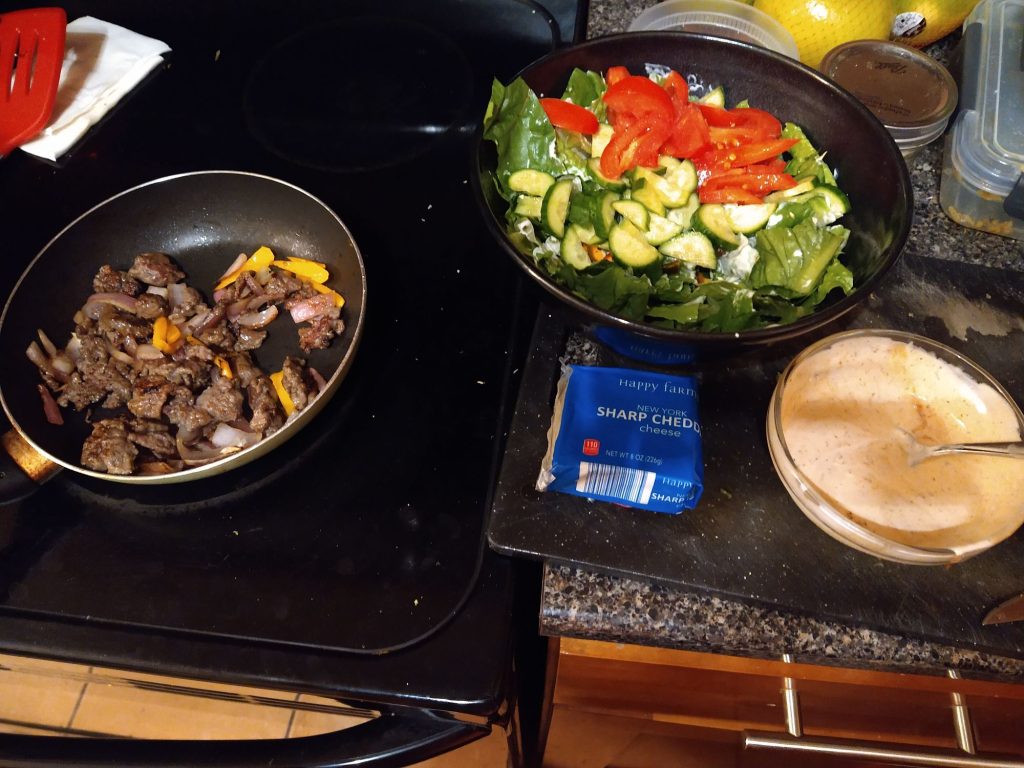
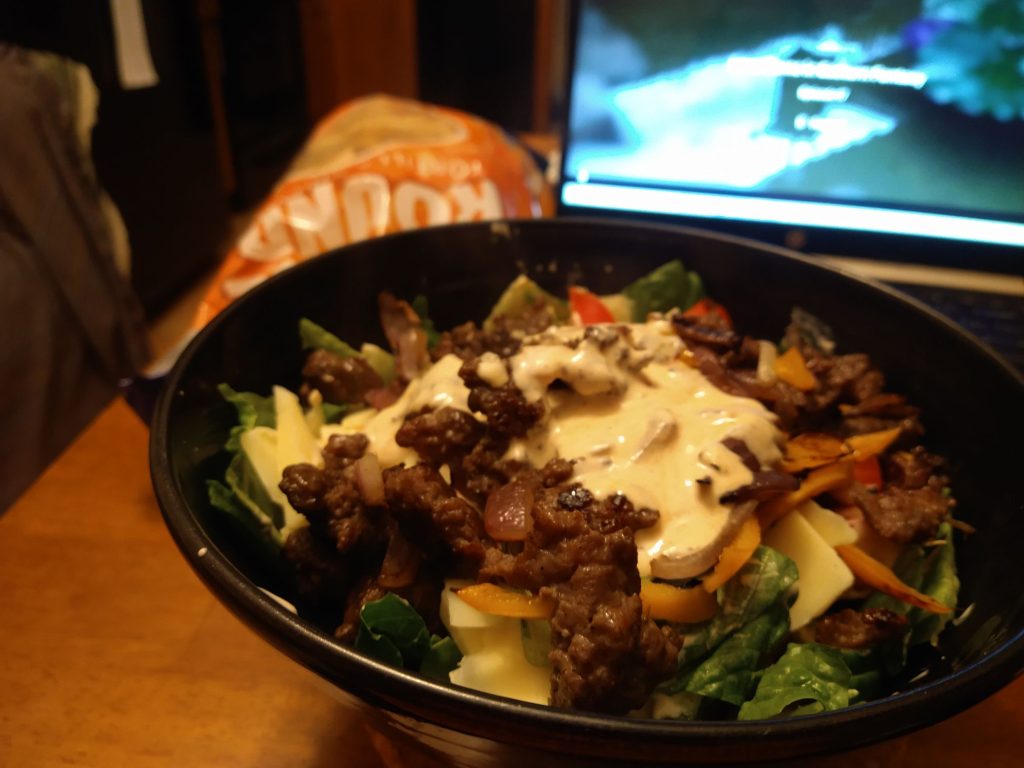
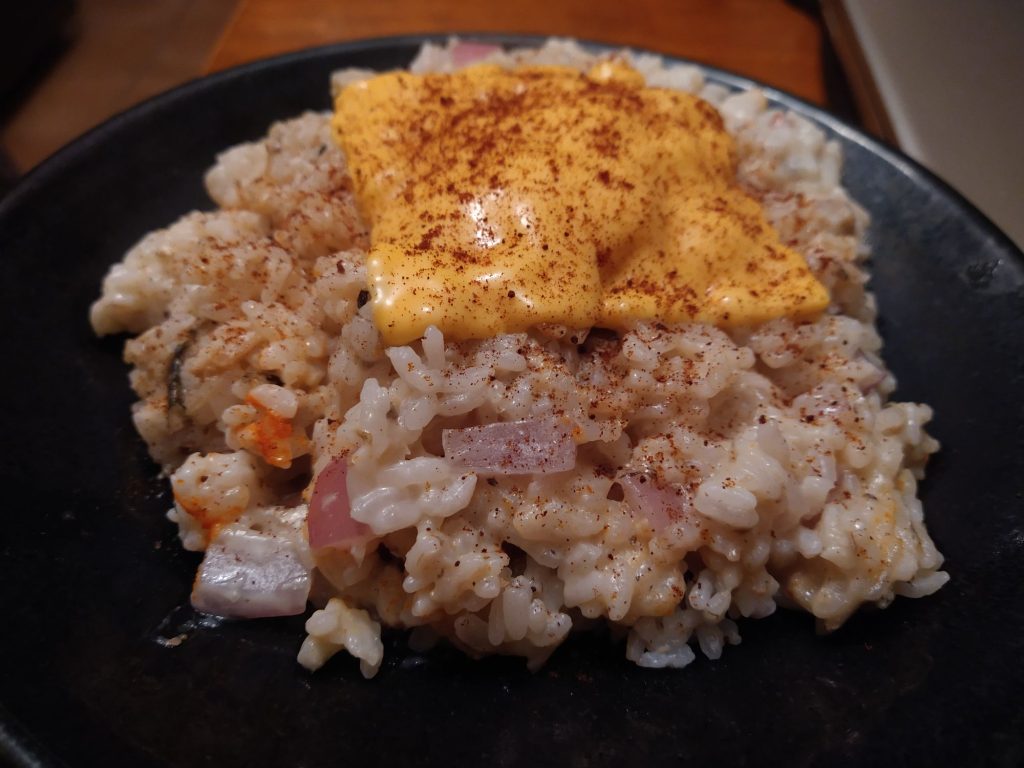
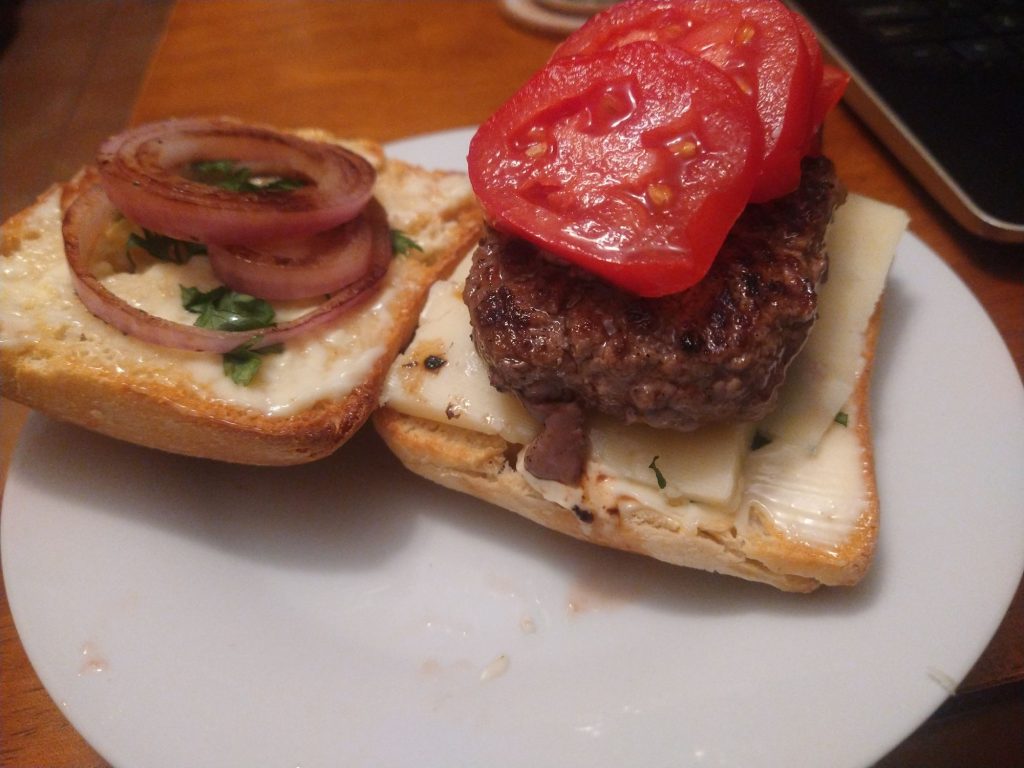
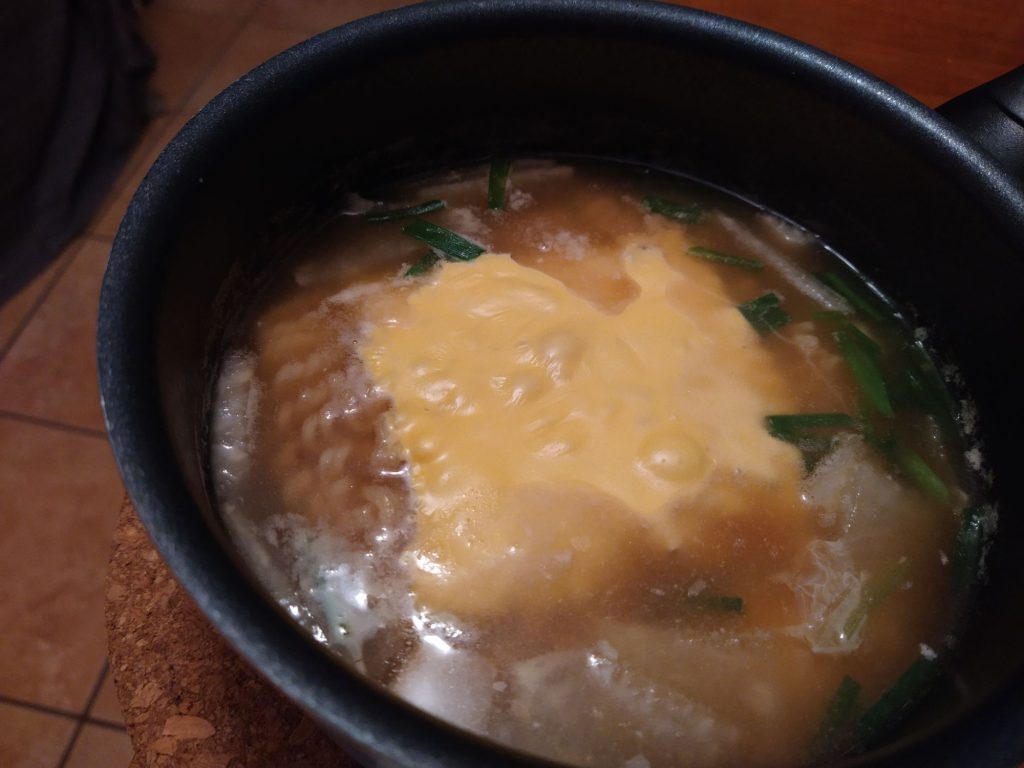
Tonight’s dinner was steak and potatoes.

The potatoes are small yellow ones from Aldi’s that I cut in half. I start off boiling/poaching them because otherwise I always get the outside too cooked before the inside is cooked, and this both slows me down to give them more time and provides more even heat.

Once the water cooks off (or I get impatient and pour the water out), I add fat. This time I added a chunk (1tsp?) of bacon grease from my freezer. Then I let the potatoes cook and color for about five minutes before adding diced onions and peppers (a poblano from my garden ). Stir it enough that nothing burns and sticks to the skillet. Once the onion is soft, I can add minced garlic. I also added dried thyme (from my garden) and paprika, black pepper, salt, and Penzey’s Spices’s Turkish Seasoning.

The steak was cooked in a hot cast iron skillet starting about when the garlic went into the potatoes.

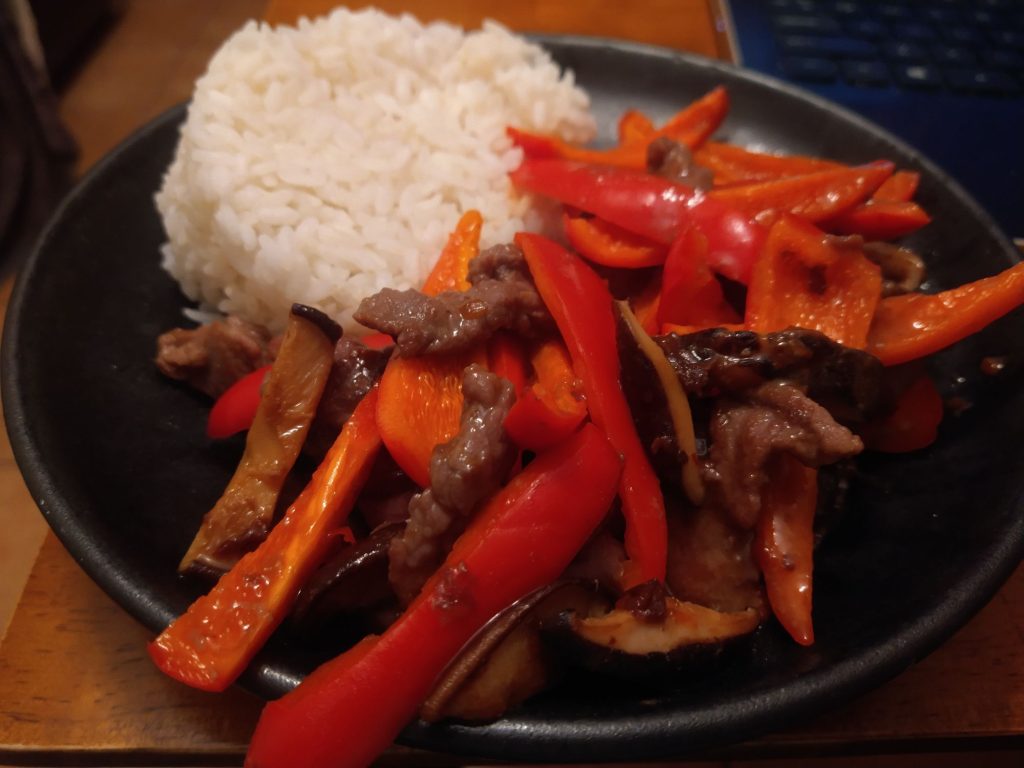
It’s actually half a steak. I cut off some strips with ambitions toward making a stir fry later in the week

Some small advice for people who get bored of cooking

As someone who lives alone and enjoys making food for myself almost every day, I thought I might talk about how that works

A few months ago, someone on twitter was asking – as someone new to trying to cook regularly, how do people enjoy that whole process. It seems very frustrating and stressful. What if you aren’t good yet and it’s terrible and then you’ve put all this energy in and are still hungry?

And that is stressful! And the advice I’m giving here is not aimed toward poverty and subsistence living. There is a lot of reassurance in knowing that if you end up making something absolutely inedible (yes, I’ve done it, too) that you can order last minute delivery or make a meal out of other food in your pantry.

After the covid lockdown, when I started going back to working in person, everything took more effort and energy. One of the habits I picked up then, which I’ve recommended to several people since, was ordering 4 or 5 soups (wanton, hot & sour, egg drop – the ones that are extremely cheap ($2-4/pint) from Chinese restaurants) on delivery at the start of the work week. And then when I came home too tired and hungry to plan dinner, I would have a soup and that would give me space to figure the rest out.

But there are also other ways to make the daily dinner making engine go.

Grocery shopping – Grocery shopping is stressful and has become more expensive and there are so many people. You can do delivery. But this tip isn’t about how you shop, but what you shop for. Because it’s stressful, it’s easy to fall into a pattern where you buy the exact same things every time and you have the exact same resources every week. I fully believe in keeping regular stocks of breads and grains and beans and sauces and the components that let you build a variety of meals. But for produce (and meat?) I recommend letting some things run out and letting some things be seasonal and trying one thing new. And let the change in produce drive variety and experimentation.

Freezer shopping – I have a chest freezer (again, these are not subsistence living tips). That’s why I put a question mark by the meats – Since lockdown, I mostly get meat delivered, and that makes it harder to build in experimentation. But I also make and freeze stocks, soup, shredded braised meat, and I have a collection of frozen items I inherited from my parents’ freezer when my mother died: vegetable soup, terrible chili, tomato puree, and marinara sauces. And I almost always have a meat pulled out to thaw (and have a bowl the meat will fit in just in case it leaks as it thaws). When I first use a meat: if it’s a pound of ground beef, I’ll use a quarter of it in that day’s dish and then either right away make hamburger patties of the other 3 quarters to freeze again or keep working through the pound, one quarter at a time; if it’s a steak, I’ll often cut it in half or thirds and slice the part I won’t use that day to freeze in bags for the future. So the cycle of having a meat thawed and available narrows down and targets the creativity from the vegetable choices.

And then I’ll also pull out one of those miscellaneous items: stock or soup or a thing from my mother’s freezer once every week or two. So that can also be either an easy dinner or a randomly generated challenge to do something different than usual. But it’s all supports that are planned ahead to make the process of choosing what to make more interesting.

Gifts for your future self: You can build in supports while you are already cooking and have the energy. If I make rice, I make double the amount, so in the next few days I can also have a rice dish, but I only have to wash the pot once. If I’ve got plenty of the base of whatever I’m cooking, I might pull out half a cup or so and just stick it in a container in the refrigerator. I won’t necessarily have a plan for it, but it will be a fun addition to a future dinner or a tasty side dish – maybe the sweet potato curry will get added to meat to make a hash as dinner, or maybe it will be a taco filling, or an omelet, or I’ll shred a quarter of a cabbage and add some canned tomatoes and have a whole additional meal with 2 fairly stable ingredients and spices. And you can make these gifts outside of your meal prep – if the mushrooms are going to go bad and you don’t feel like eating them tonight, but you have the energy to just cook them – then they will last longer and you have a gift for future you.

Leveling up – cascading meal prep: Here’s how I deal with making larger quantities of food – because sometime large cuts of meat or 5 pounds of potatoes are on sale, and I am still but one person. So first you cook the big quantity of food – and you look for something that will be fairly versatile and keep it mostly one thing. Roast the meat or braise/stew it. Then you eat a portion for your meal. Instead of freezing the leftovers whole, portion them into future meal sizes. If it’s a roast, maybe freeze some as slices, some as big chunks for soups or curries, and some diced for hash or other quick cooking meal. If it’s stew or braised and shredded, then freeze it in both pint and half pint containers. And then when you turn those leftovers into a meal, don’t forget to pull out some of that deliciousness to pop back in the refrigerator as a gift for future you!

[I’ve mentioned hash twice – for those who are unfamiliar, it’s a dish where any variety of meat and potatoes is cut into the same size dice and then they are cooked together (maybe with minimal vegetables) to make a hot filling, not super visually attractive, meal. (Example)]

So anyway – those are some tips. Have fun, good luck, and don’t despair.

Dusting this thing off

Whew! It’s been a few years. I migrated servers and had pointers pointing in the wrong directions.

In the meantime, I spent sometime putting posts on just dreamwidth. Some time on instagram.

Oh, yeah, I’ve been experimenting with taking pictures. They aren’t great art, but they look like food and are usually in focus. They aren’t going to improve because I’m still going to be taking them in my kitchen at 2am with artificial lighting that makes everything a little yellower and a kitchen table full of stuff. But it’s fun anyway.

So I’m hoping to start moving my posting here regularly. Wish me luck!

Stuffed Shells

One of the more pedestrian comfort foods. I was making this for a friend, and realized that even though this is not a dish I make frequently (maybe once every 8 years or so), I have strong opinions about it.

My strong opinion: Why so little flavor?

So let’s start with the filling.

Let’s start with the eggs in the filling. I never notice them, they don’t seem to provide much structural support, and they make your cooking/reheating slightly more complex than just – assemble and heat until hot enough you’d be happy serving it. So I don’t use them. Your mileage may vary.

But you should totally have other things in there. Other green (but not watery) things! For a pint of ricotta, there should be at least 2 scallions – sliced thinly all the way up including the green parts (but not any dried tips, let’s be real). There should be a huge amount of parsley (a fluffy pile of minced leaves that looks to be about the same volume as half your amount of ricotta). You have a mix of dried italian herbs? Throw a bunch of that in the filling. You have fresh basil? Mince and throw in maybe as much as a fluffy pile of 1/4 the volume of your container (I don’t know – it depends how flavorful your plant is – go by what smells good to you). Mix that together. Taste. Add salt. Maybe add pepper. Mix again.

Some people add spinach or chard to the recipe. Either have a delicate hand with the fresh leaves, OR cook the leaves first, press very dry, cut up finely, fluff with your hands, and stir in thoroughly making sure you don’t have clumps.

So now you have your filling.

Let’s fix the pasta – take any old box of dried pasta shells. Boil the water, pick out just the intact shells to throw in (a few more than you’ll actually need because a couple usually tear while cooking), and cook for the package directions. Most dried pasta has a range of times depending on how firm you want it, but jumbo shells boxes usually just have the time for ‘pretty darn firm’ because they know you aren’t eating them straight away – people only make them for stuffed shells. And then once they are cooked and drained, rinse them in cold water (so they stay firm – and in this case getting the surface starch off will benefit you by having them less likely to stick together and tear)

Now you get your casserole and your sauce. I just use jarred sauce. You can have your own sauce opinions.

Spoon a little bit of the sauce into the empty casserole dish and spread around.

Grab a shell, stuff it with the ricotta (you get to balance your ricotta/shell ratio based on your preferences and relative amounts of materials), and lay them out in a single layer on the pan. Again, you get to choose how orderly your layout might be.

Once you have all the shells in the casserole dish that you want to have (this works best if you have chosen a dish sized to have the shells fit fairly firmly together inside, but still all in a single layer). And pour more sauce over it. Because I am not a fan of crunchy pasta (I know people who are, so not judging), I make sure to spread the sauce to get all of the pasta surfaces at least a bit wet and red even if they aren’t buried fully in the pasta sauce.

If you have it on hand and are feeling the gooey cheese, sprinkle mozzarella on top.

(If you have a casserole dish with a lid, you can totally freeze this right now)

Bake at any temperature (250F-375F) until the dish is as hot as is aesthetically pleasing to you. I go until the cheese on top is bubbling and maybe browning in a couple spots. (If frozen, make sure it’s warm throughout before caring about the condition of the topping – that might mean thawing ahead or not using the highest heat you possibly can)

Serve and eat. Enjoy!

Ova Elixa – Eggs dressed with fish sauce

This is another Roman recipe. I made it for Noisemakers IX.

So a lot of SCA events just have a bowl of hard boiled eggs in the shell – pretty much for people to fill up on when they aren’t adventurous for weirder dishes. So I found a recipe that would make hard boiled eggs one of the adventurous dishes.

These were served cut into quarters and already drizzled with the sauce, and a side pitcher so you could add more sauce, if desired.

Ova Elixa: liquamine, oleo, mero vel ex liquamine, pipere, lasere – Apicius VII, xix.2

Boiled eggs with a sauce containing fish sauce, olive oil, red wine, black pepper, asafoetida

So for the fish sauce, I ended up being convinced by my favorite cheese mongers to try BLiS barrel aged fish sauce. And I chose this dish to use it on because I thought the woodiness and the eggs would go well together.

We strewed the plate with baby arugula so the eggs wouldn’t shift in transport from the kitchen to the buffet.
The pitchers with the sauce were made by Brunissende.

And this was at the very start of the buffet so that it would be like the sources in a Roman dinner party – from eggs to nuts – but I forgot to put out the nuts in the end.