My feet were pretty worn out after the Reina Sofia, but I only have this one day for museums. So first there was a short break for a lunch.
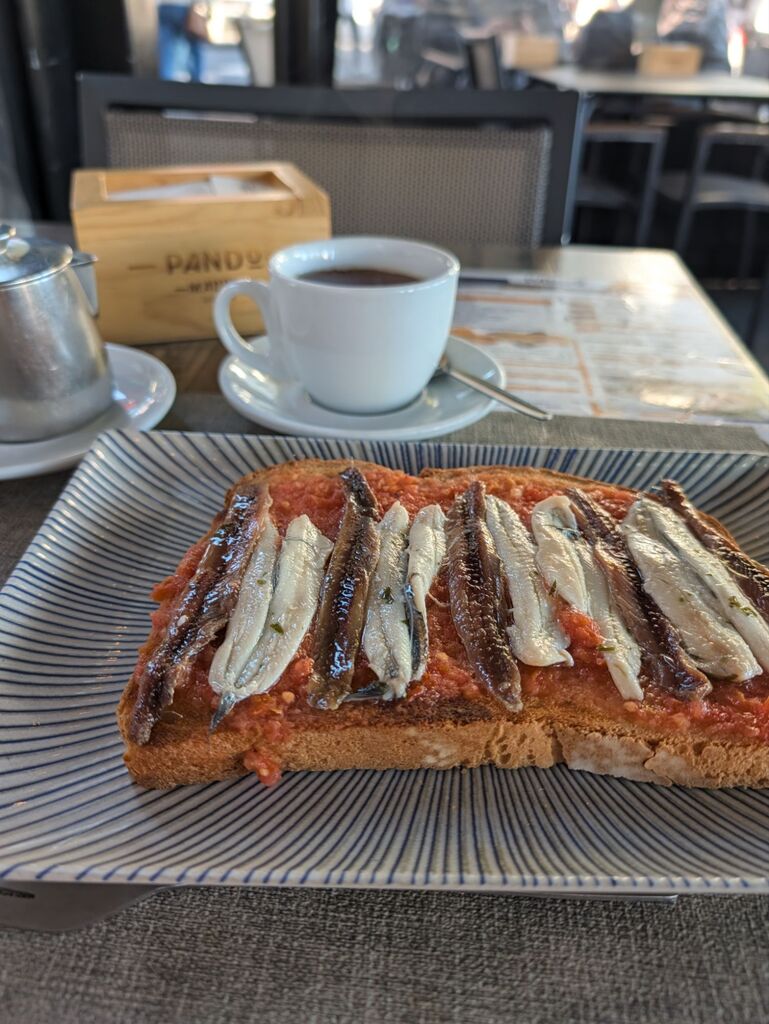
Sardines on toast with tomato
On the corner across the street from the new wing, there’s Cafeteria Pando with outdoor seating. It seemed to be about half locals and half tourists. The dark sardines are oil preserved and the white ones are pickled in a vinegar brine. Very yummy!
But I still have two and a half more hours until the Museo Arqueológico Nacional closed, so I decided to squeeze in another museum visit.
And then even though I was on a roundabout with several buses, I wasn’t sure, even if I found one going to the Archaeological museum, how to pick ones heading in the right direction – because roundabout. And it was a short distance, but would require two transfers to get there by subway. So I took a taxi.
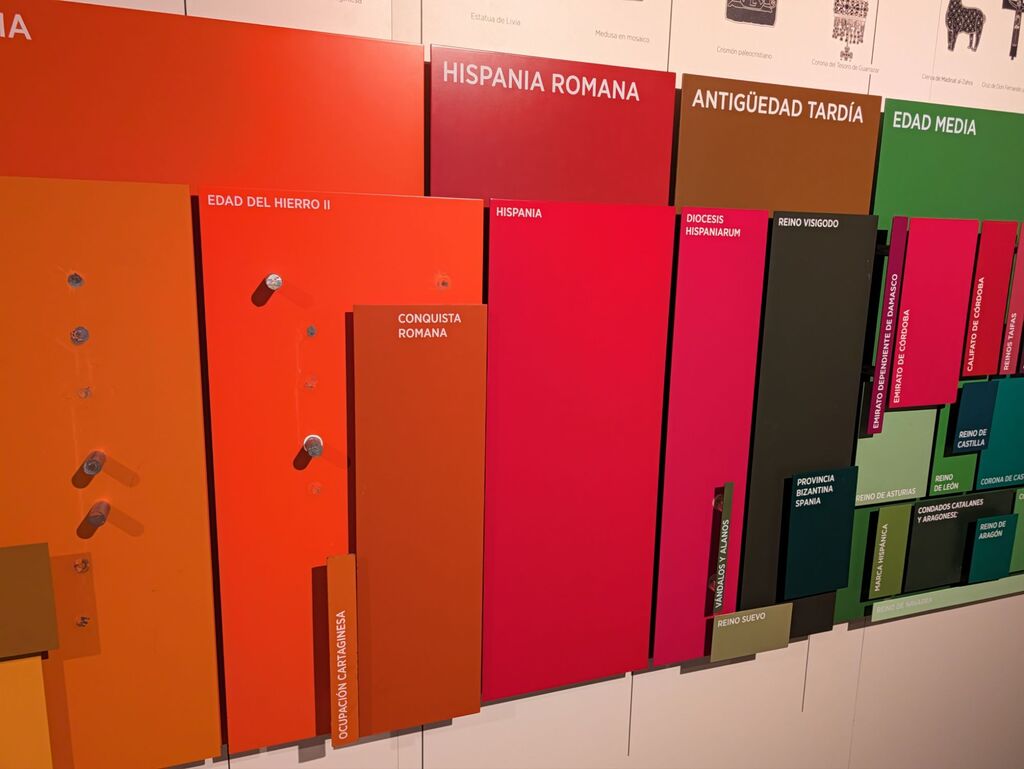
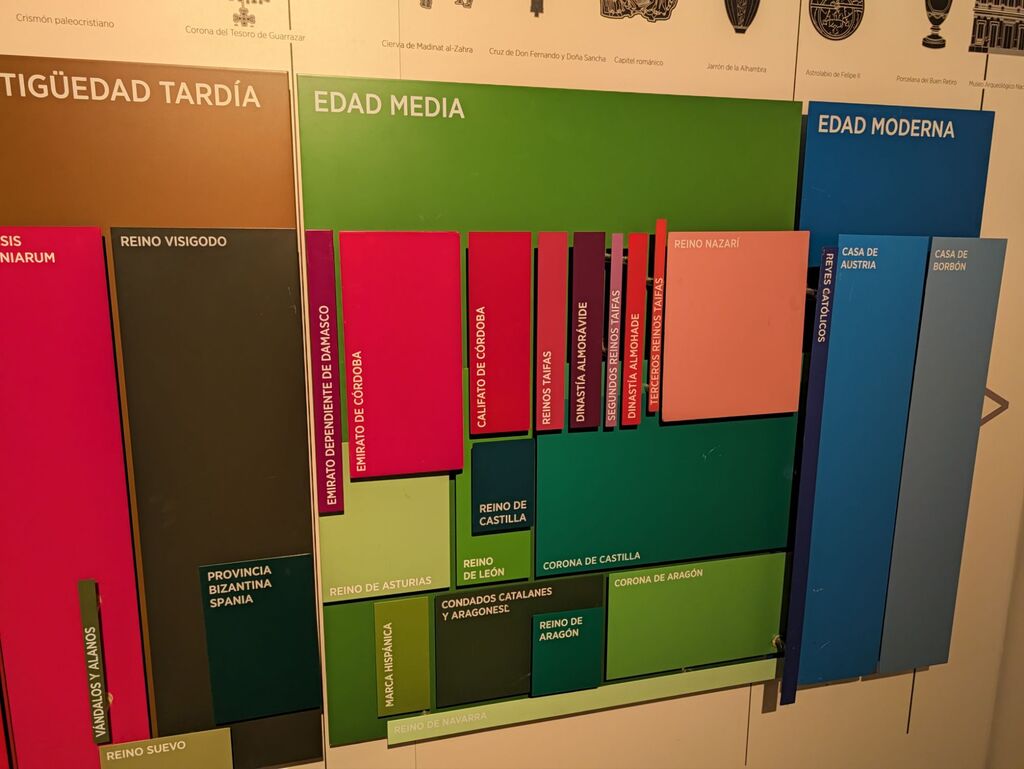
Middle section of a clever timeline visualization for cultures represented in this museumEnd section of a clever timeline visualization for cultures represented in this museum
I was looking with a particular interest in a few research projects:
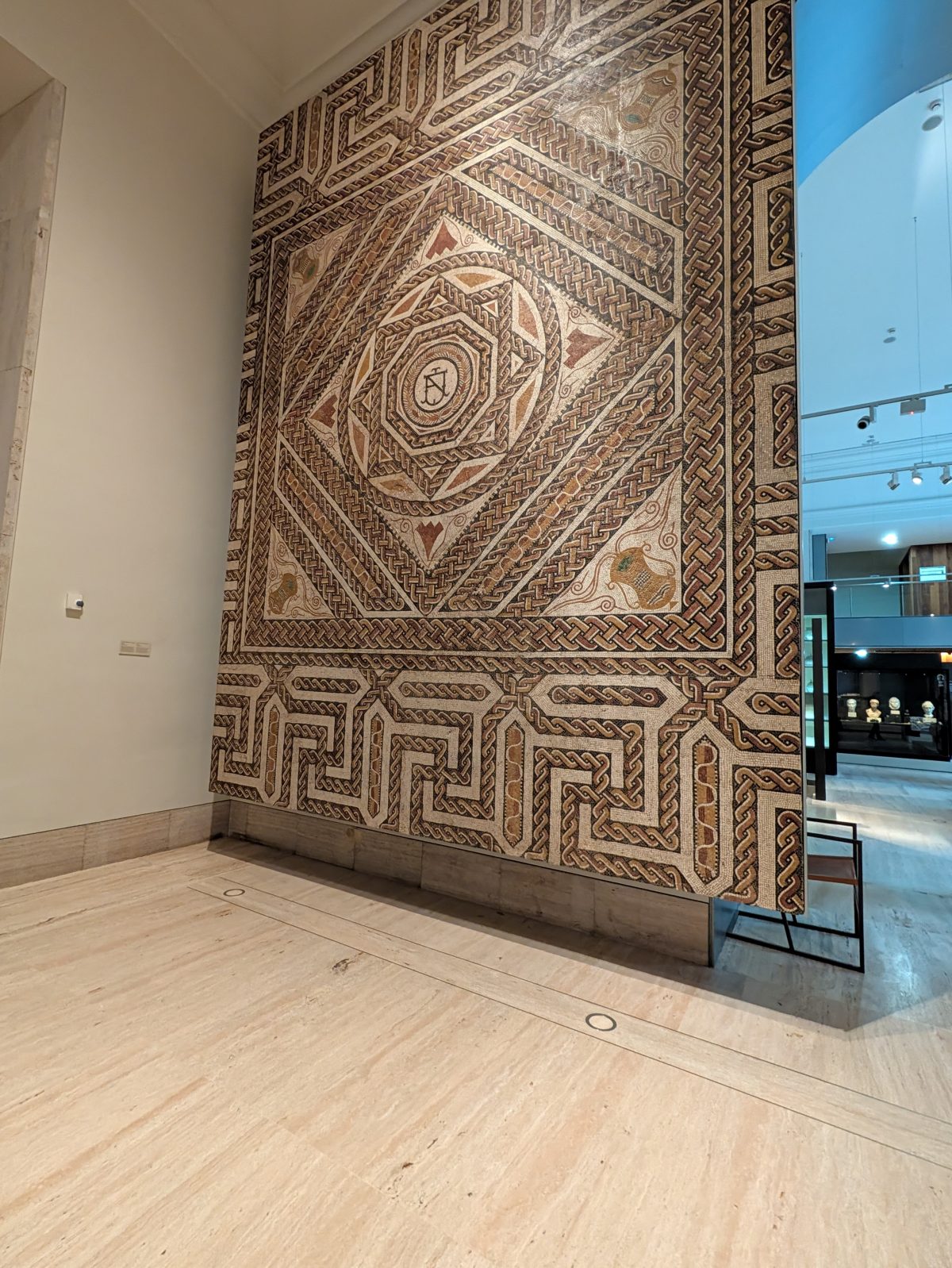
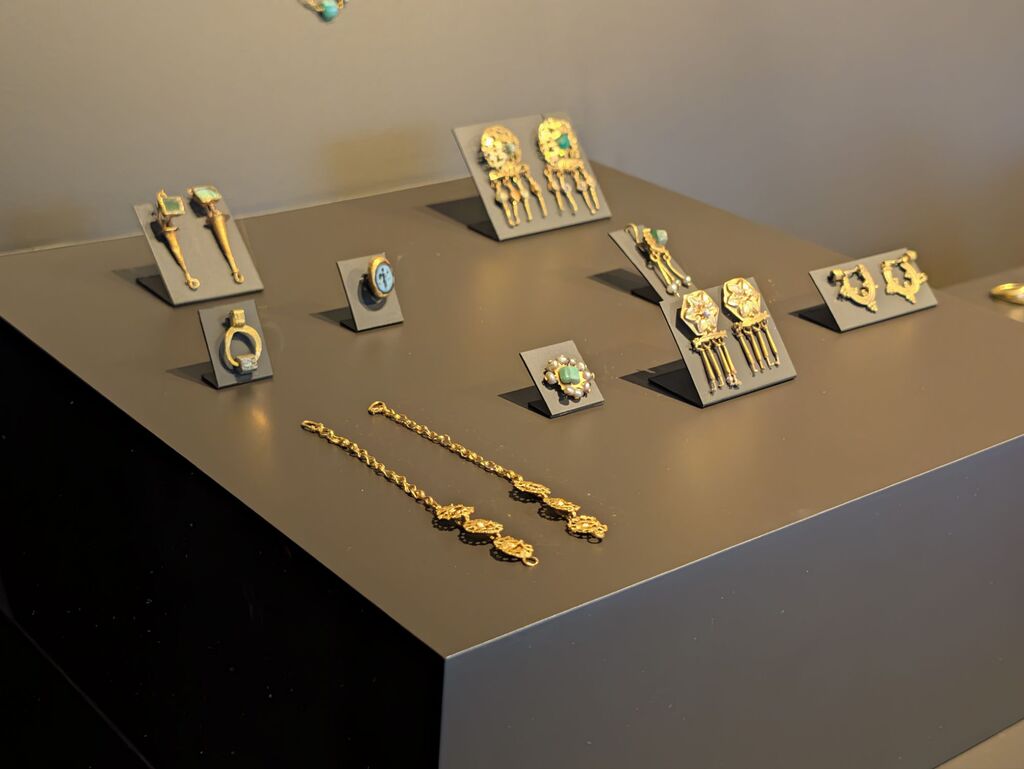
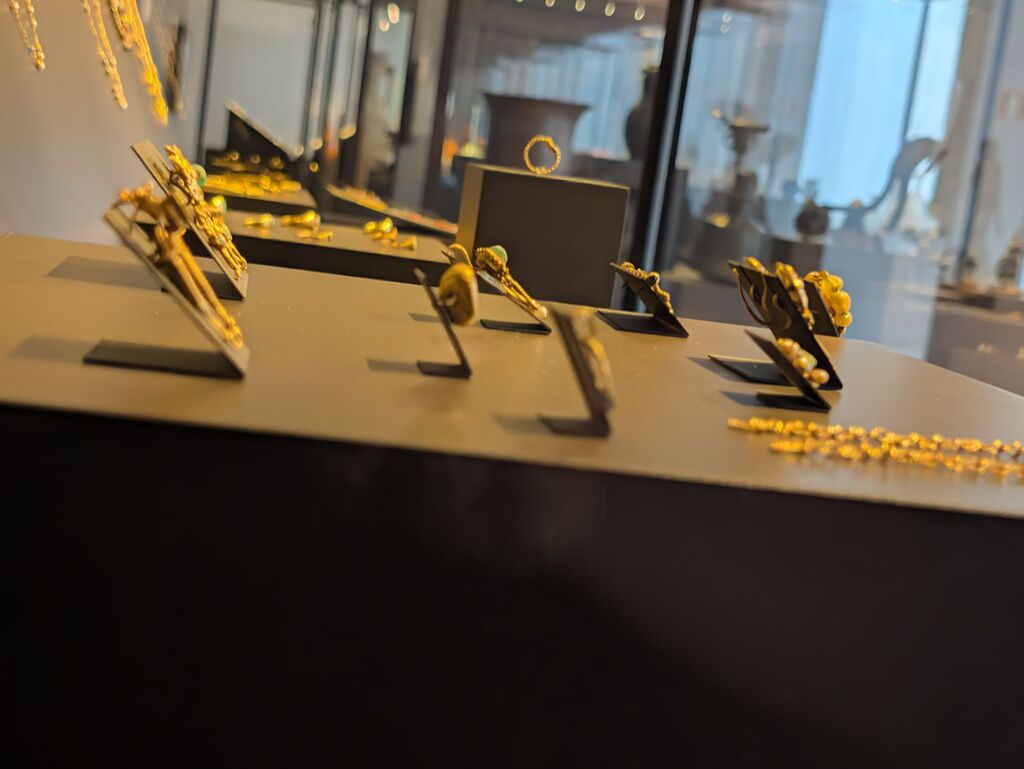
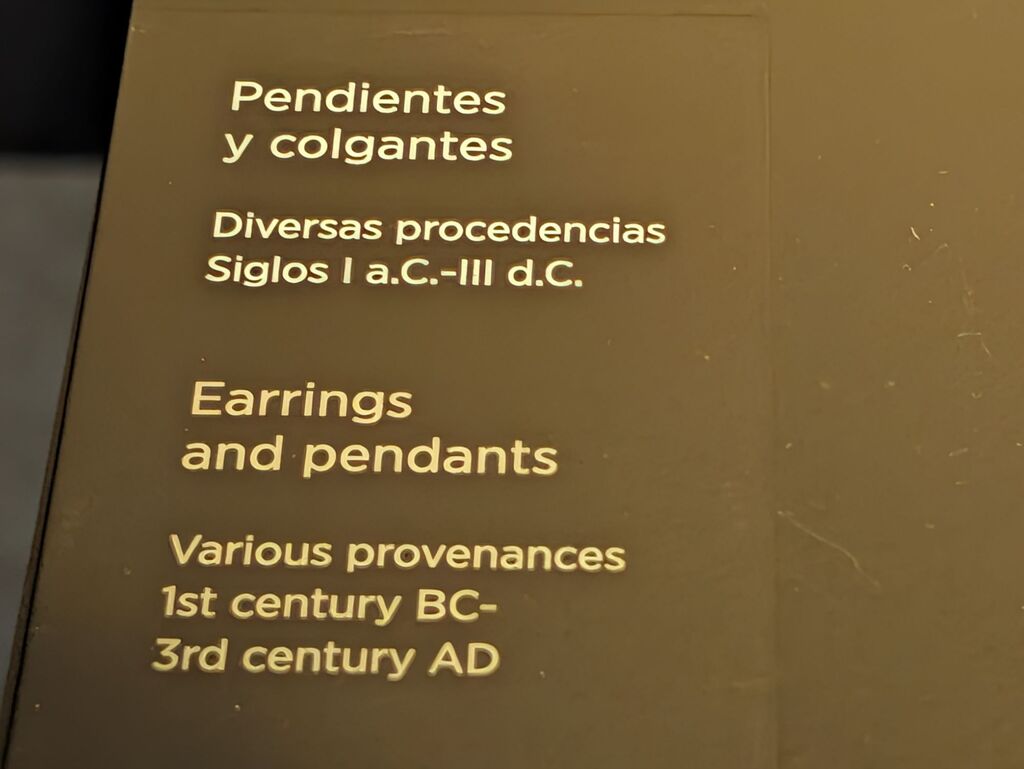
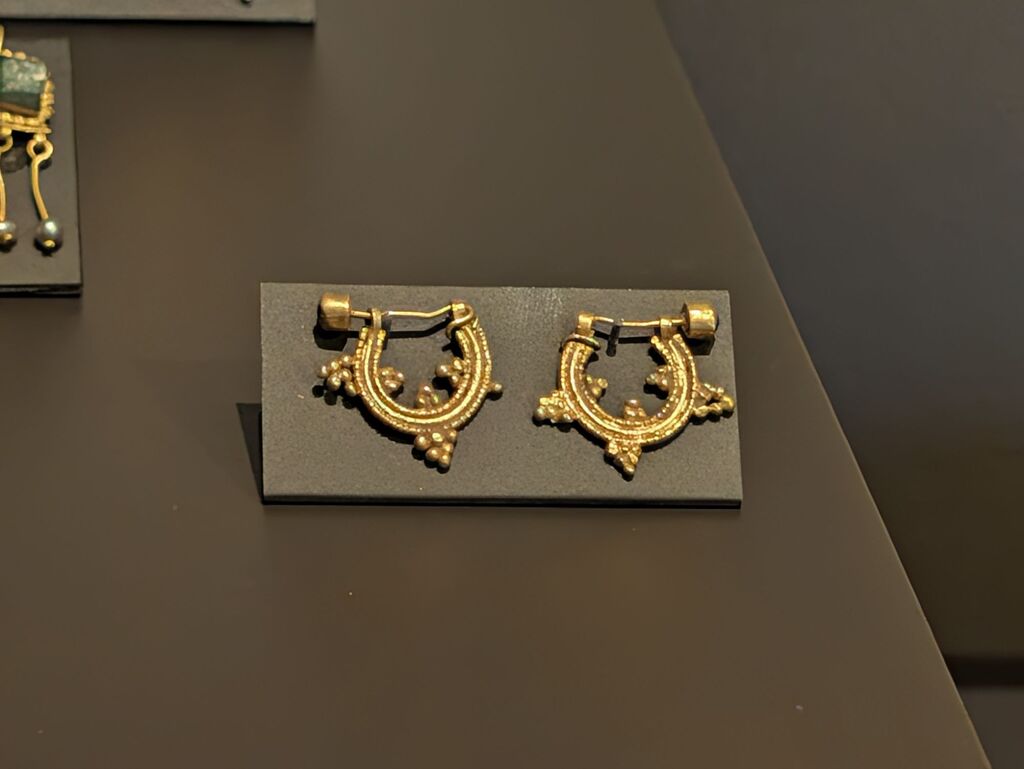
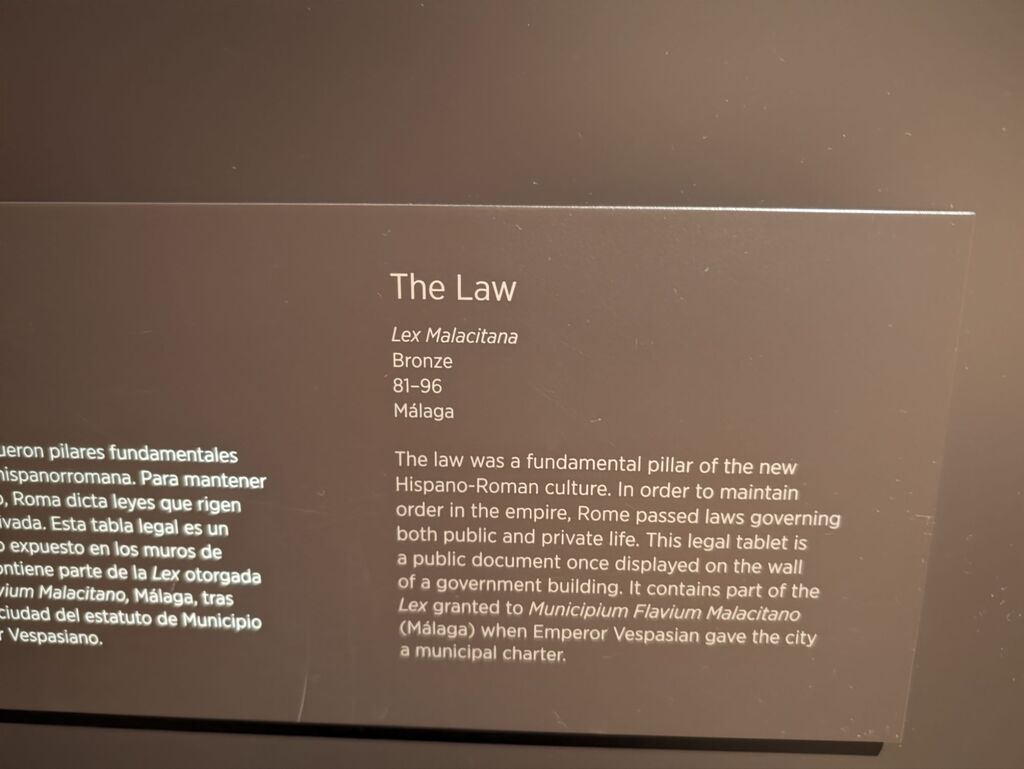
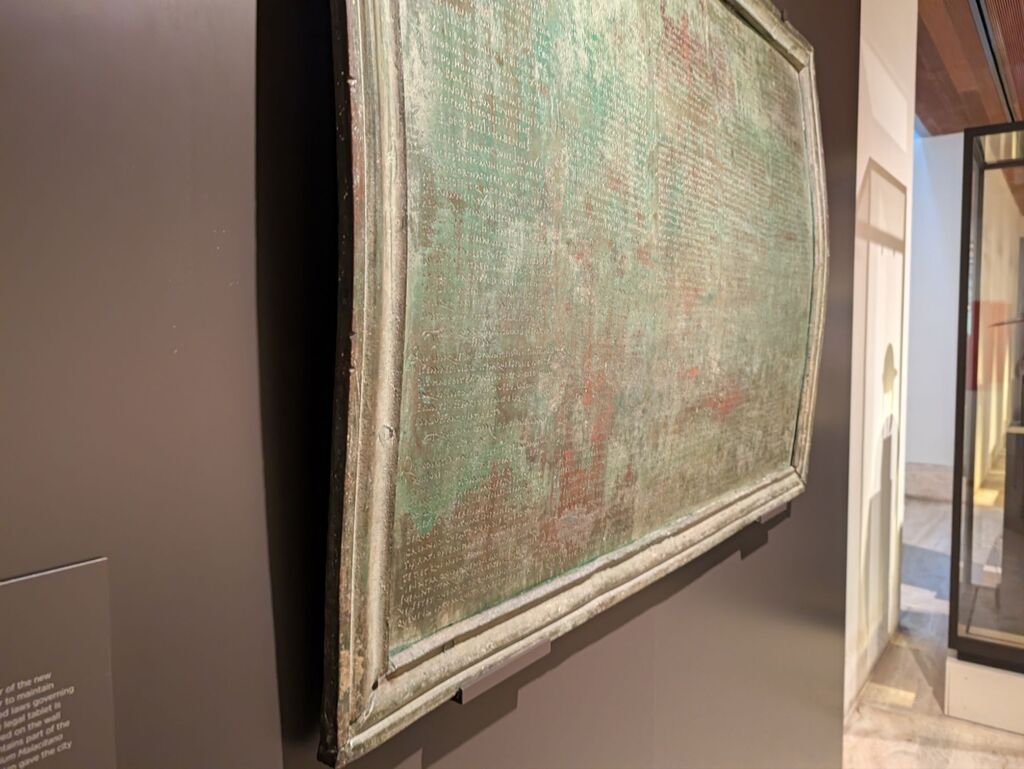
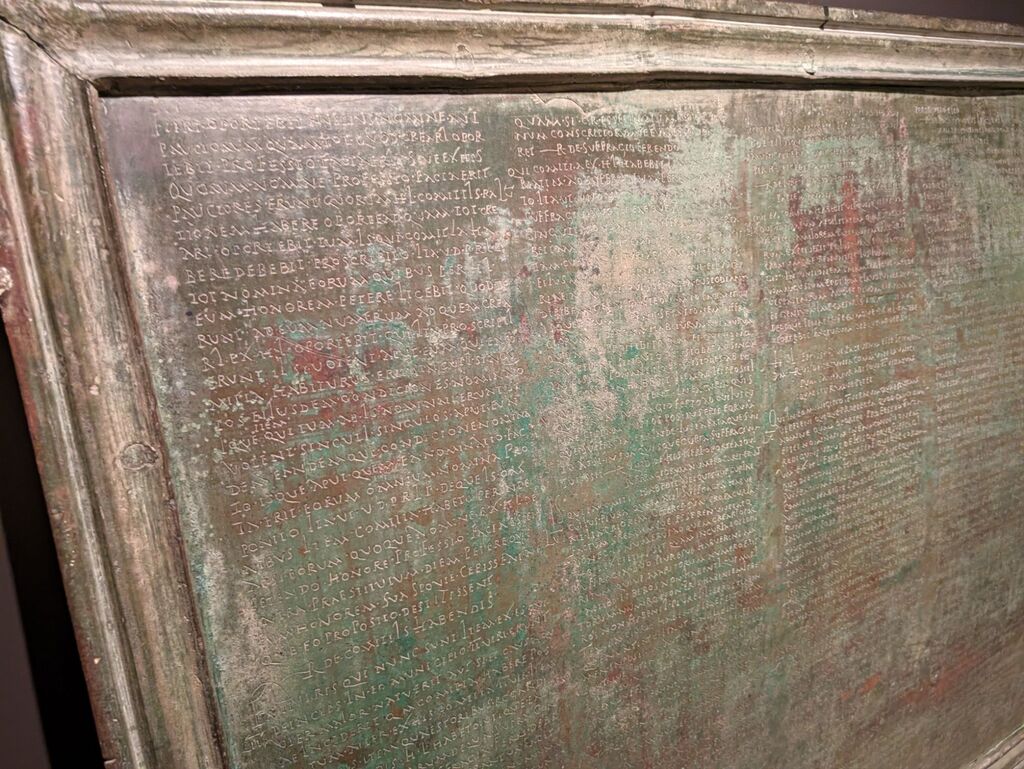
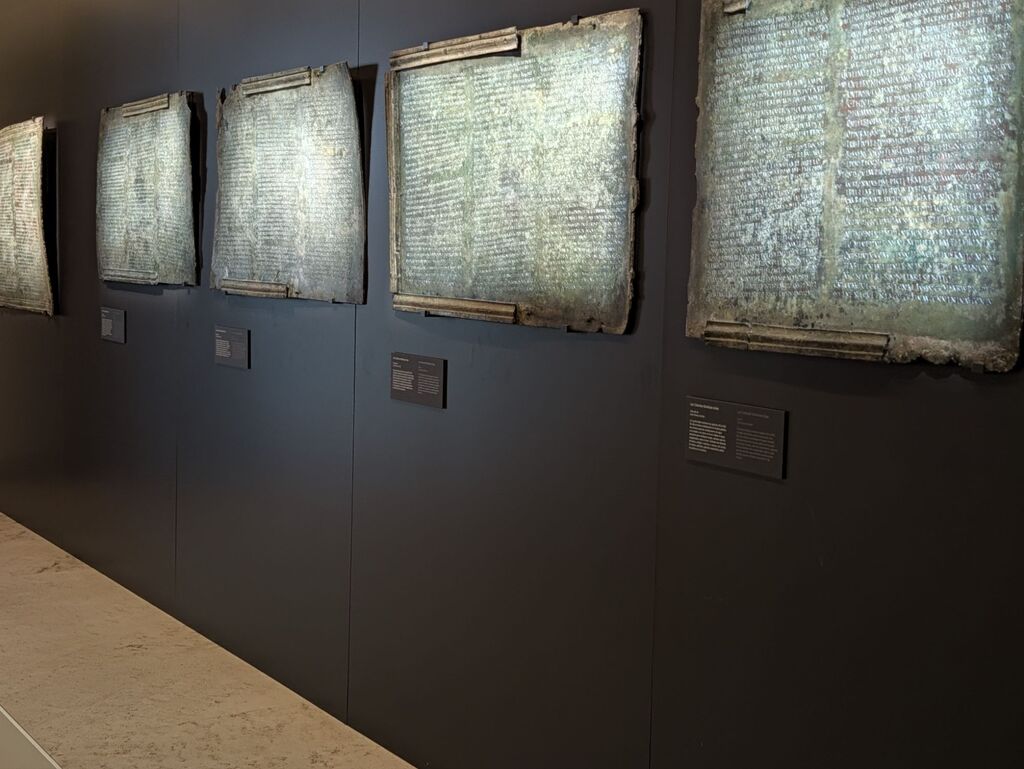
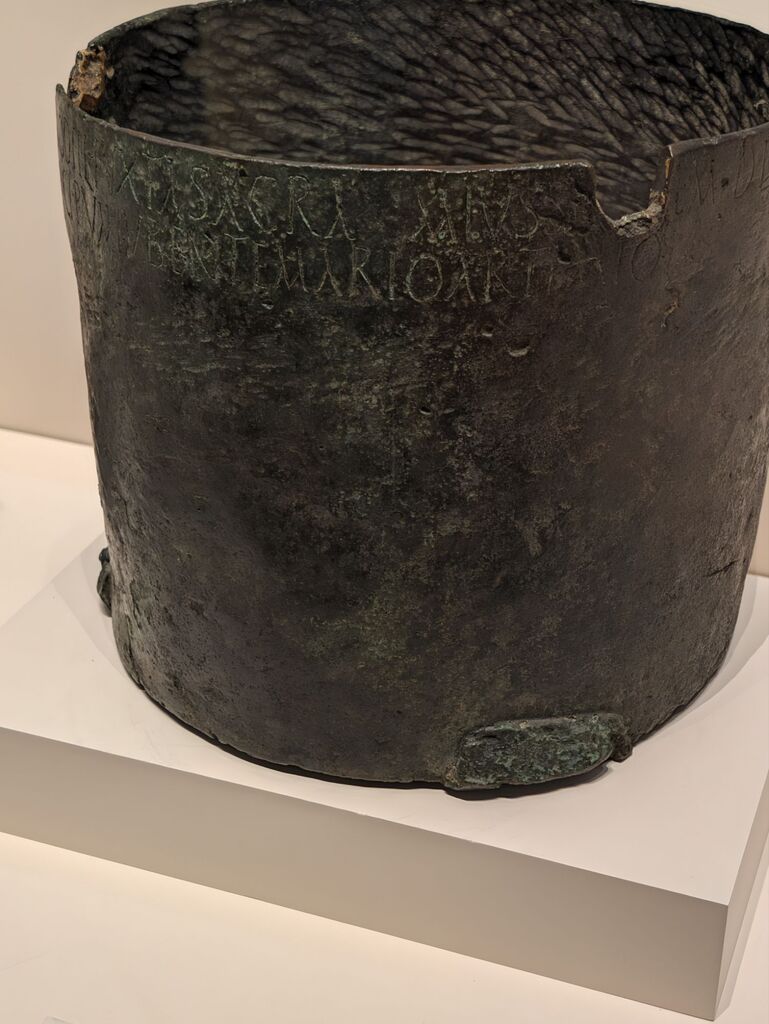
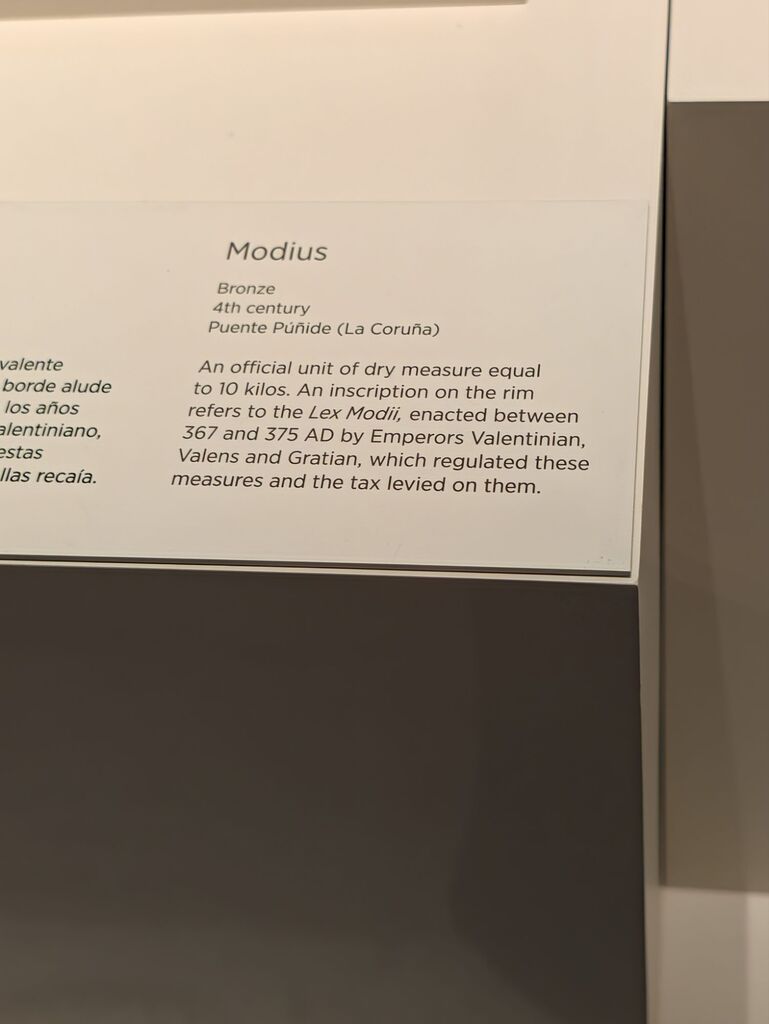
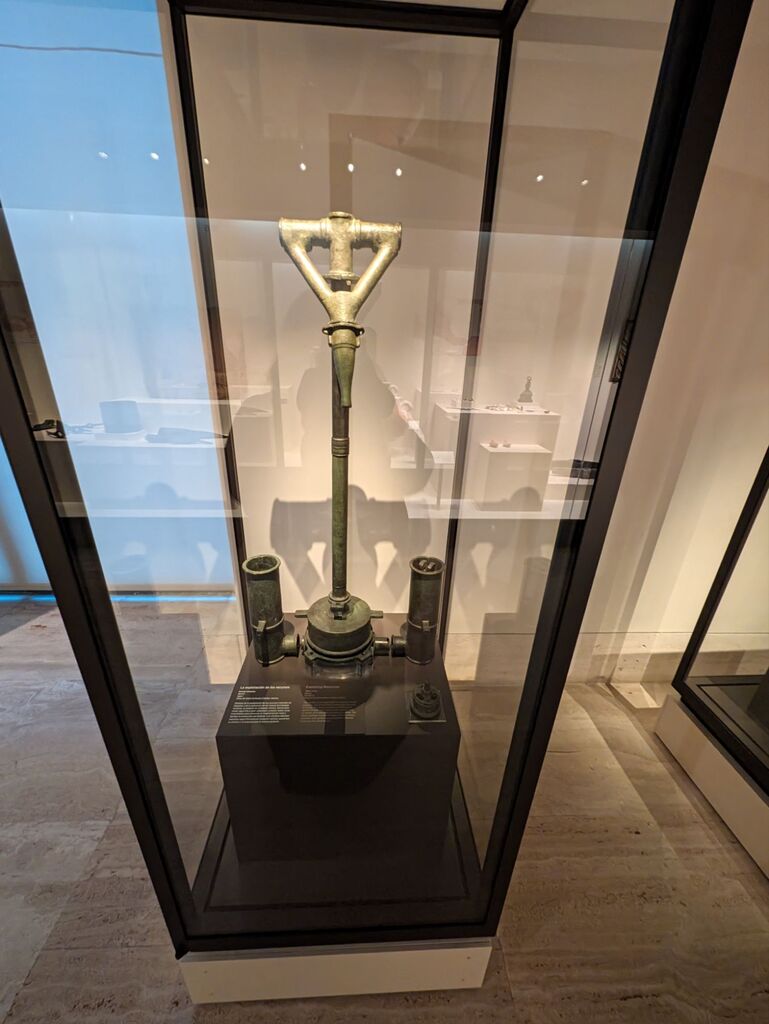
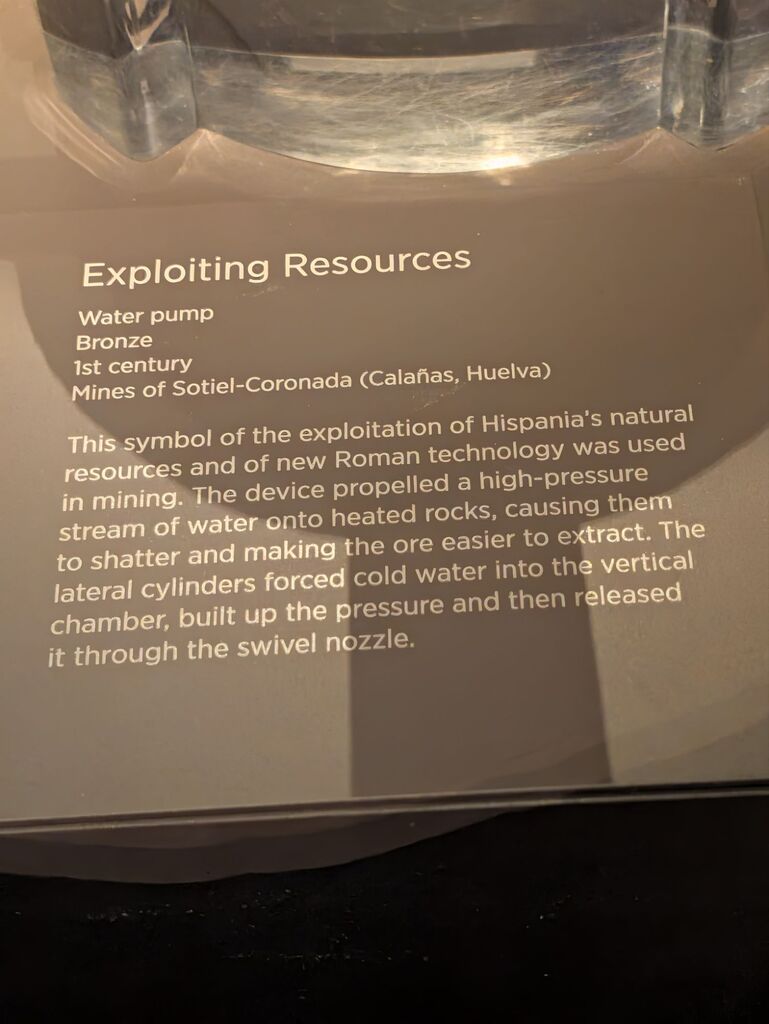
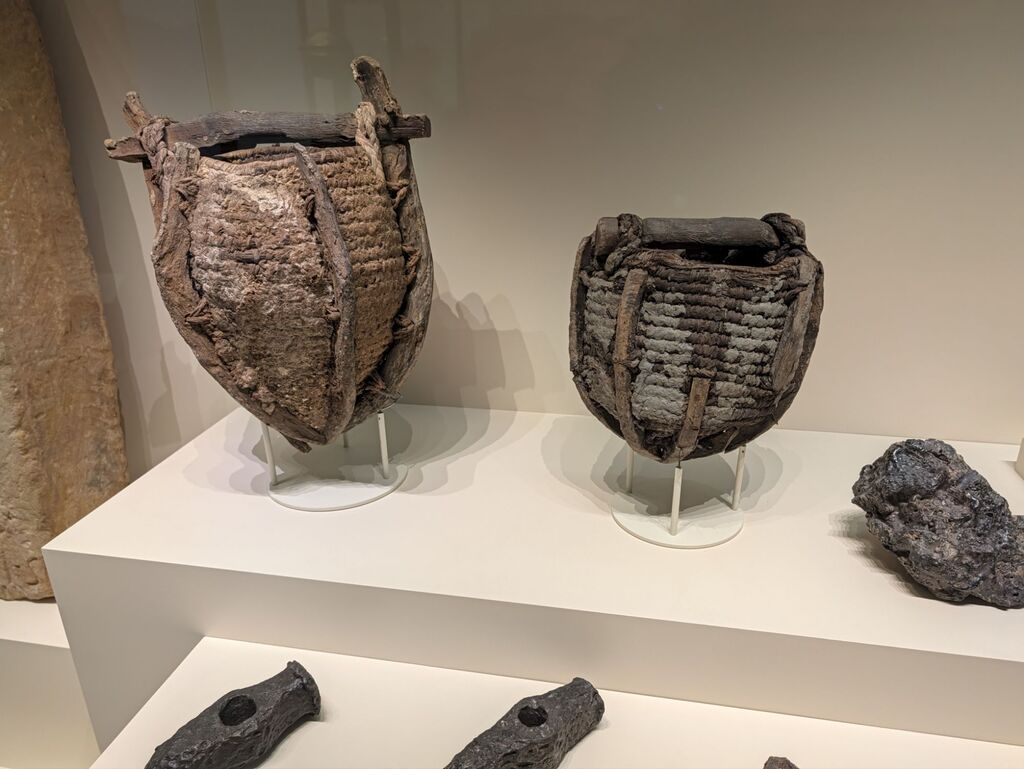
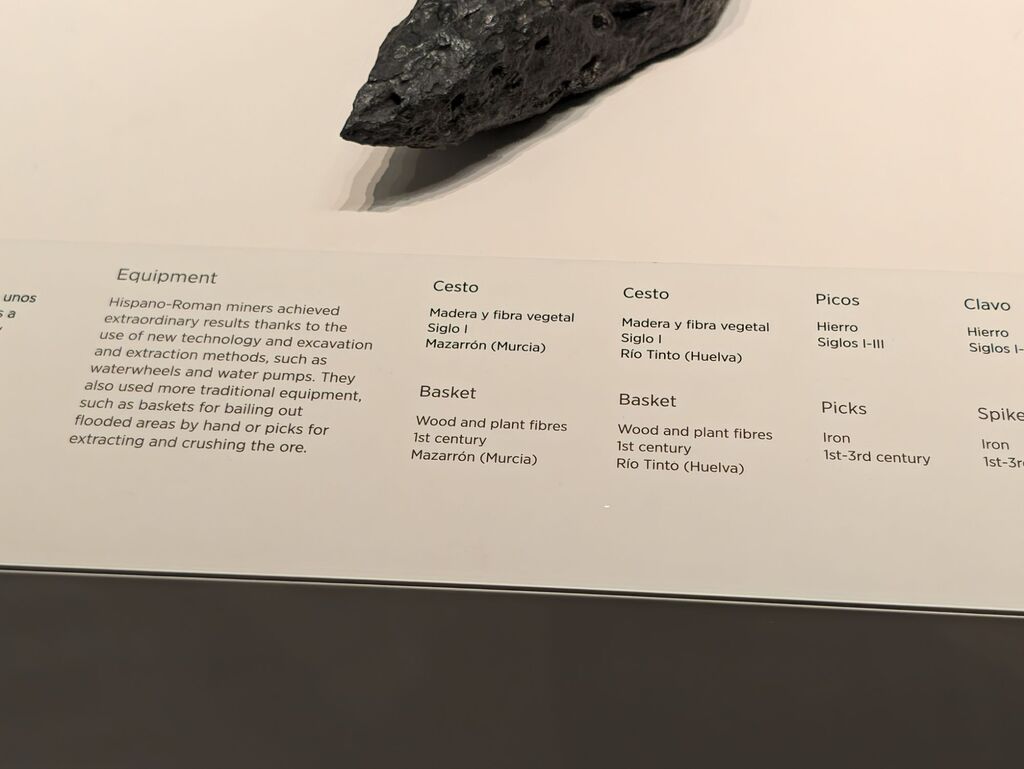
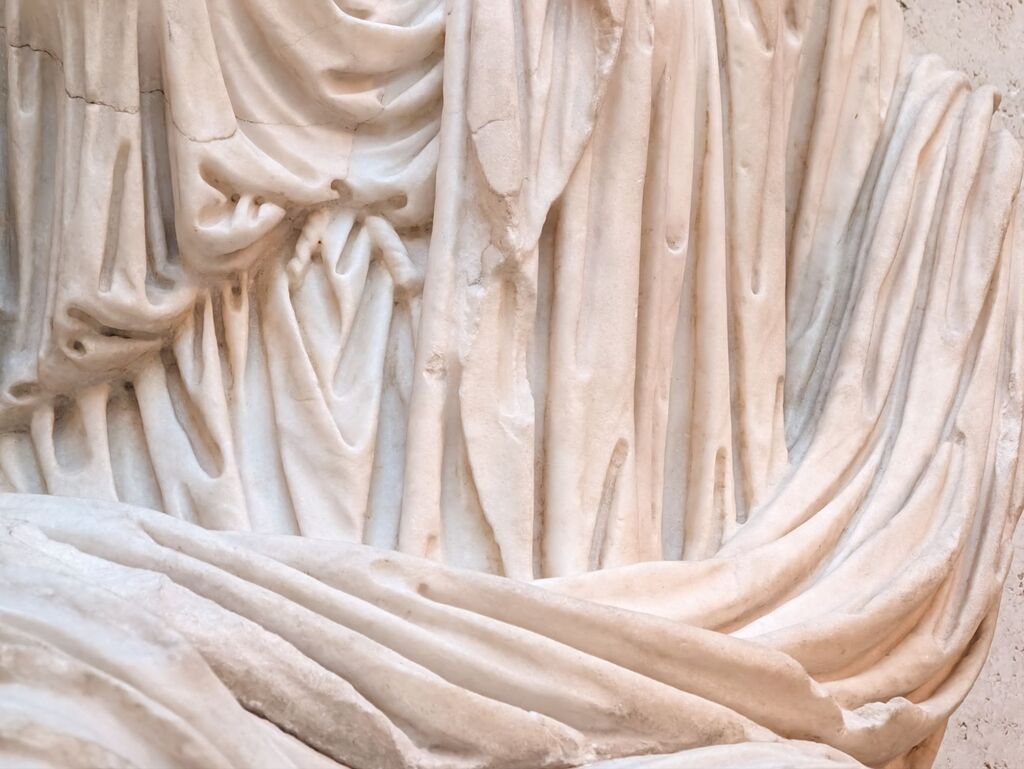
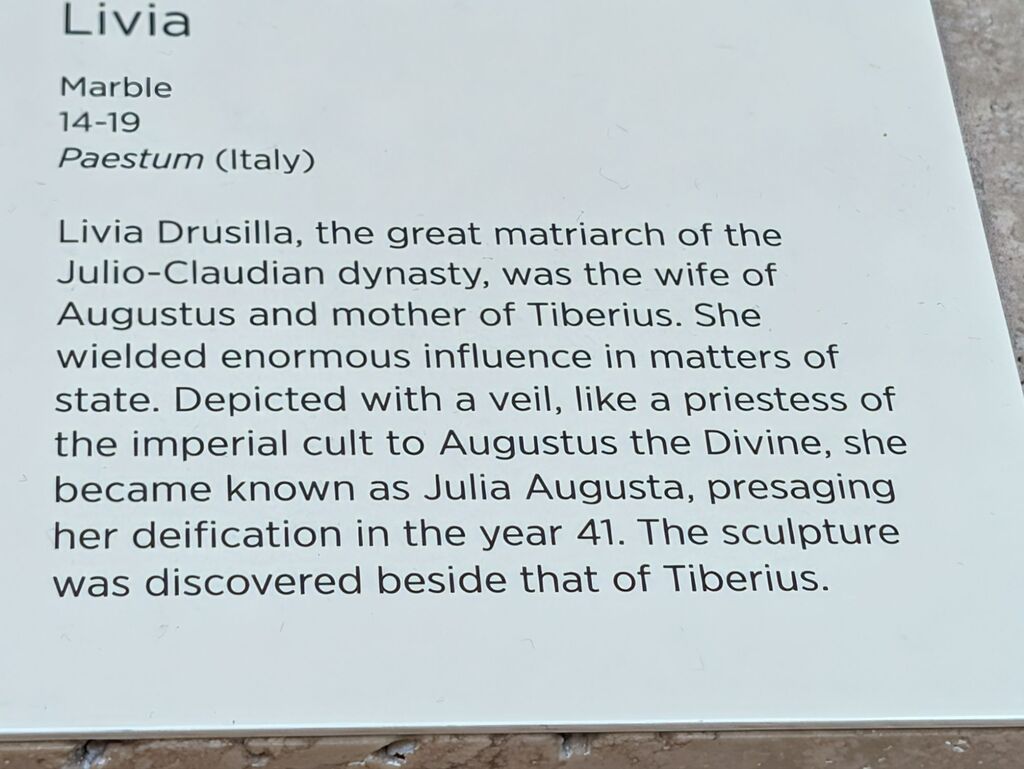
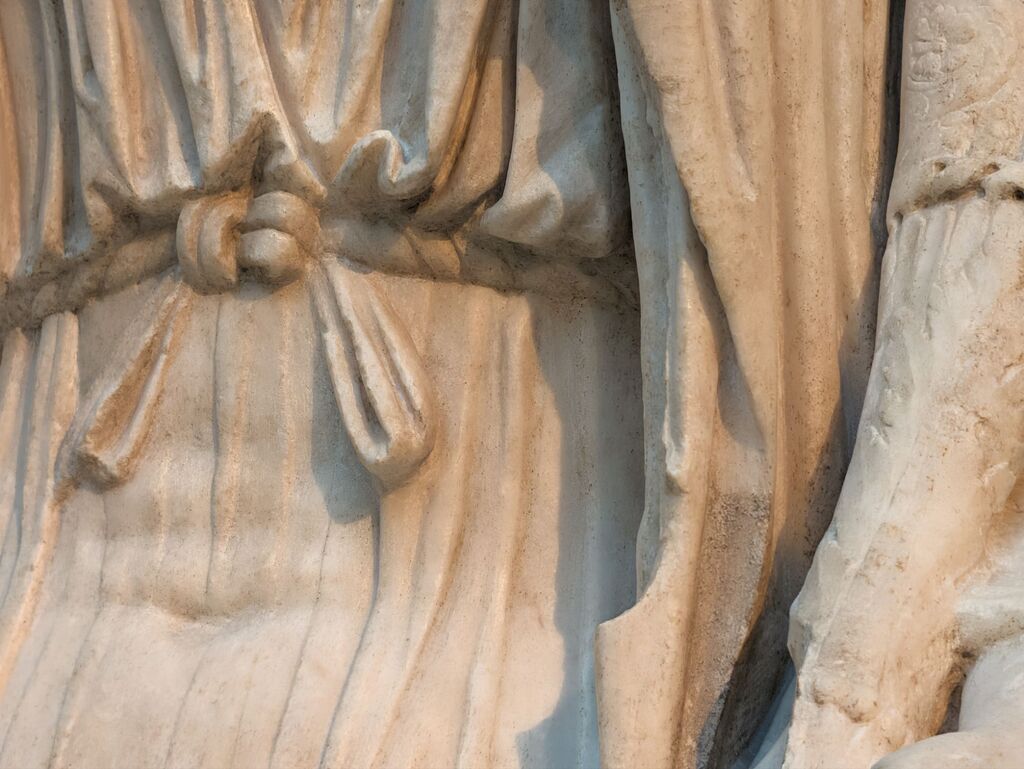
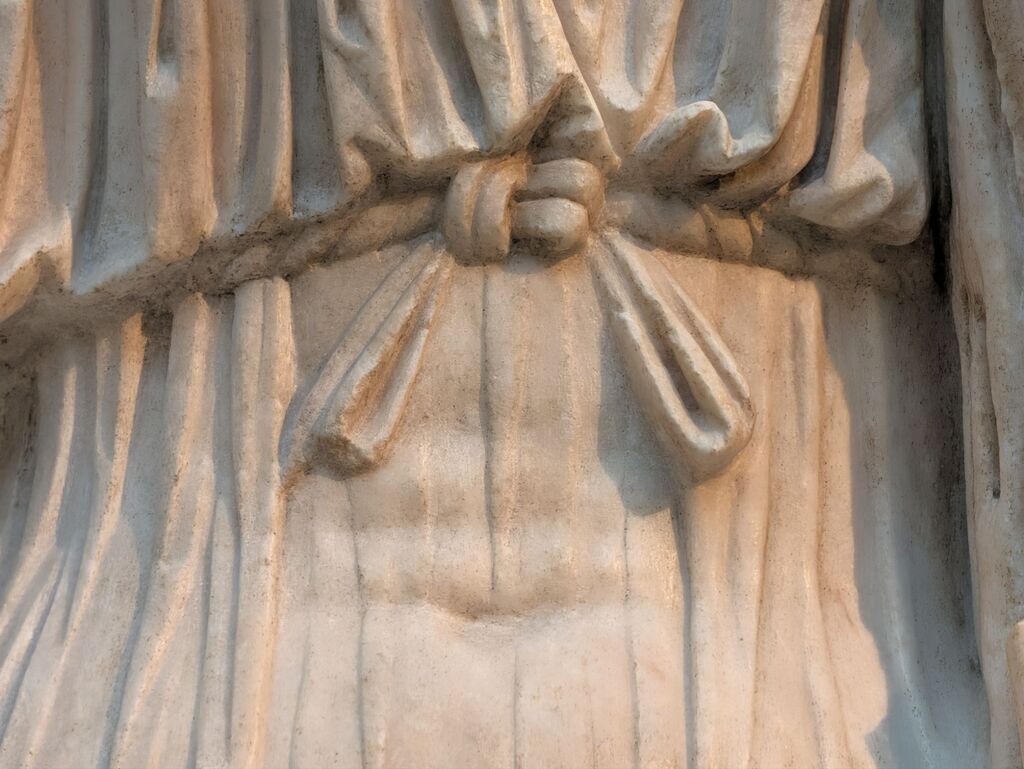
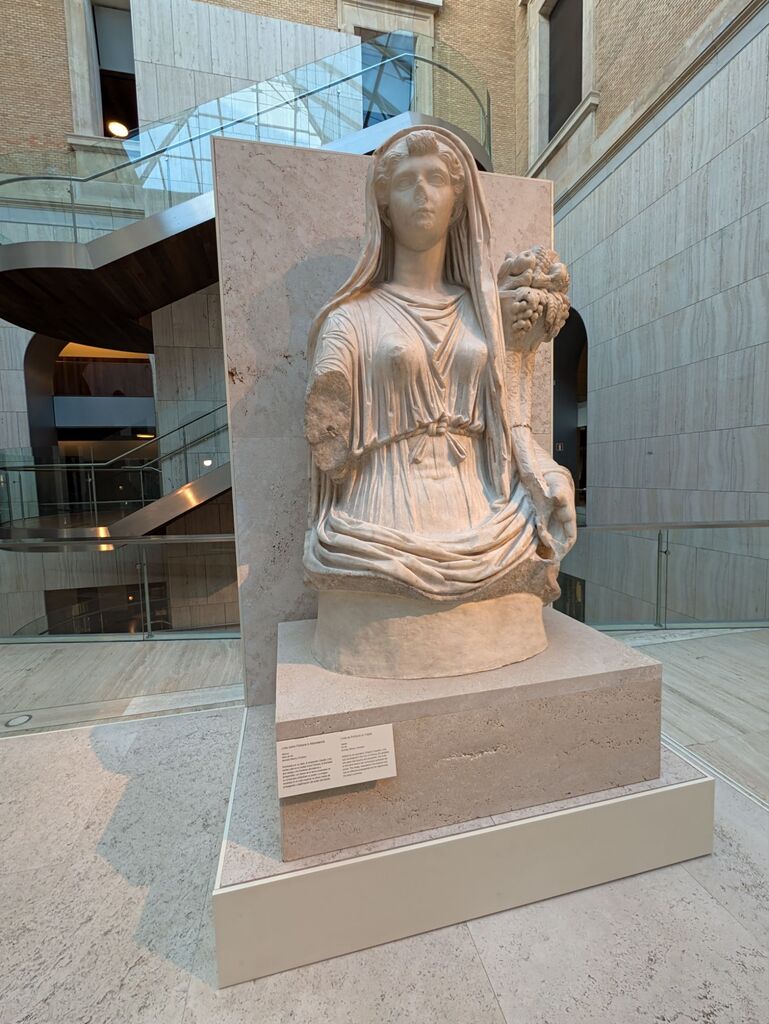
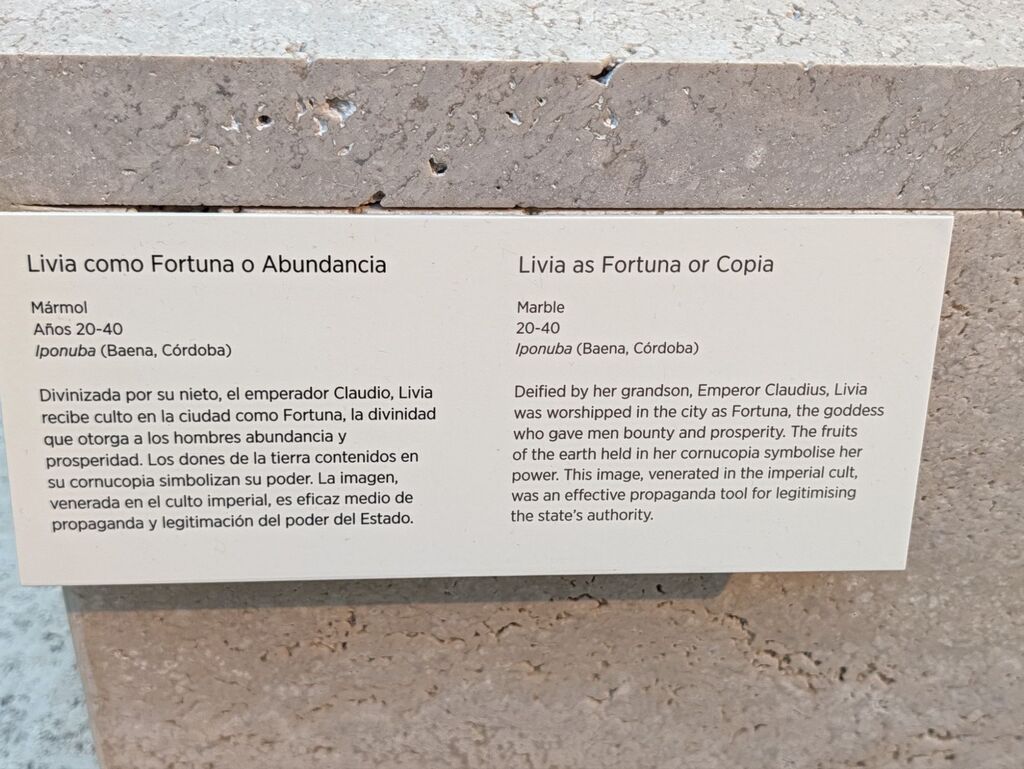
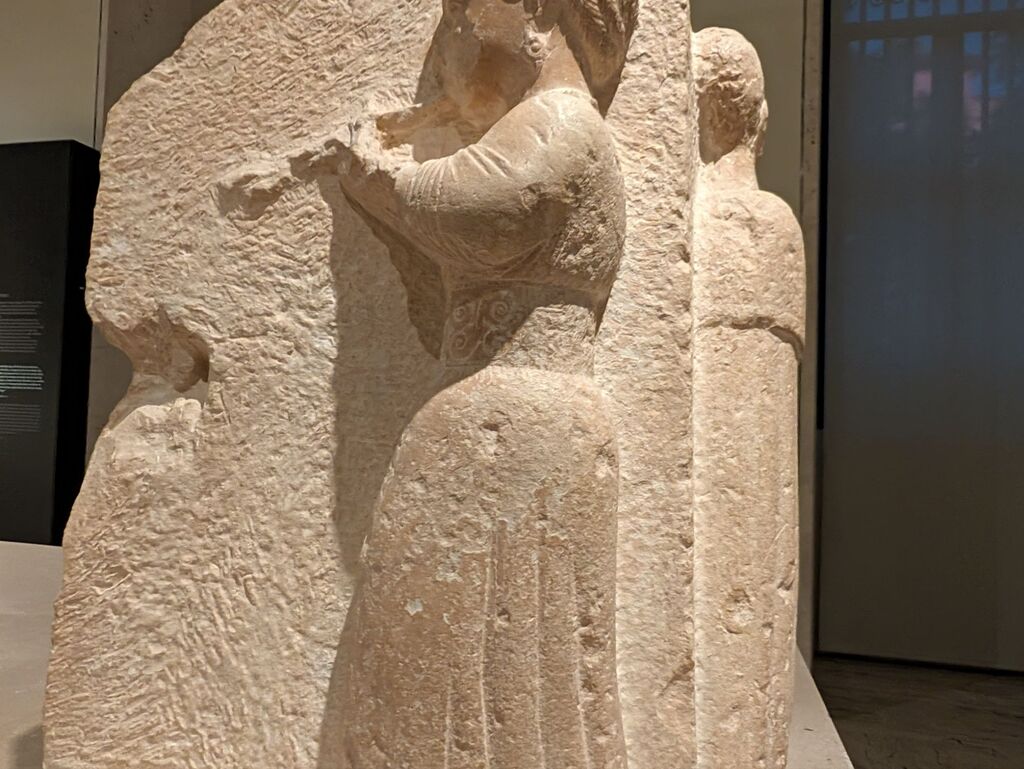
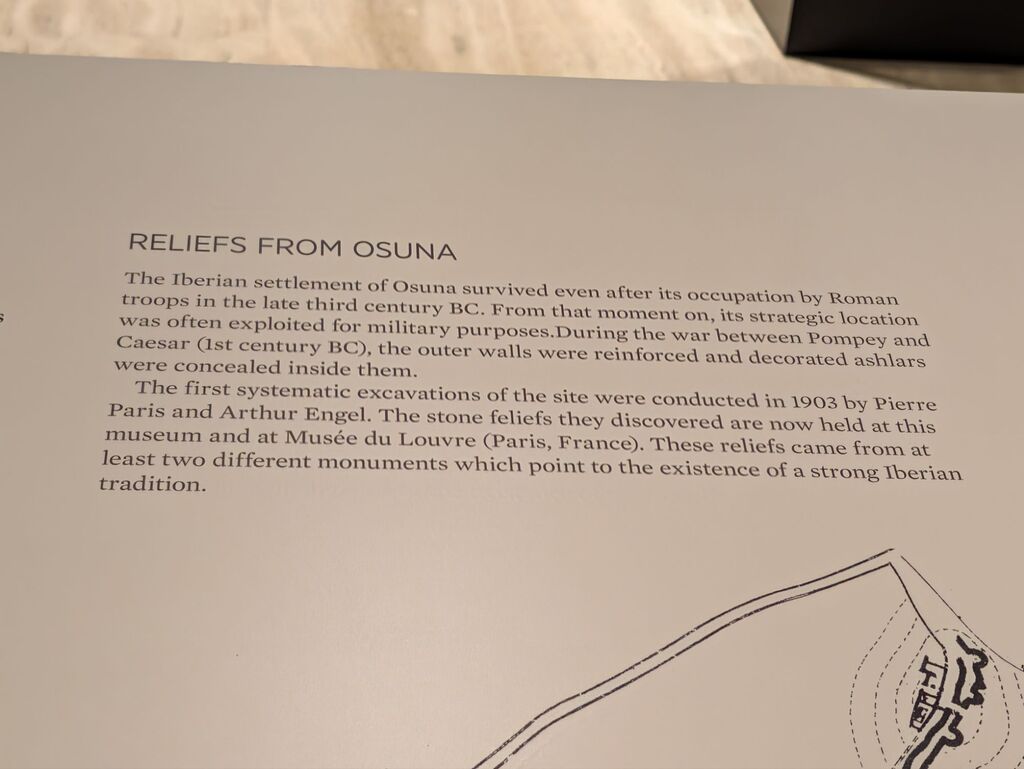
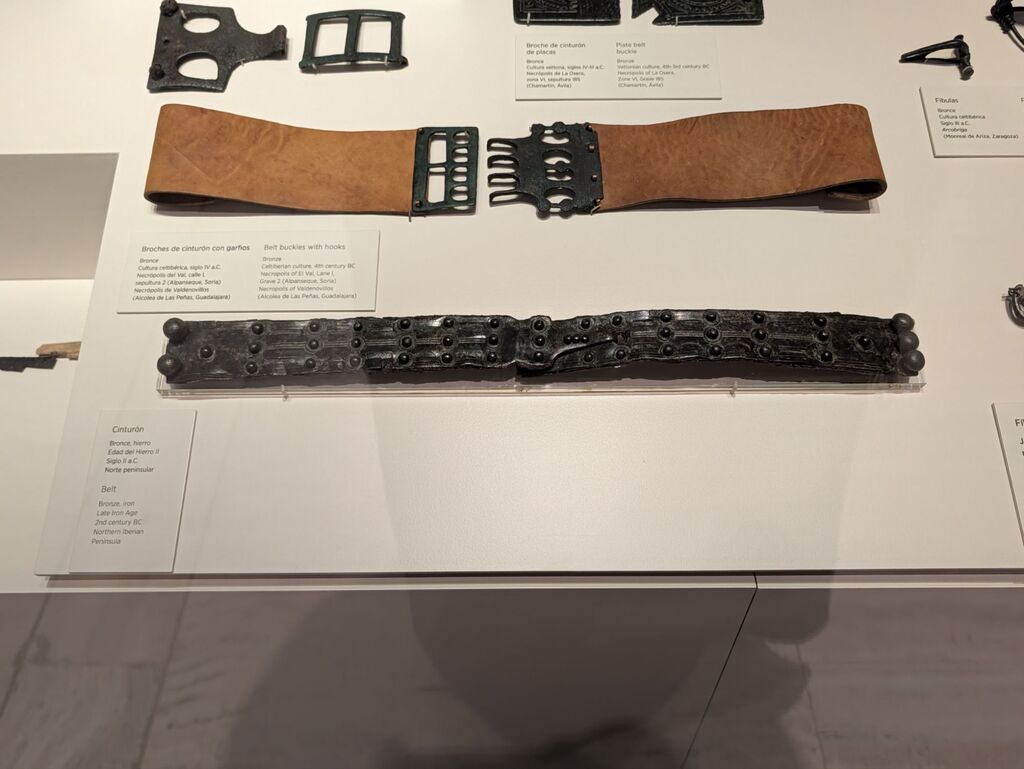
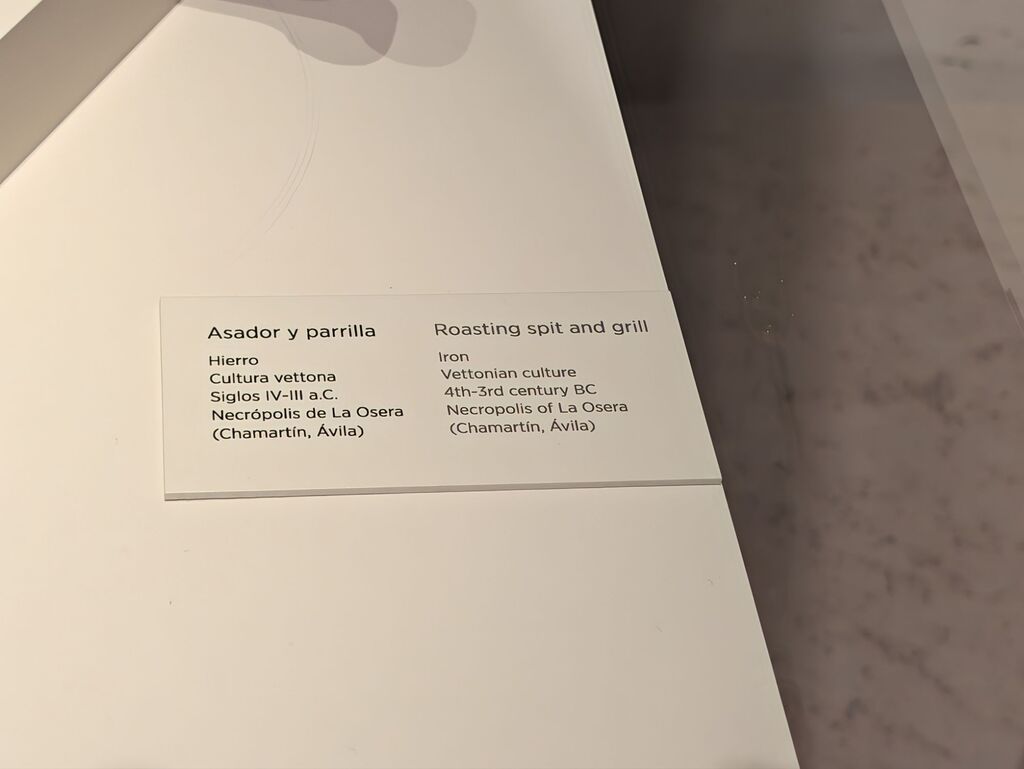
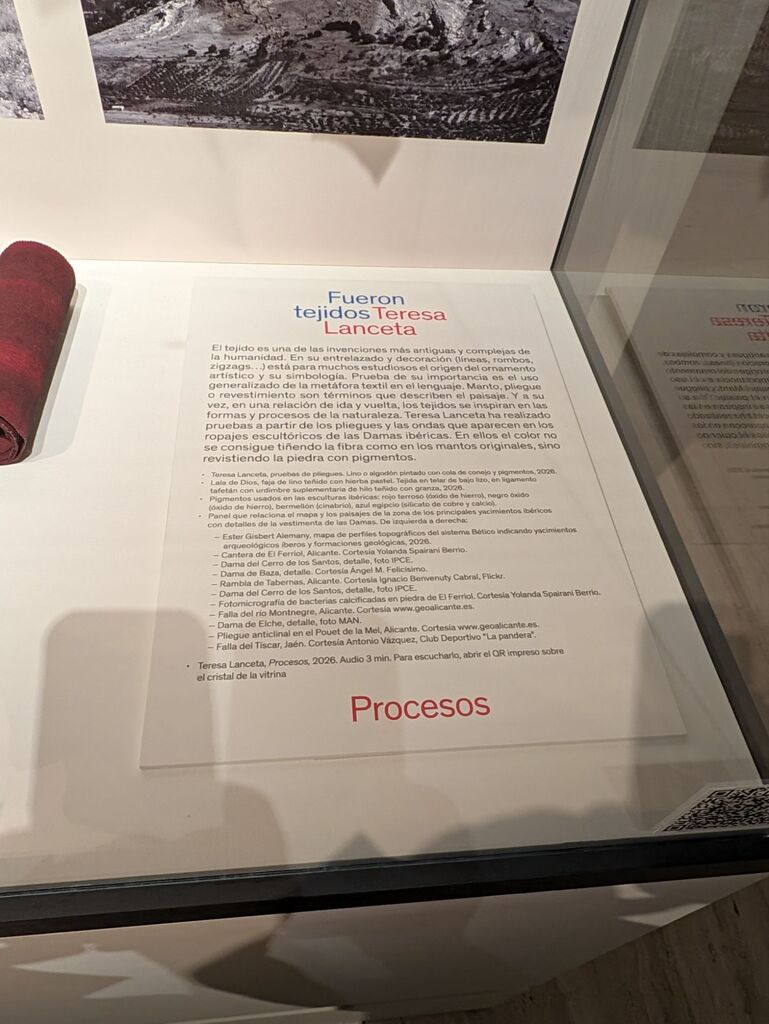
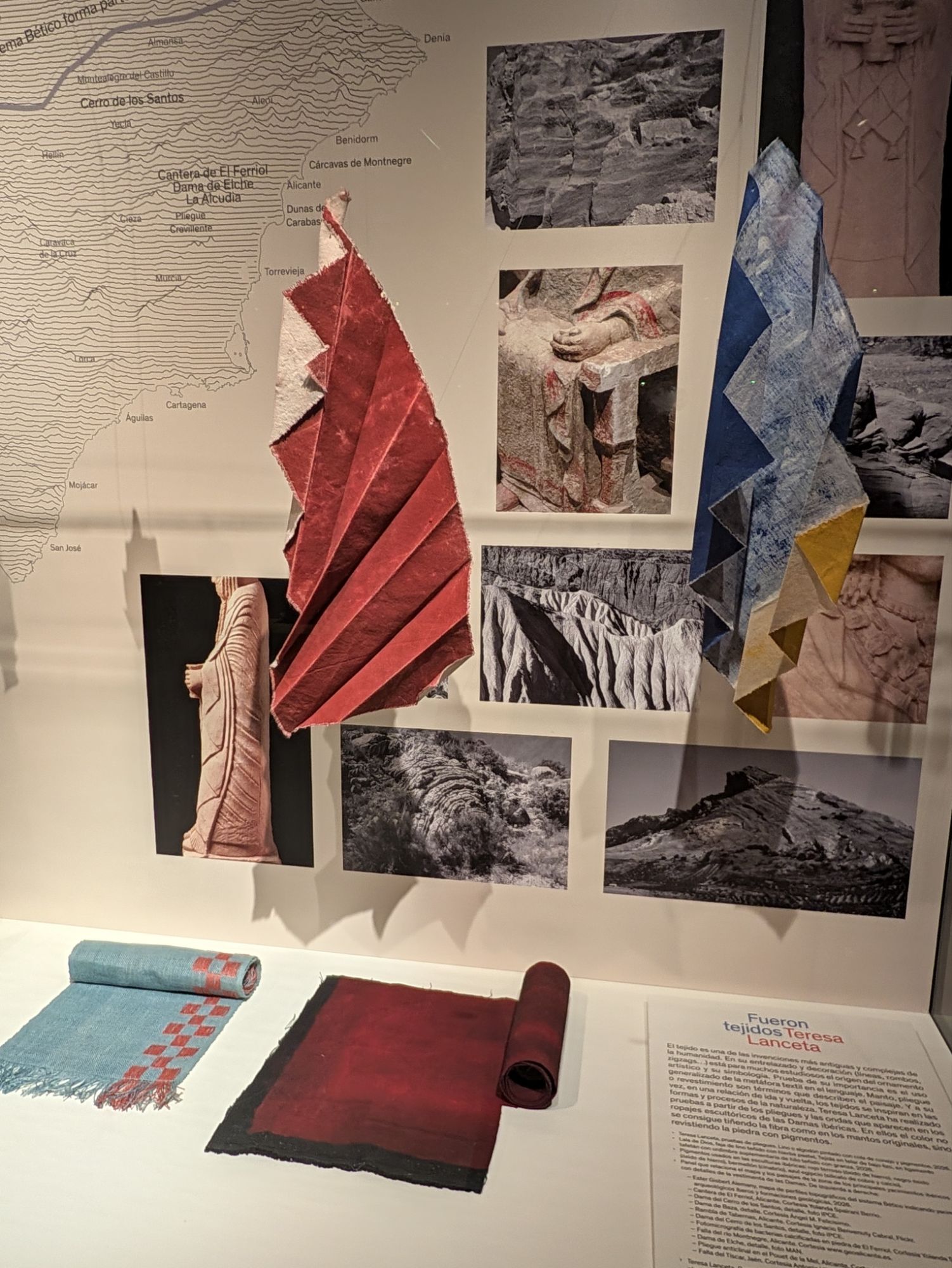
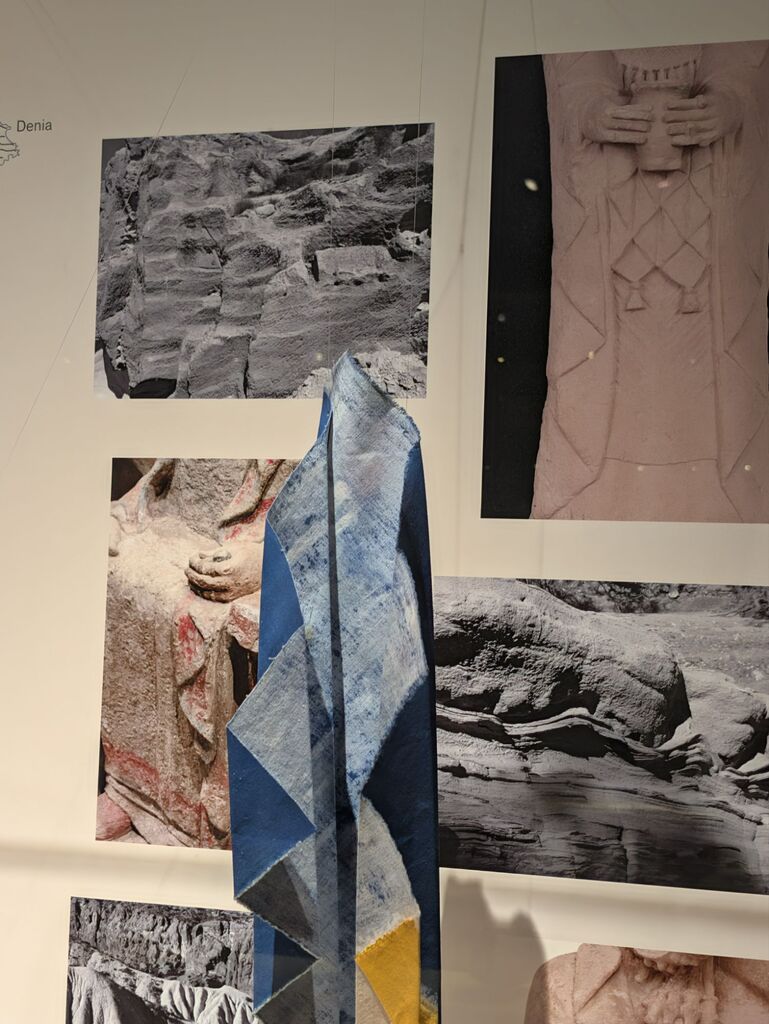
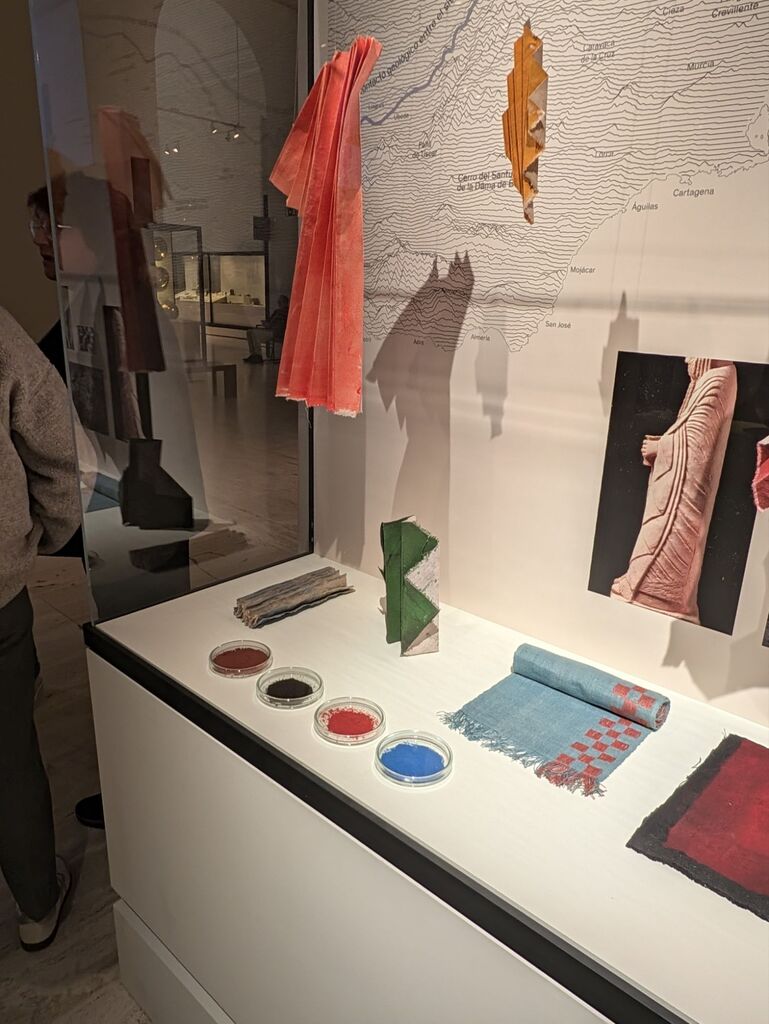
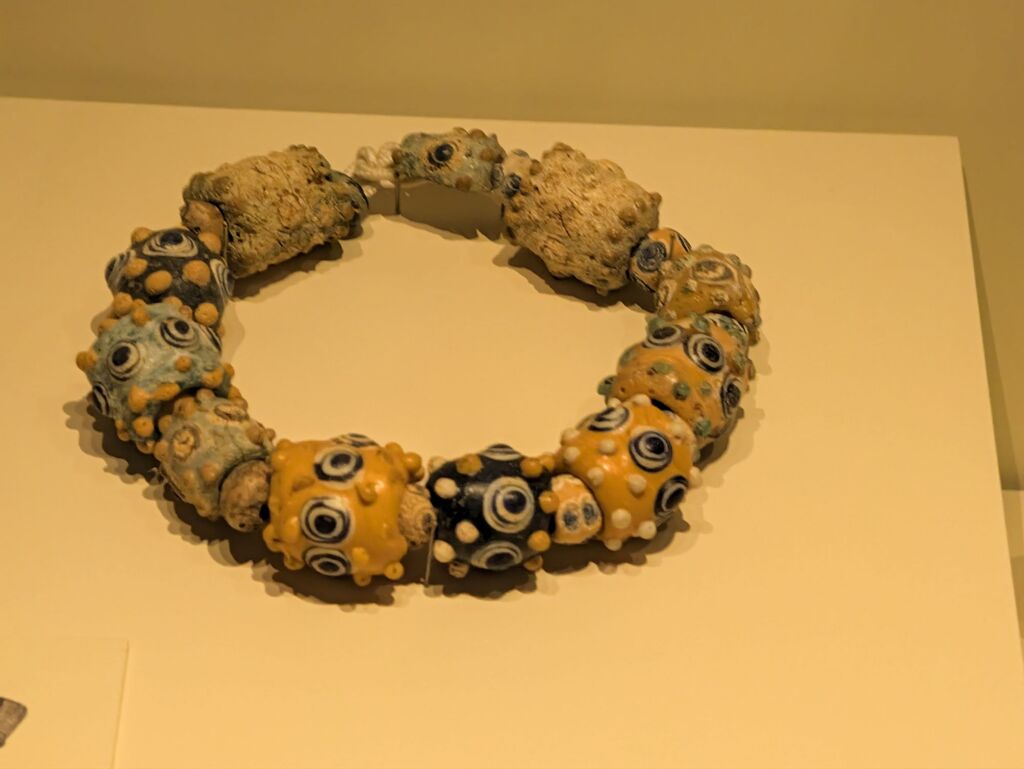
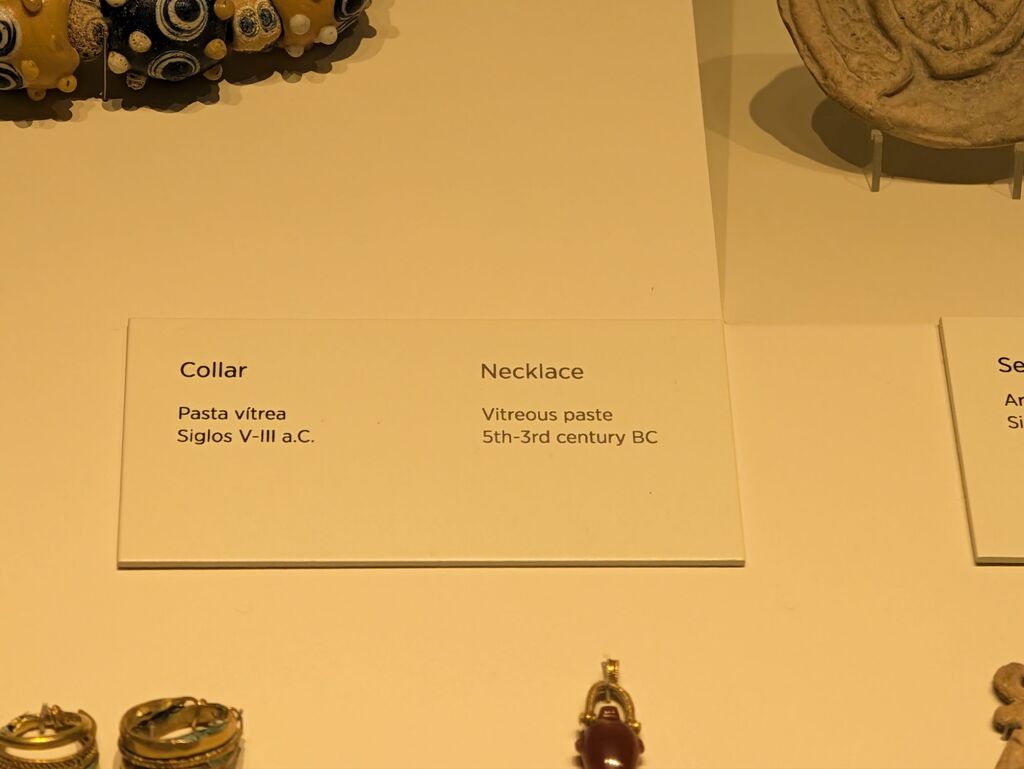
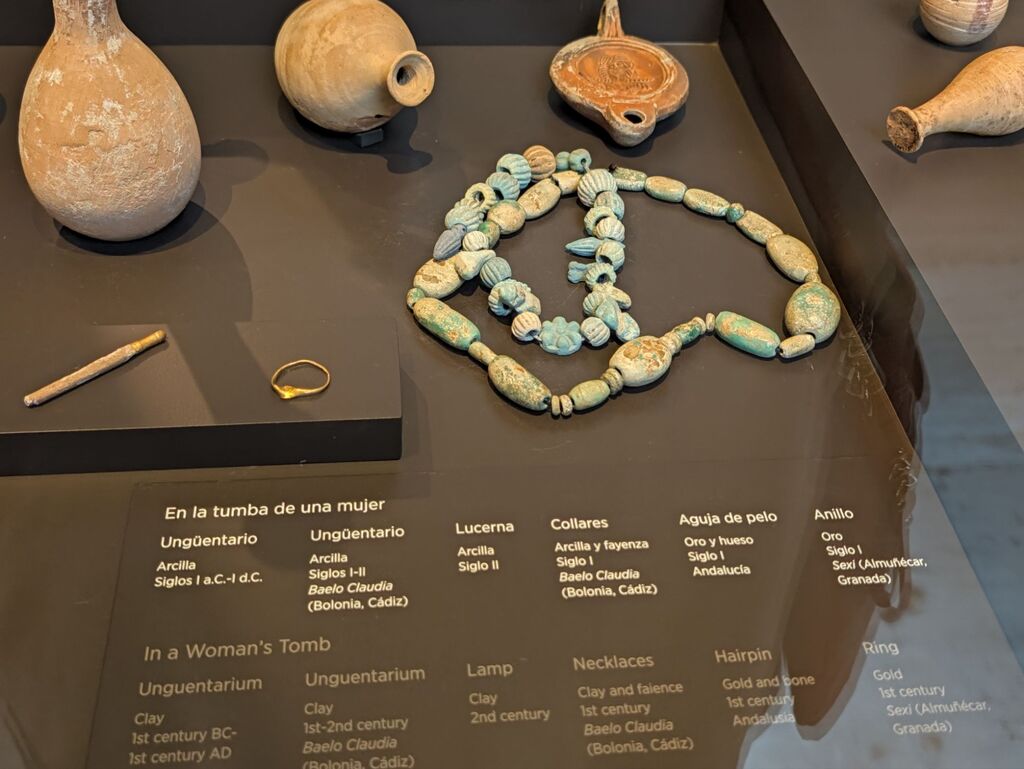
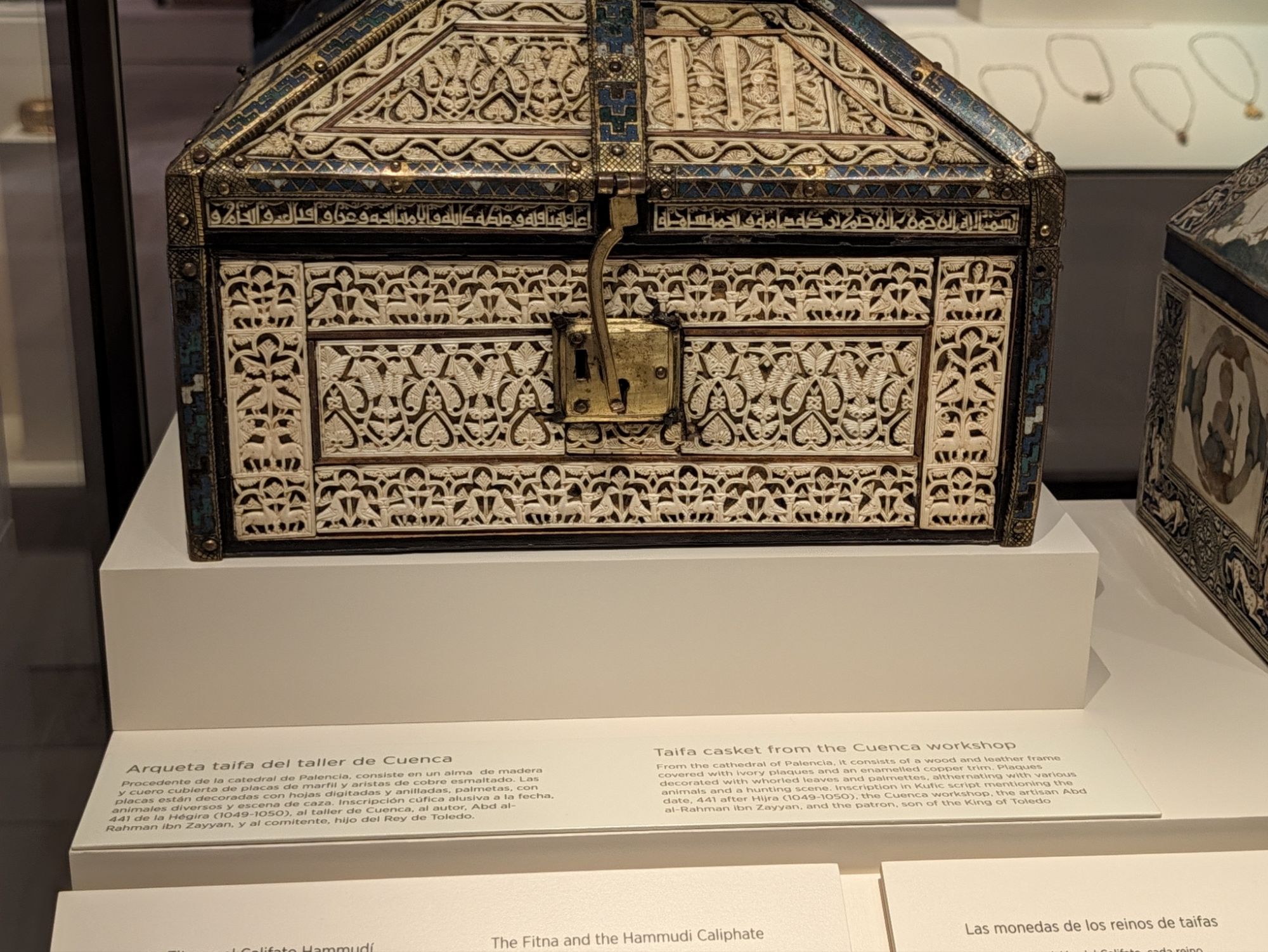
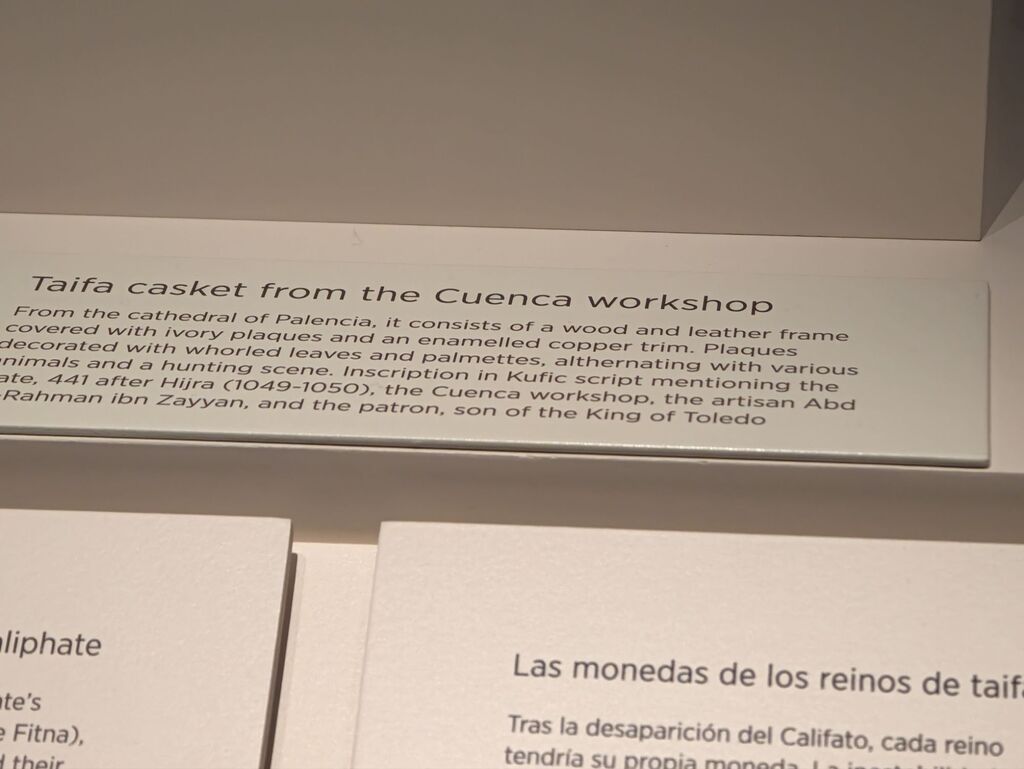
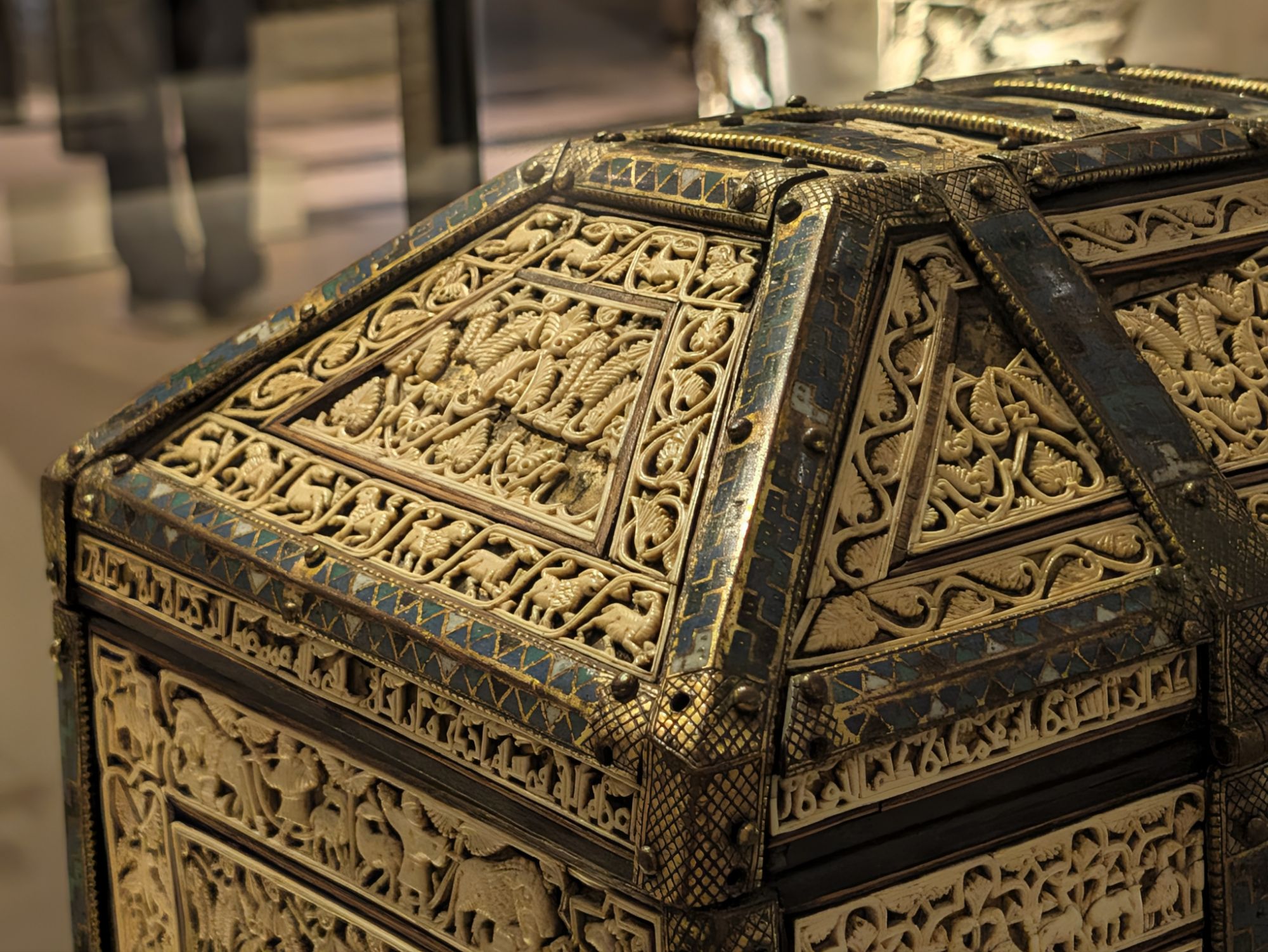
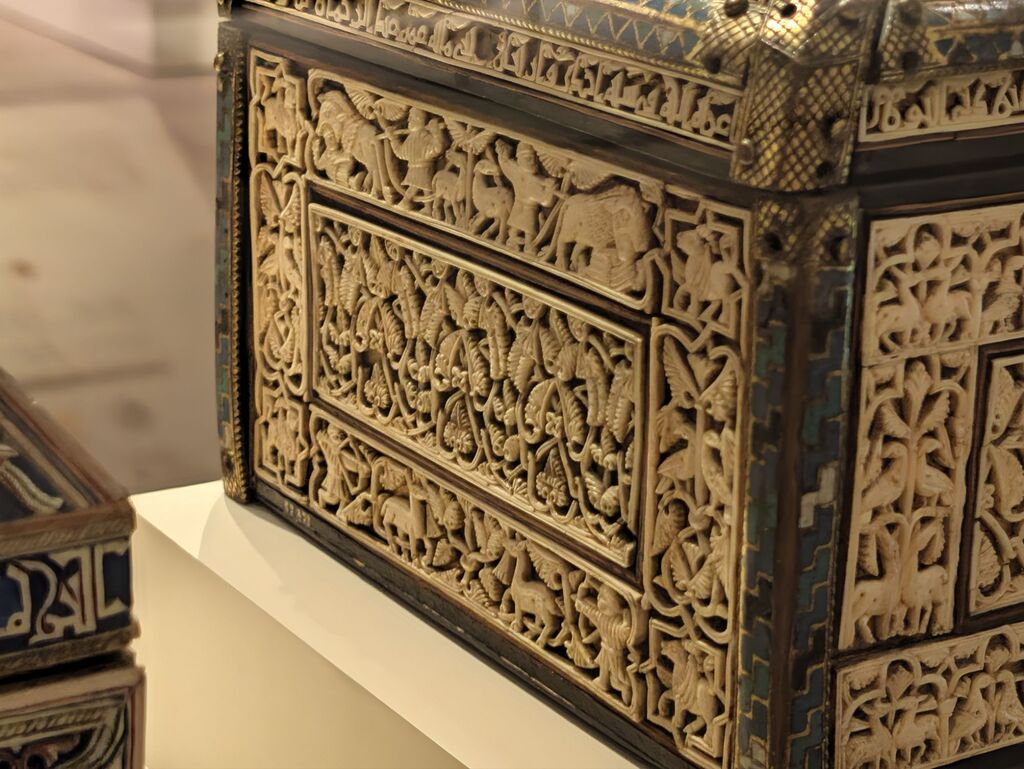
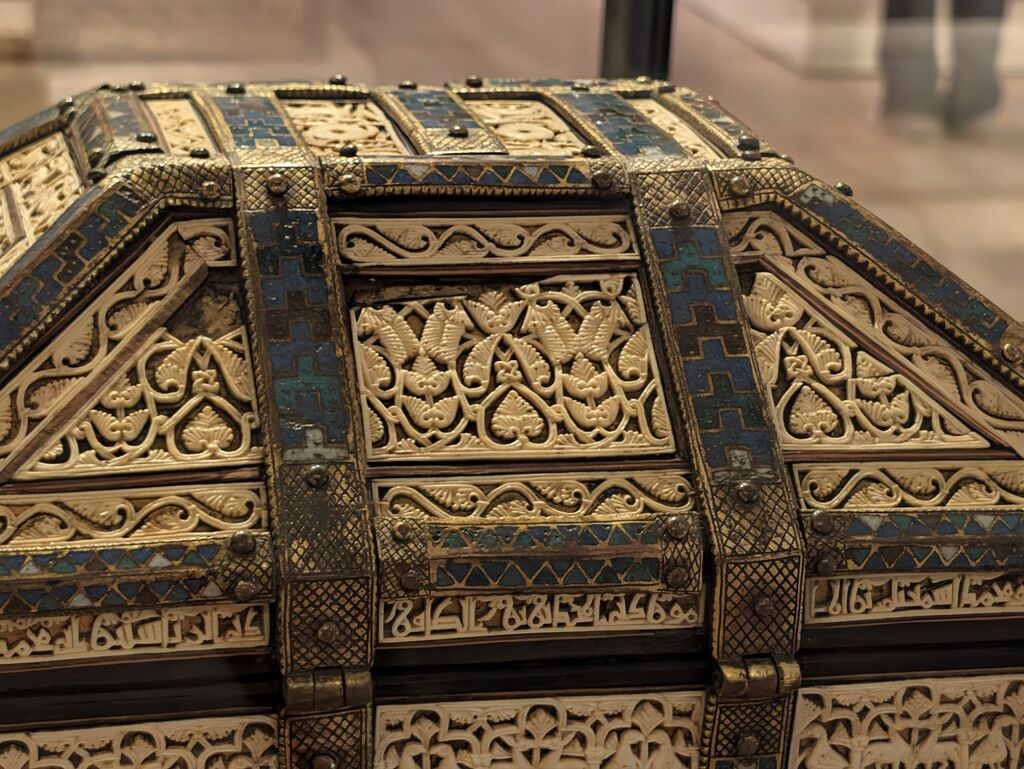
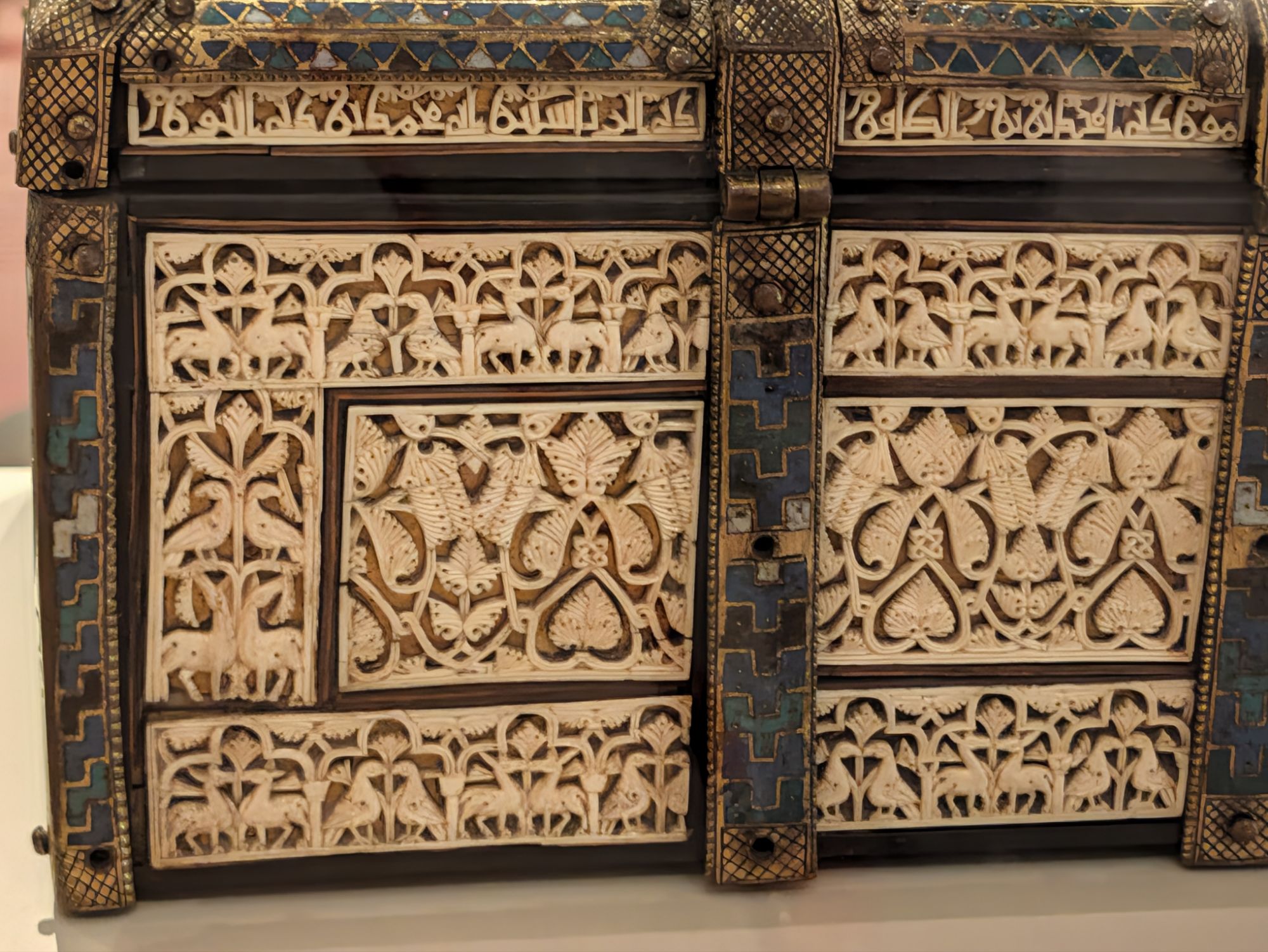
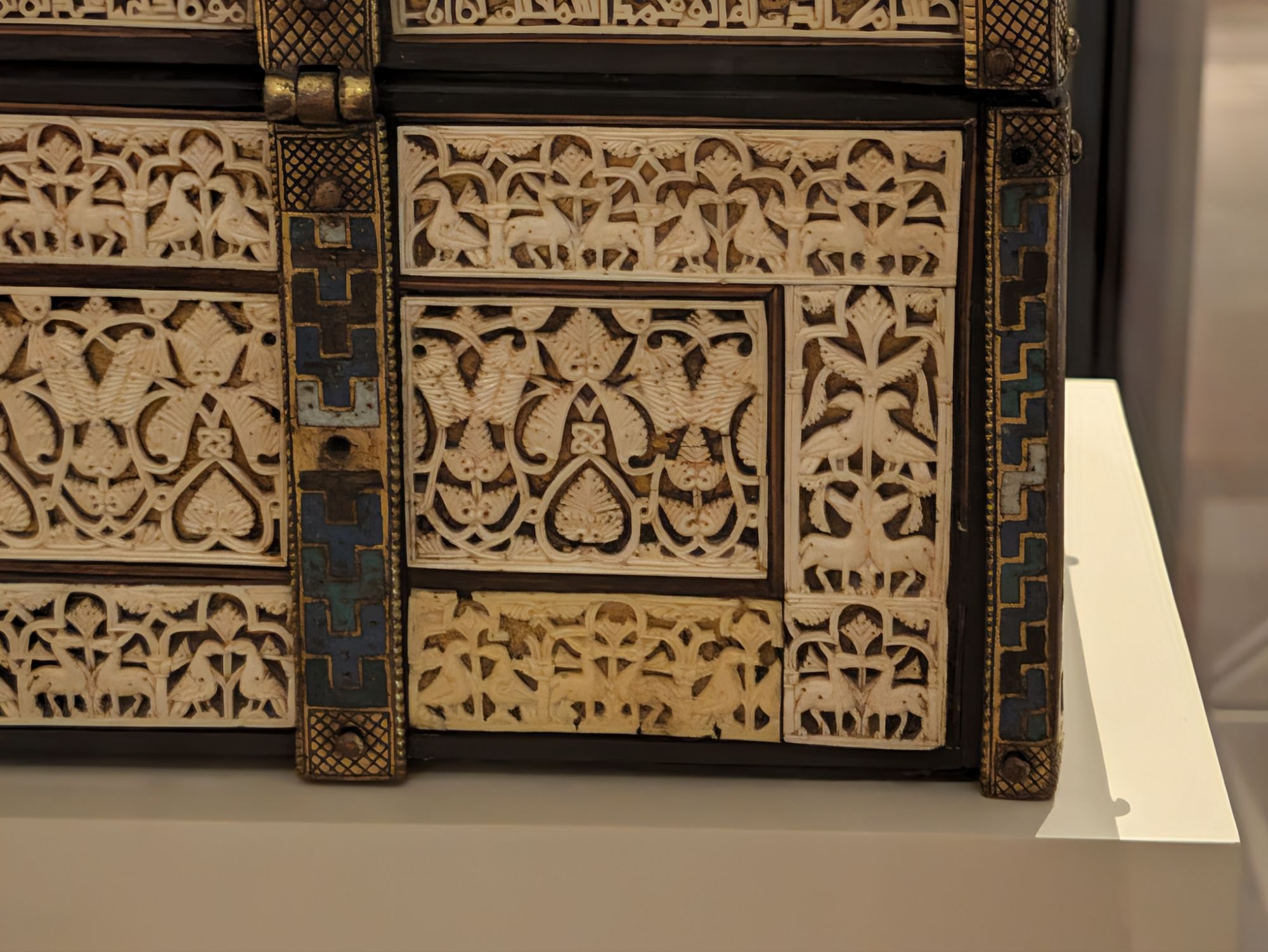
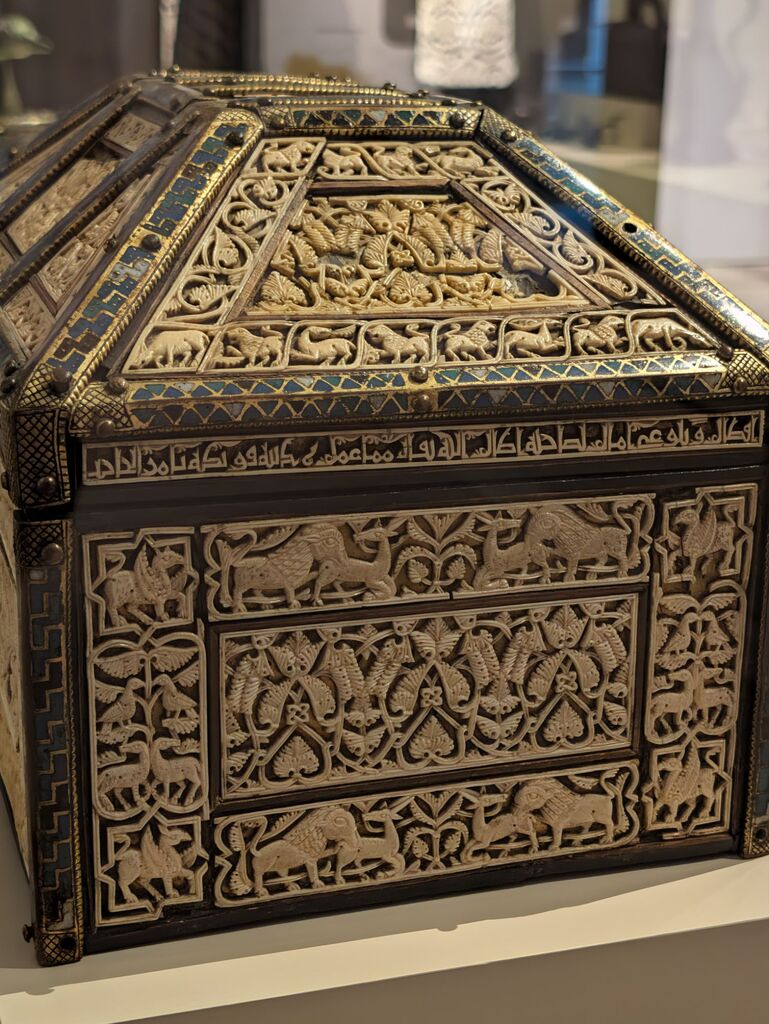
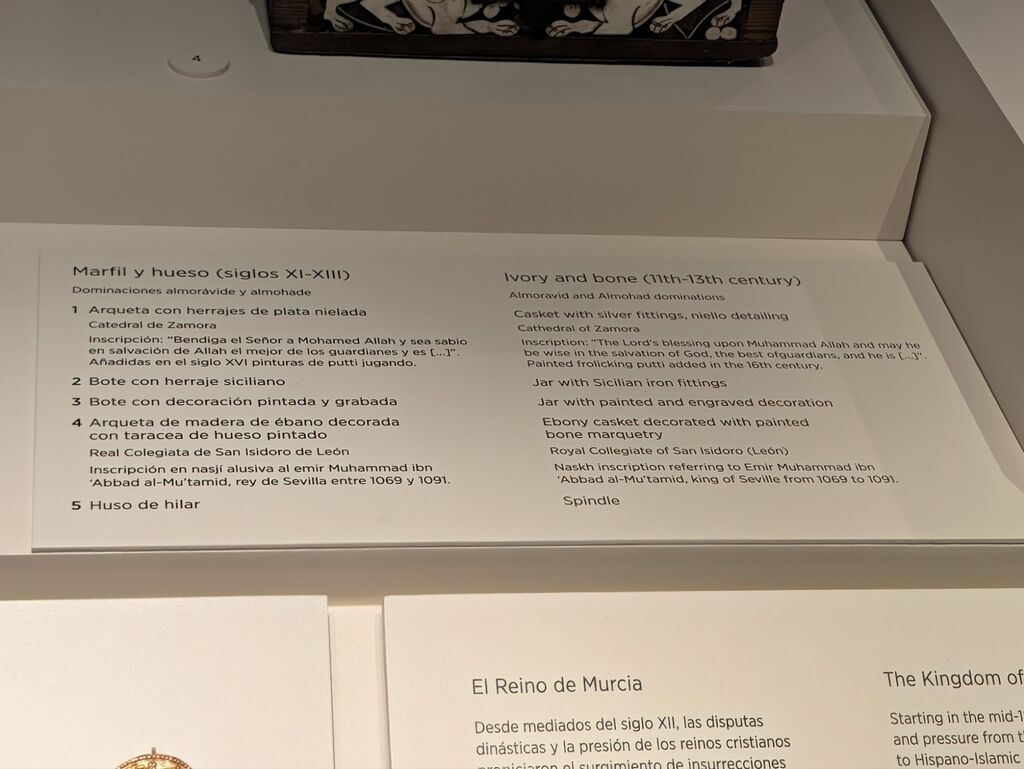
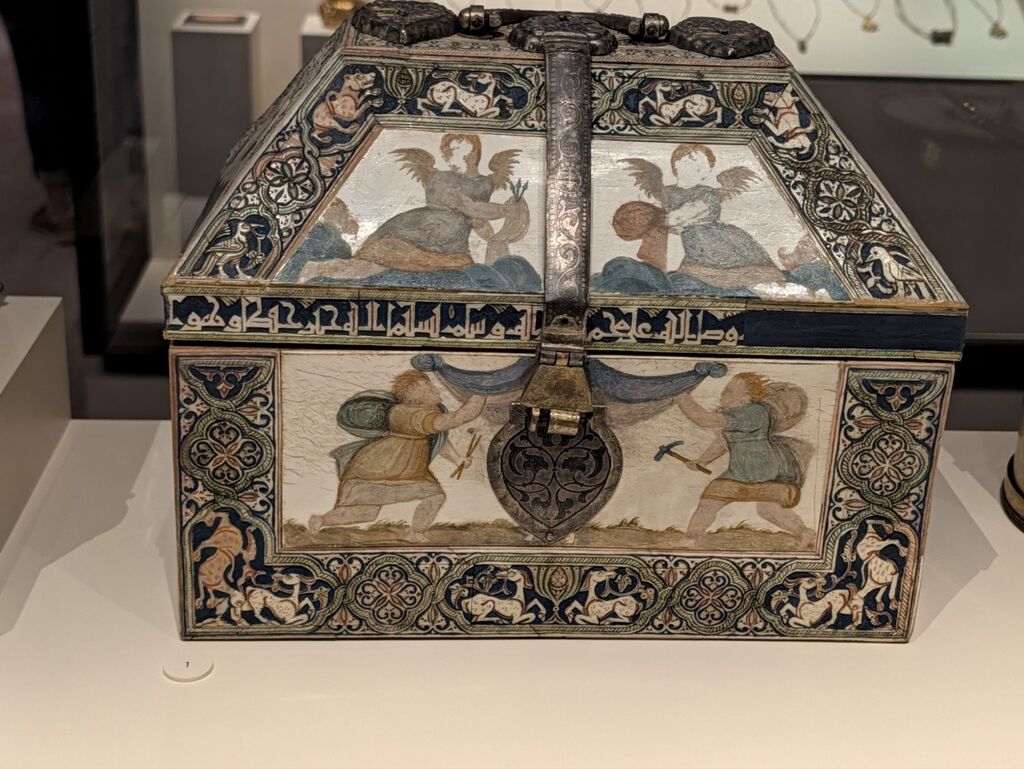
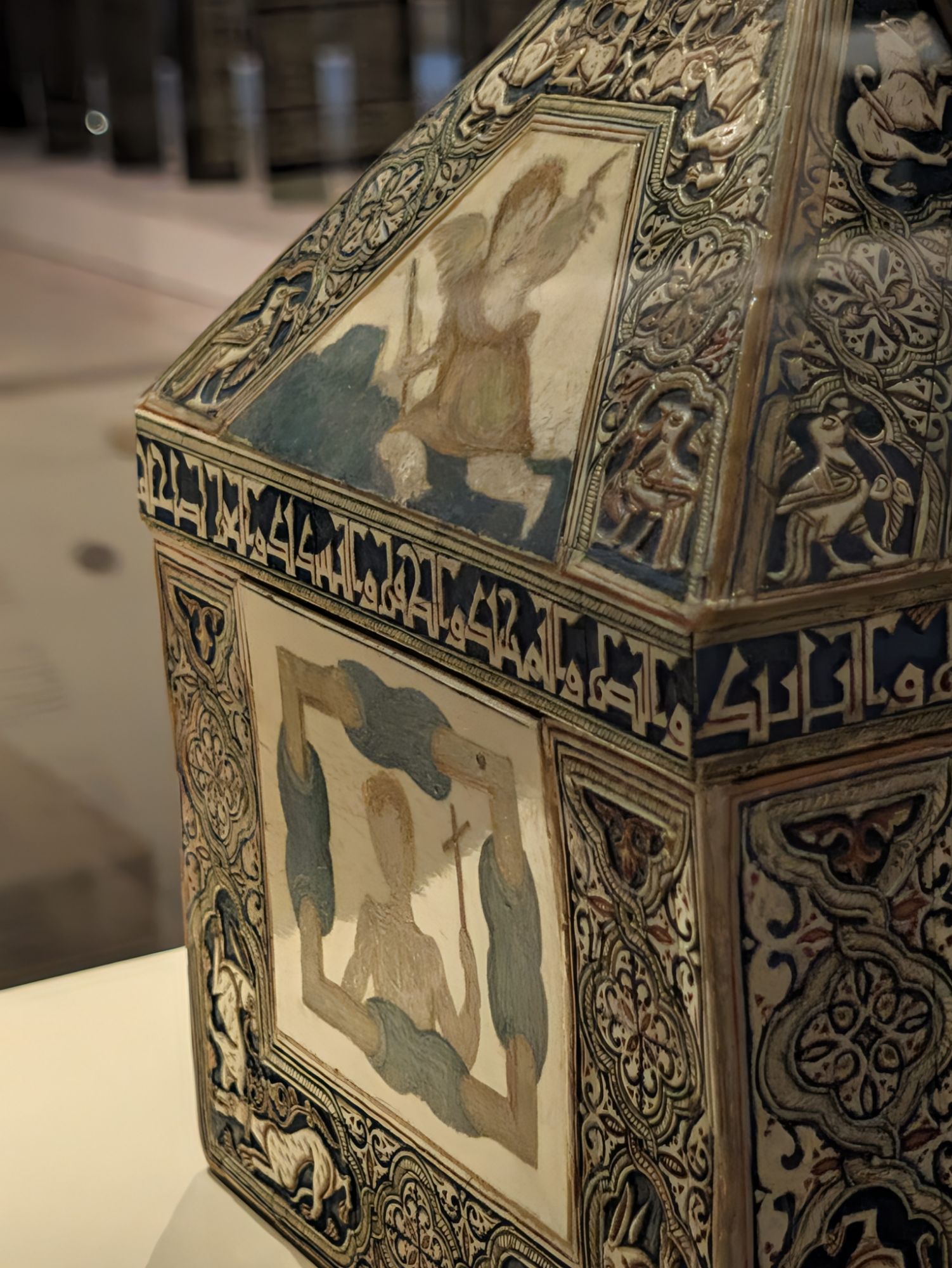
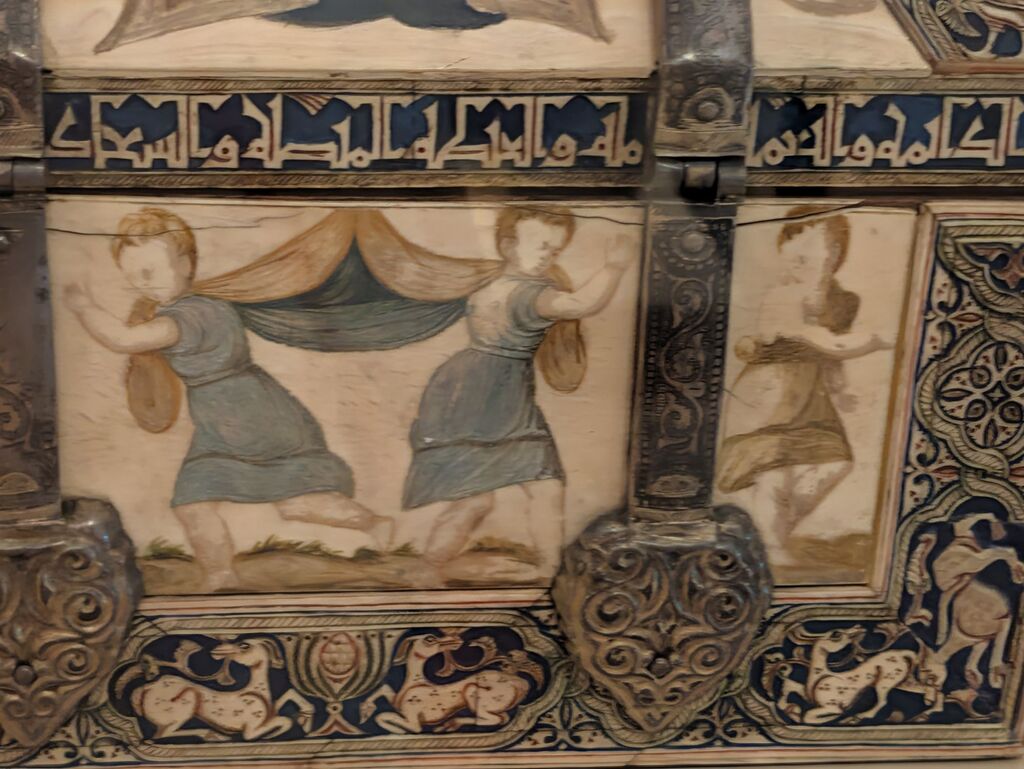
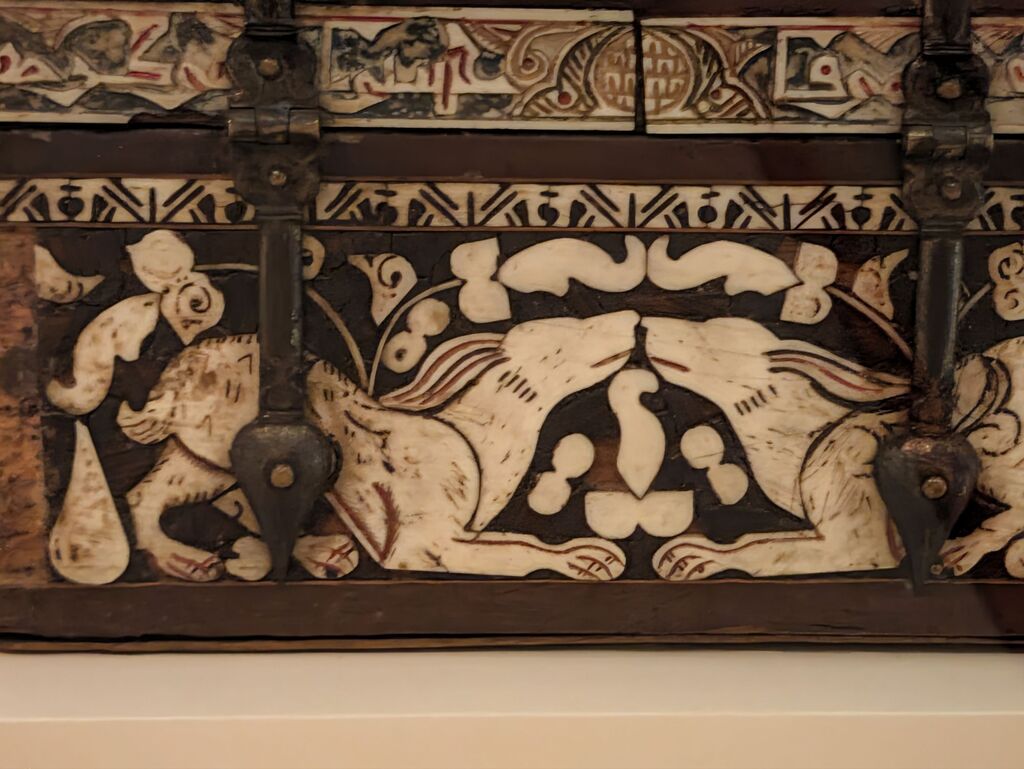
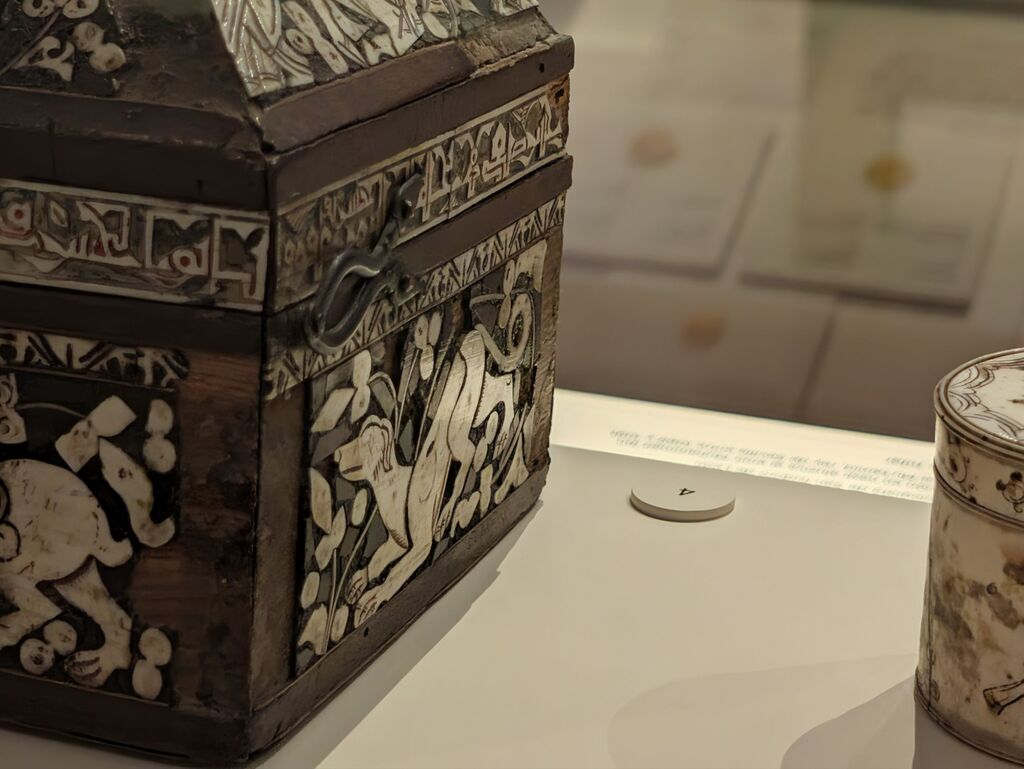
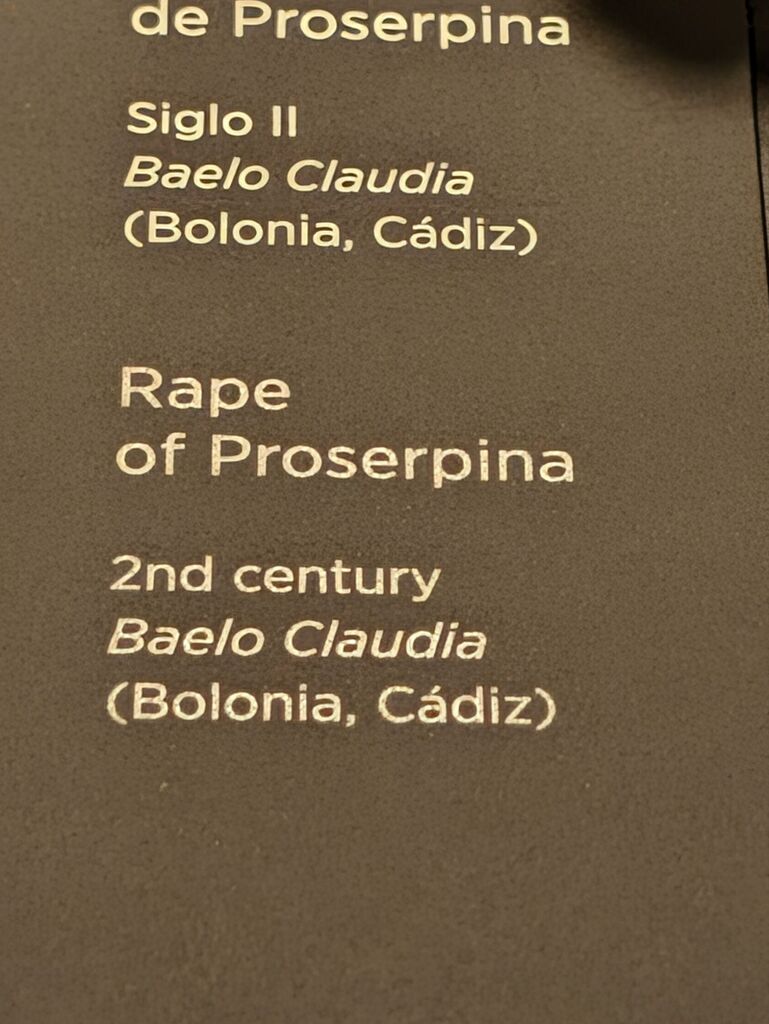
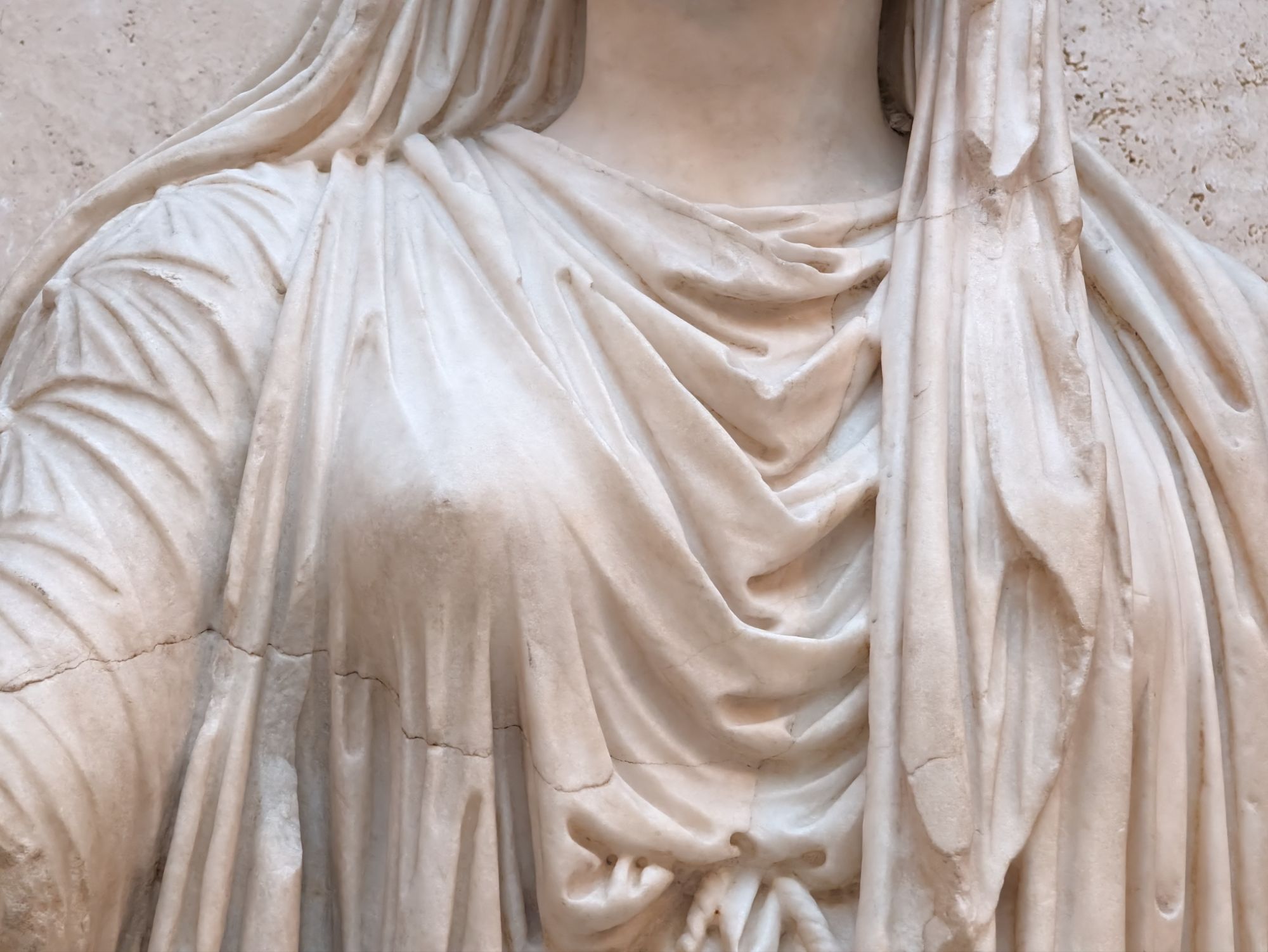
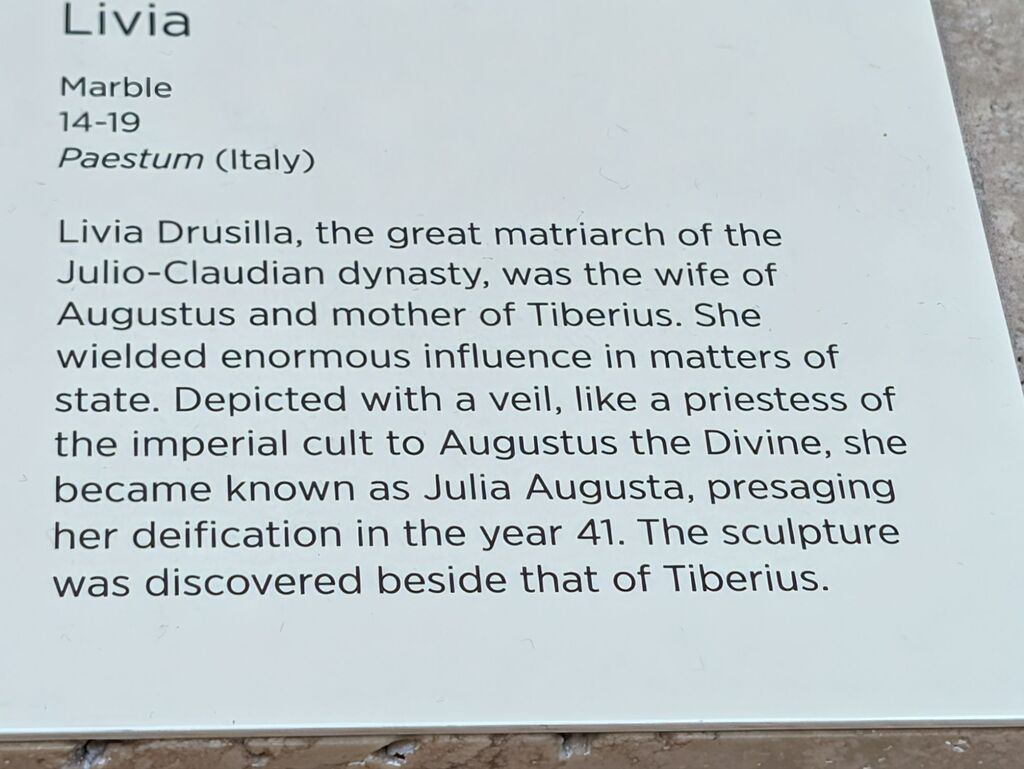
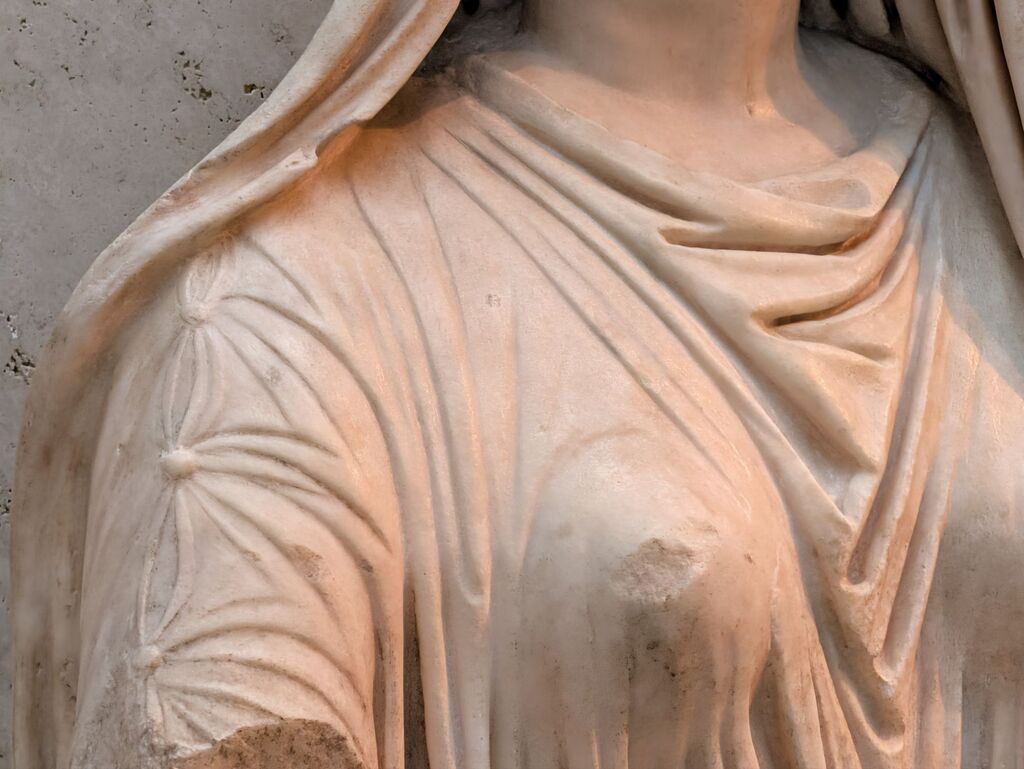
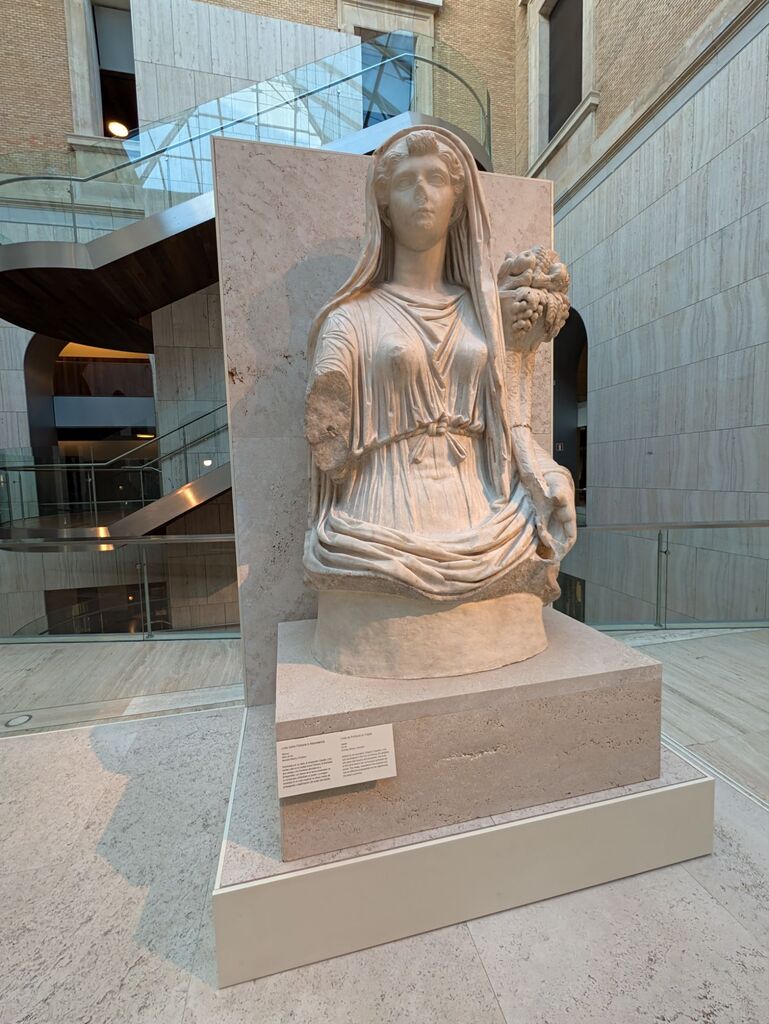
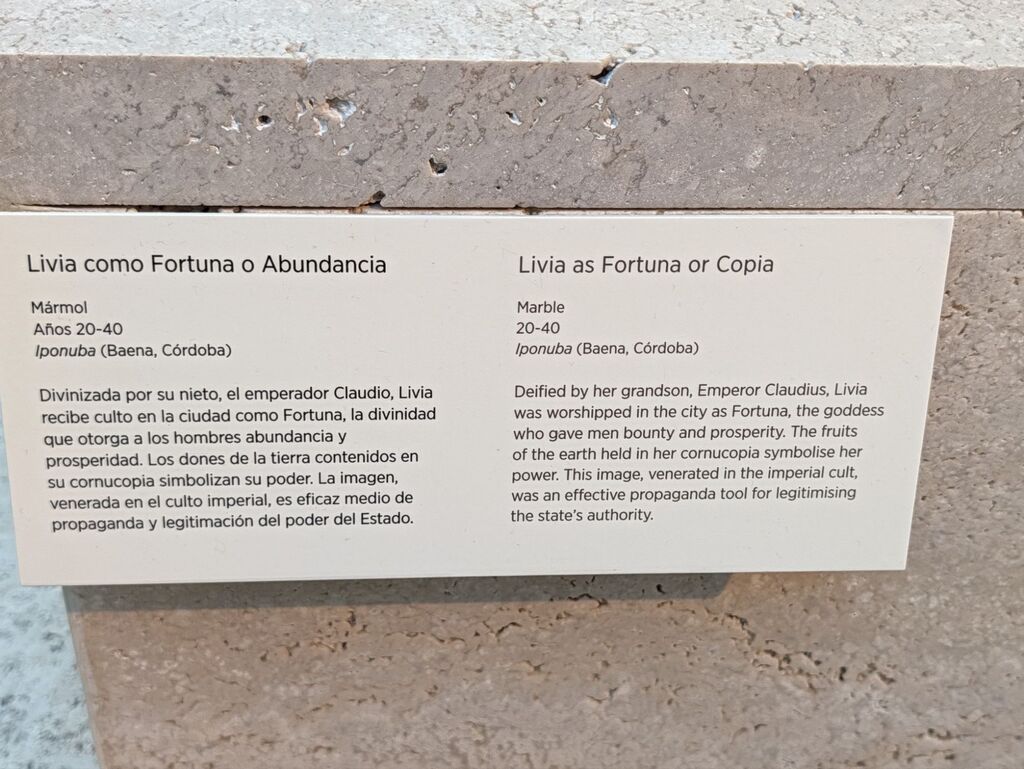
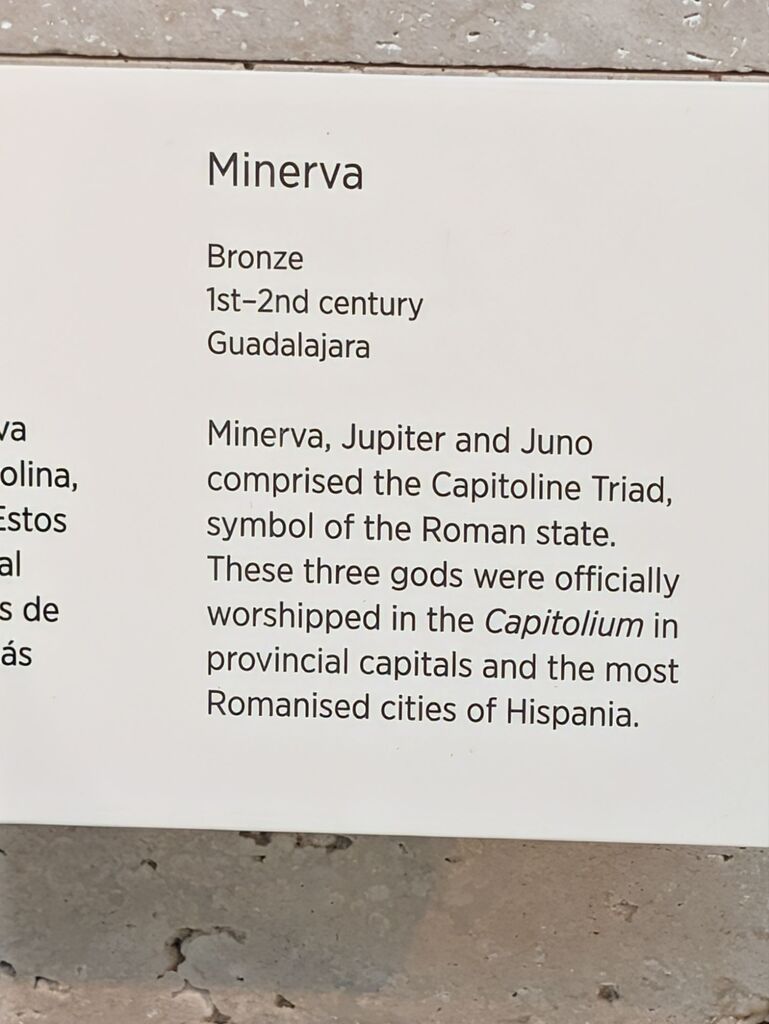
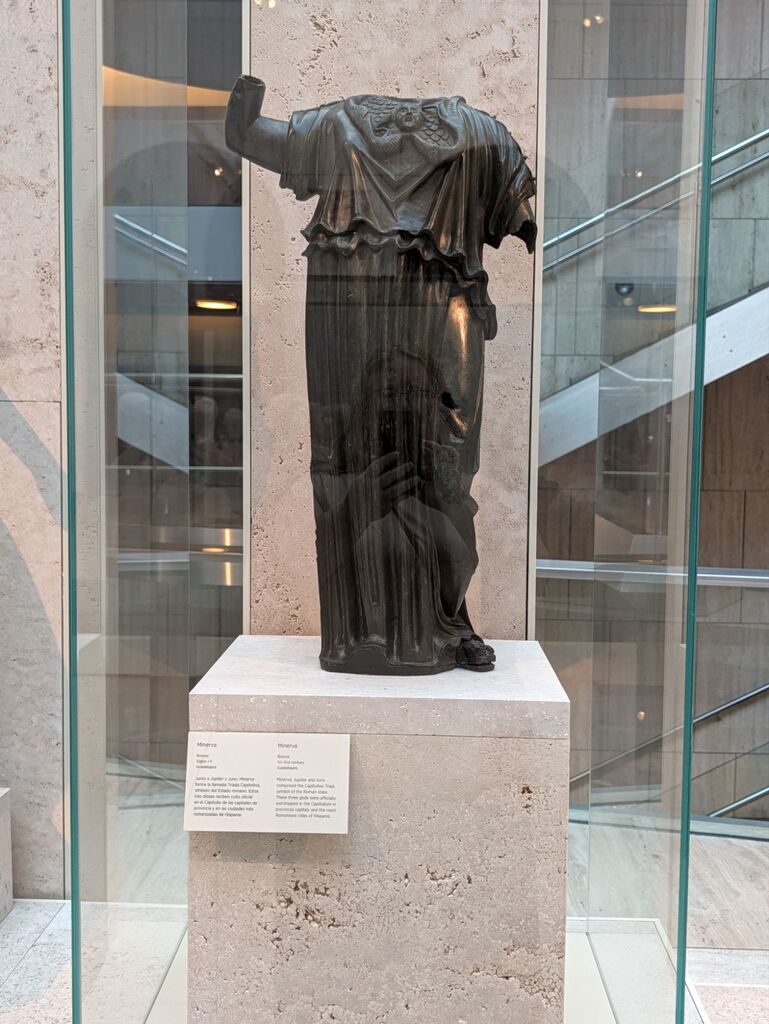
Front view of earrings and pendants Side view of earrings and pendants, trying to see if there’s anything on the backMuseum label that doesn’t give a lot of detail about these earrings and pendants Oooo look at these earrings with back fasteners!In which someone told me it was impossible for Romans to have had stud-type earrings with a pin and back fastenerMuseum label about bronze plaques of law installed on buildingsLook how thick that is!Oooo writing!So much bronze that was saved and not melted down for reuse!Standardized measurement template!Museum label for the 4th century modius standard measurementOh wow! It’s a whole water pump that not only hasn’t been melted down, but also looks barely corroded.Museum label for the water pumpSo much bronze just lying around the placeOMG it’s a preserved basketMuseum label for the basketsExtant baskets!Twisty rope/cord on this statue of Livia from PaestumMuseum label for Livia from PaestumCloseup of a flat belt that’s twisted and then tied in a nifty knot on a Livia as FortunaCloseup of a flat belt that’s twisted and then tied in a nifty knot on a Livia as FortunaContext of the statue of Livia as FortunaMuseum text for Livia as FortunaFancy Iberian belt on a relief from OsunaMuseum text about the reliefs from OsunaTwo actual beltsMuseum text about the actual beltsA friend is researching beltsMy coworkers will enjoy this display on pigments and dyes Narrow necklace of big chunky glass beadsMuseum label for the chunky beadsString of glass beads and labelBeads!Boxes and their constructionStraps?Tabbed straps?Narrow but straight connectionLooks more like the fabric is rolled than hemmed or taped Pretty typical appearance of sleeves with intermittent buttonsShoulder and sleeve construction
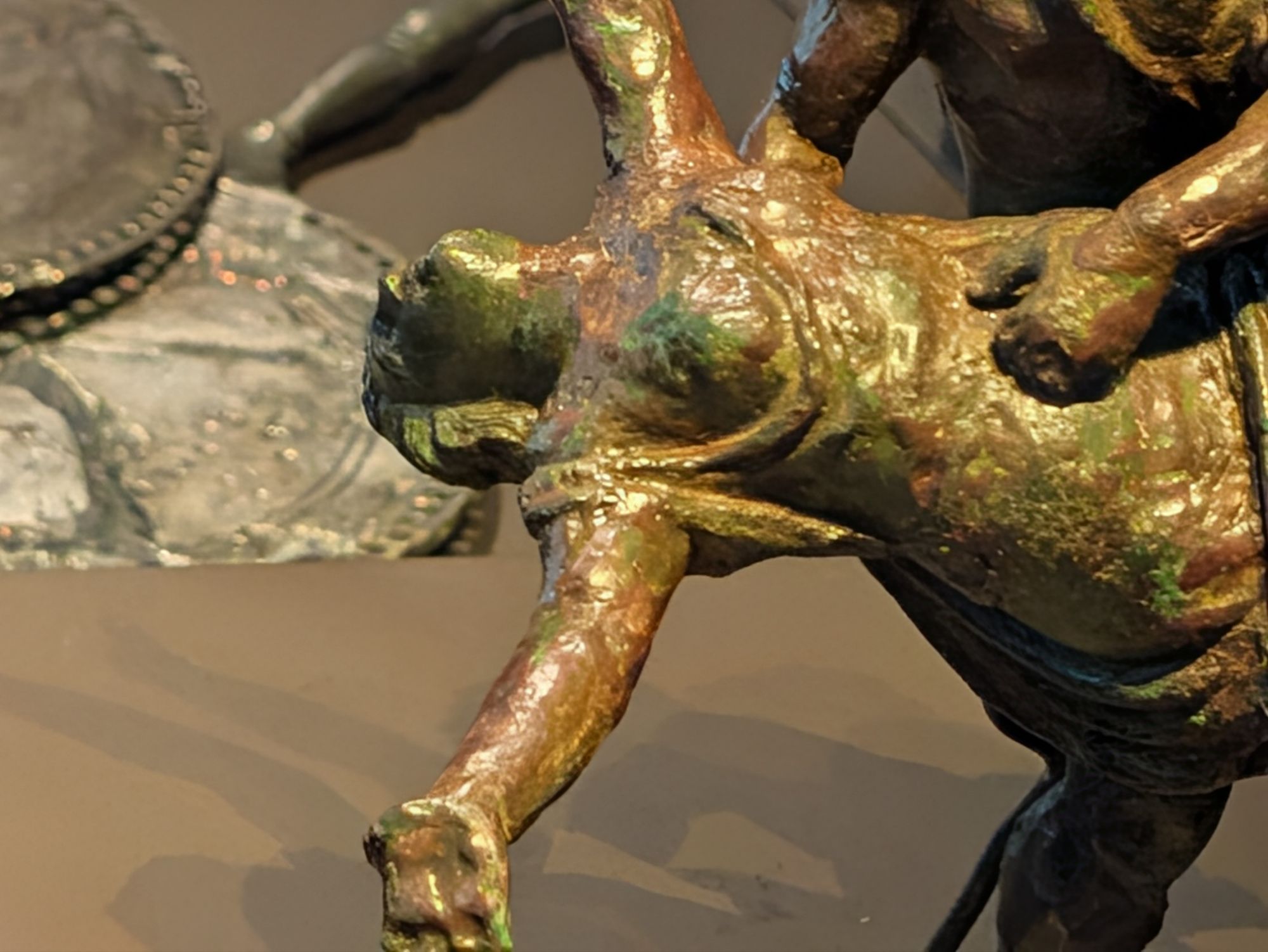
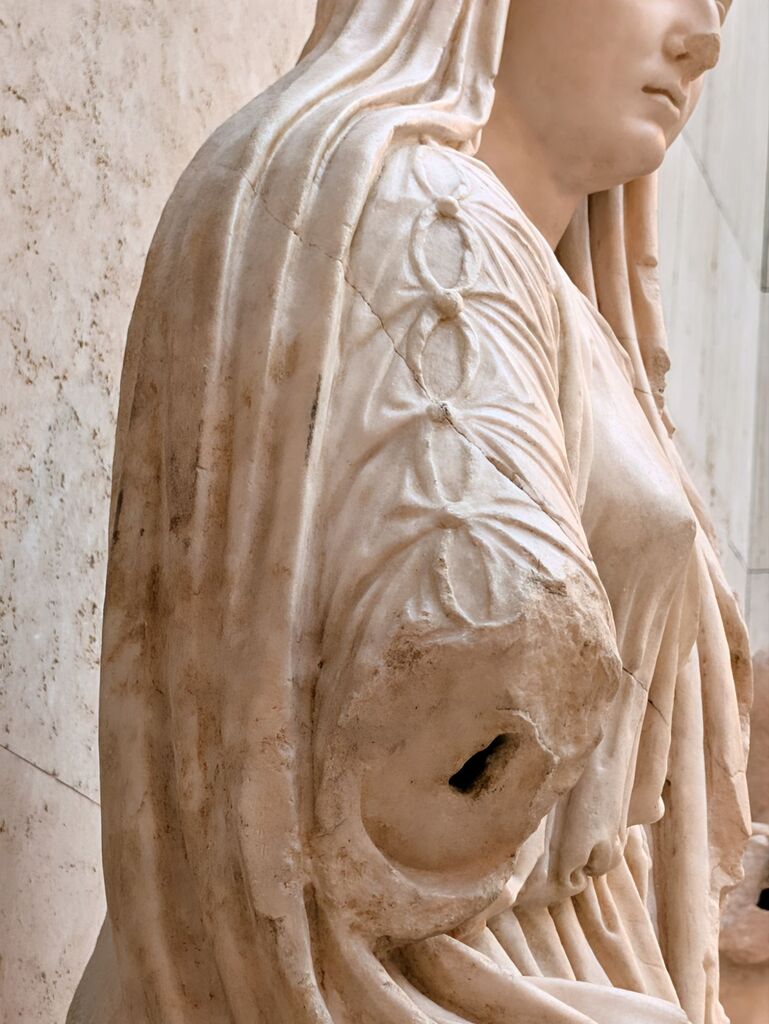
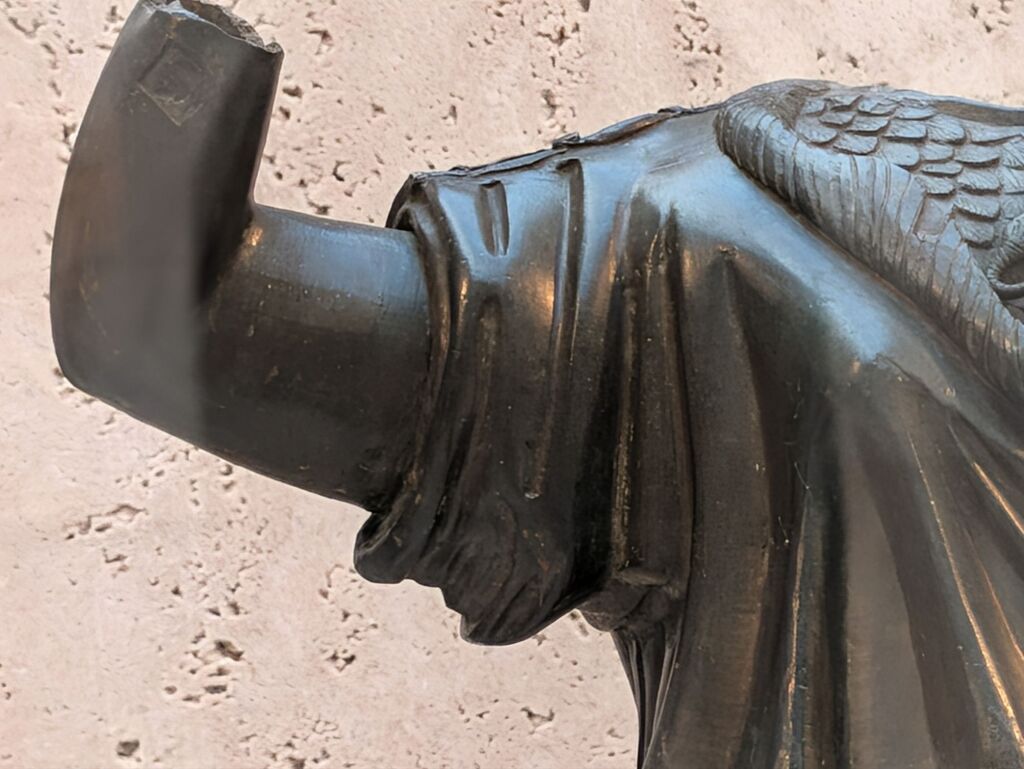
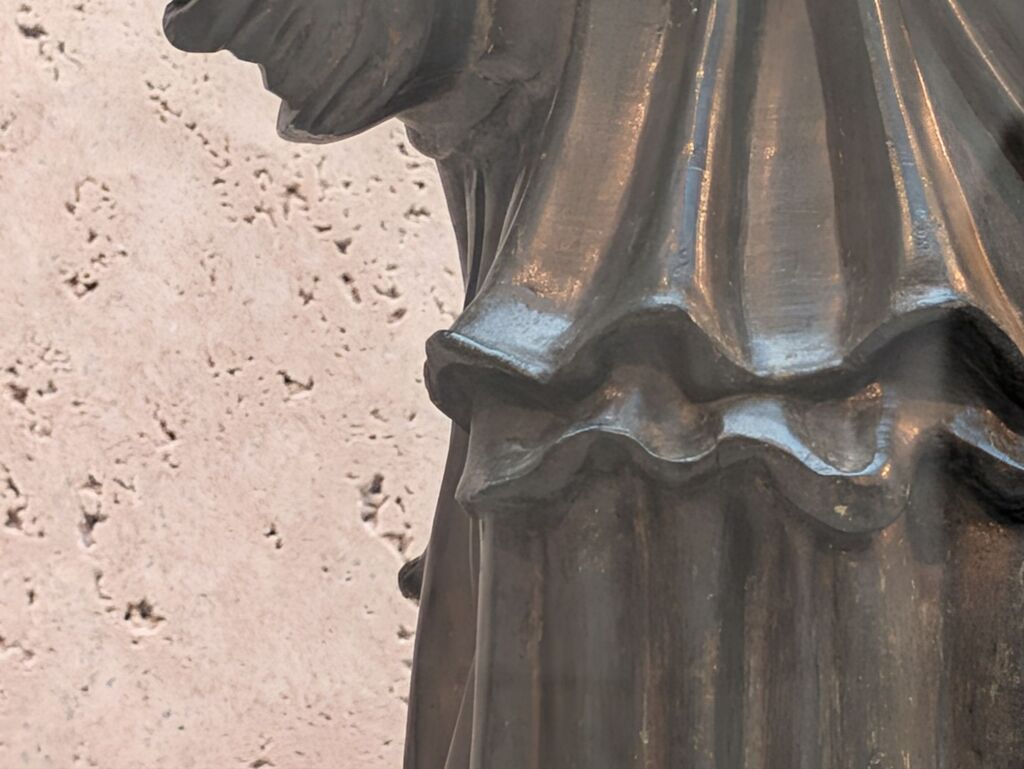
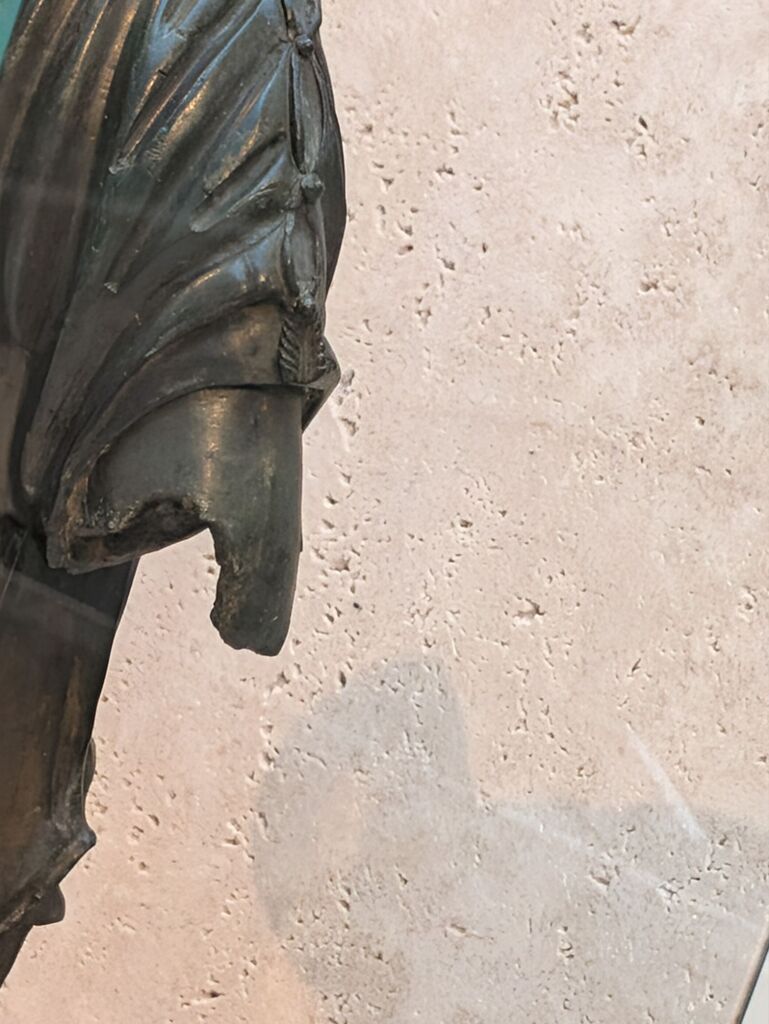
Look at this bronze sculpture! Do these look like sleeves to you? Not from draping rectangles and no evidence of as assist from cords tying into place. I think they might be sleeves.
And then after all that culture, I needed another snack!
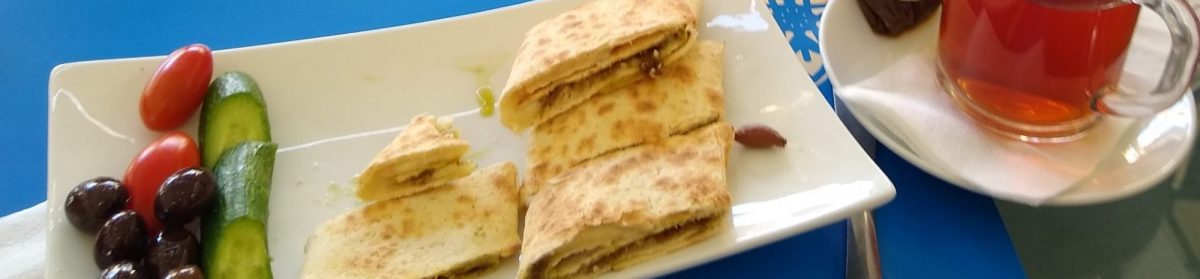
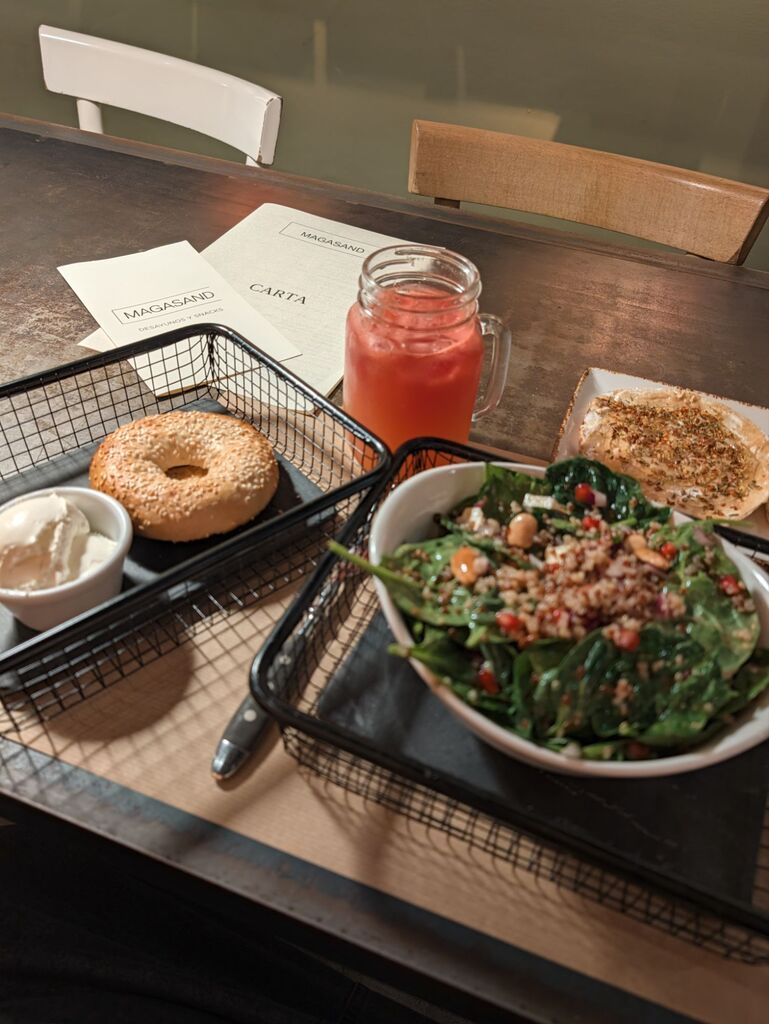
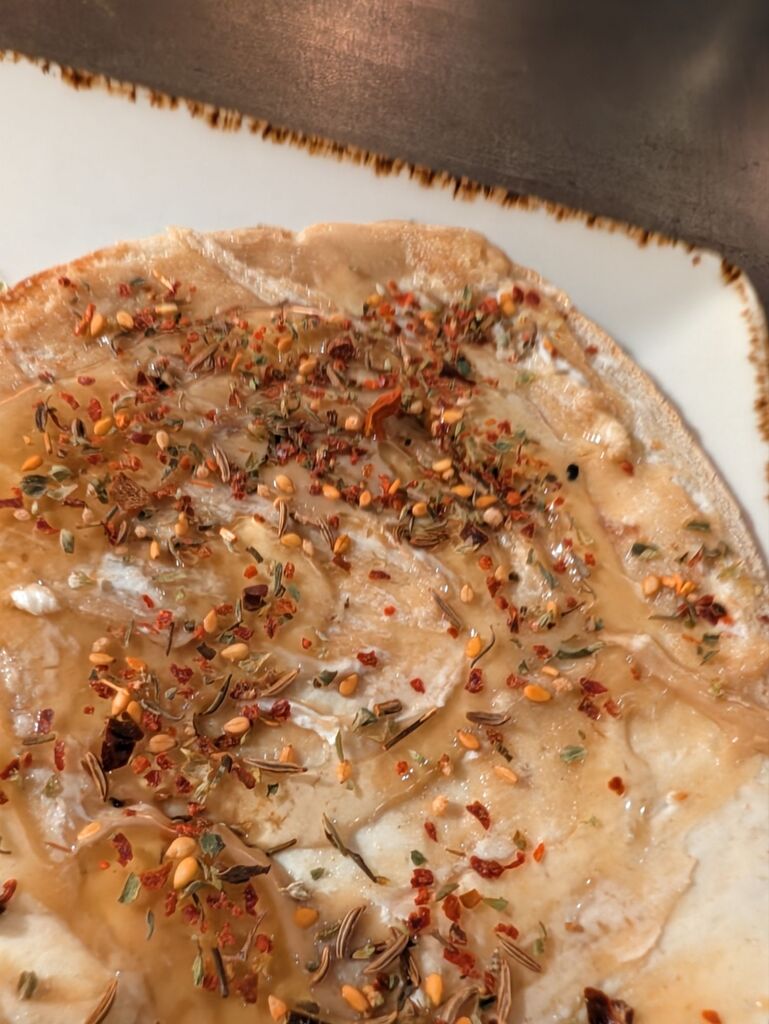
A small salad, a sesame bagel with cream cheese, a Lebanese flatbread with honey and zaatar, and a juice concoction.
Magasand Cafe was one of the only reasonably priced restaurants in the neighborhood of the archaeological museum – a neighborhood also full of designer boutiques like the Loeve store, all of them way out of my tax bracket.
This cafe is mostly sandwiches and art magazines. So I ordered a salad! It was an excellent salad, filling and well balanced. I also took a chance and ordered a bagel since they dared to put it on the menu. It was not the platonic ideal of bagel, but way better than I was expecting. Better than most bagels I’ve tried to eat in Boston.
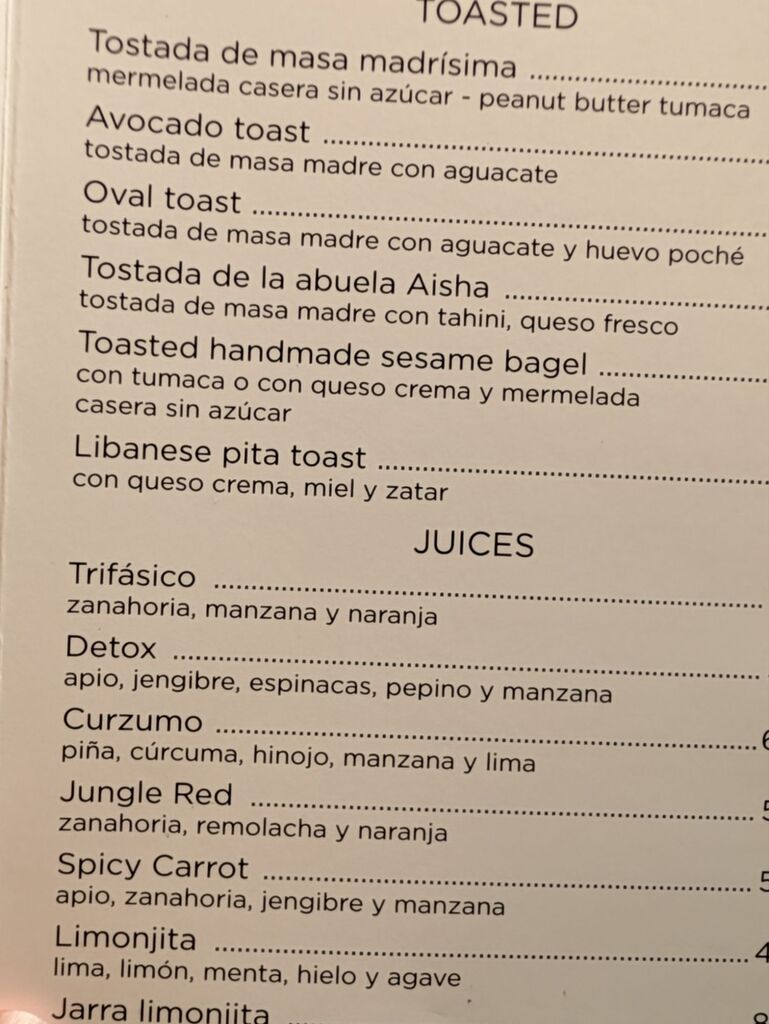
But the most intriguing thing was the Lebanese flatbread with honey and zaatar.
The menu very clearly saying it is honey and zaatarLook at this zaatar! It’s got caraway seeds in it! And maybe five leaves of thyme.
It might not be traditional*, but it did complement the salad very well.
*traditional with the understanding that there are many variations through time and geography, so I might also just not have encountered this tradition before. But if I understand the vibe of the cafe, it was more of a deliberately untraditional adaptation of the concept.
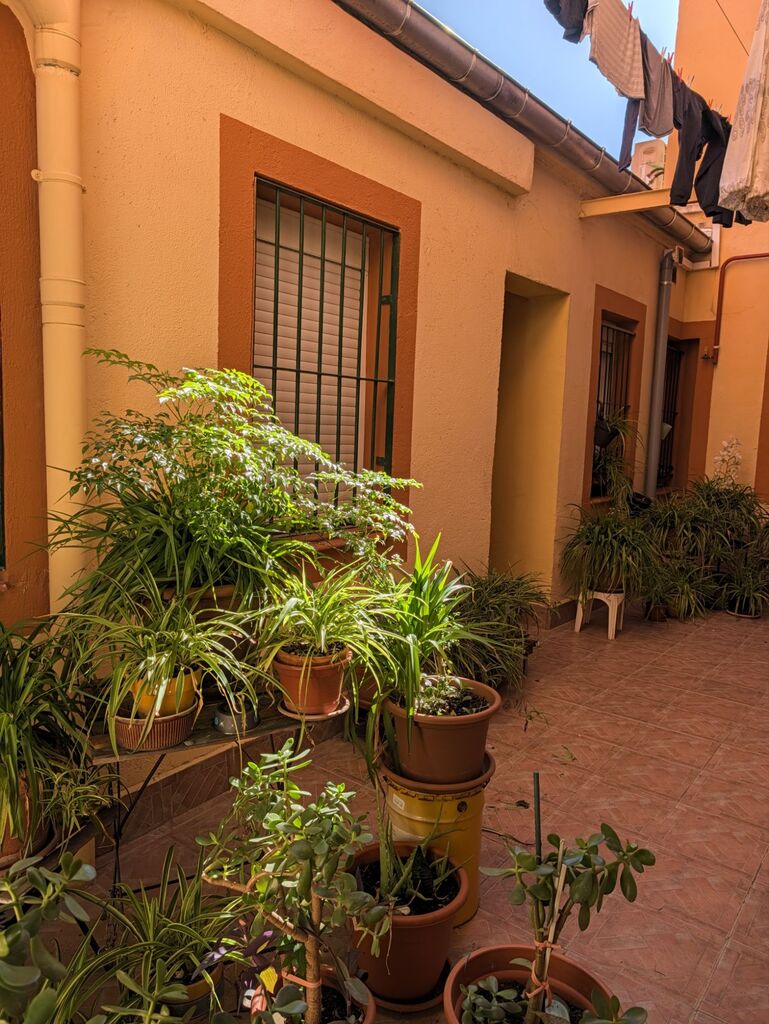
Plants and laundry in an open air courtyard just off the staircase in the middle of the building. The walls are a warm orangey yellow and the trim is a matching brownish orange.
I promised you a picture of where I’m staying. Here’s the lovely open space in the middle of the stairs in the middle of the house. Luckily (especially for an AirBNB), it’s only up one flight of stairs.
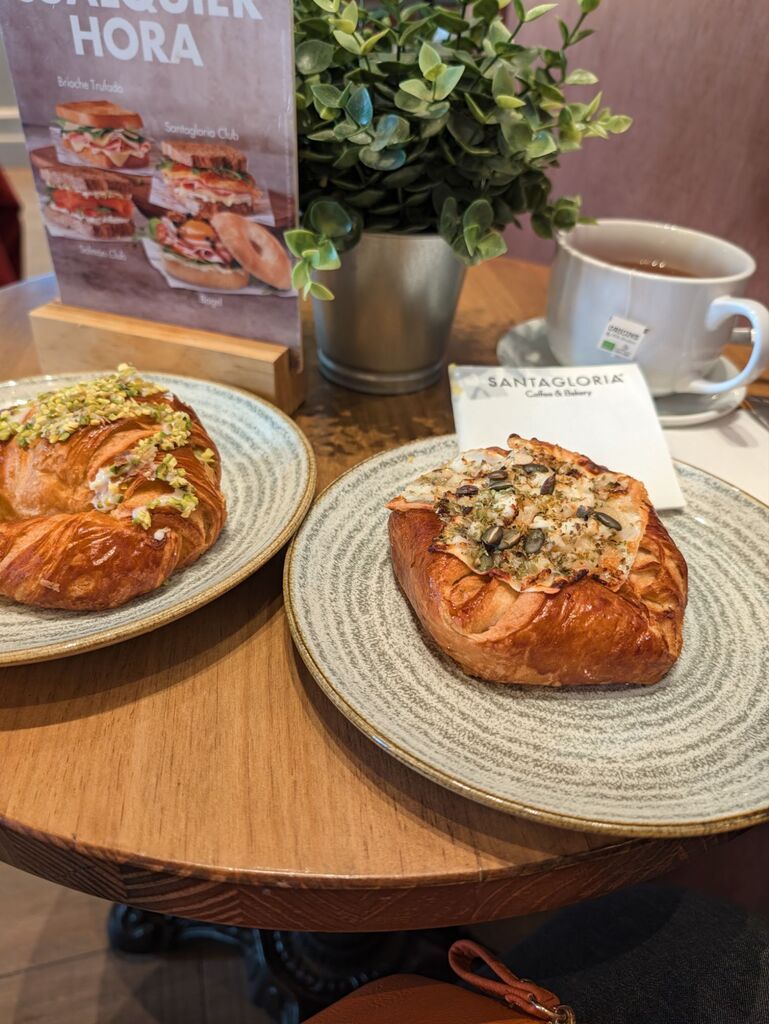
A cute little round table with a fake plant and a flyer advertising the restaurant. There are two plates and each has a pastry. There’s also a cup of tea.
Went to a comfy looking cafe a block away from the place I’m staying. I had a savory 4 cheese flaky pastry with pepitos on top. There was also a thin smear of pizza sauce inside that elevated the tastiness. And then the sweet pastry was a pistachio croissant. An excellent use for the pistachio butter that is now so much more available since the Dubai Chocolate debut. These should catch on more places – it was excellent. The tea was a Darjeeling.
I’m going to list some relevant Youtube links because the embedding isn’t working right now and I’ll play with that later
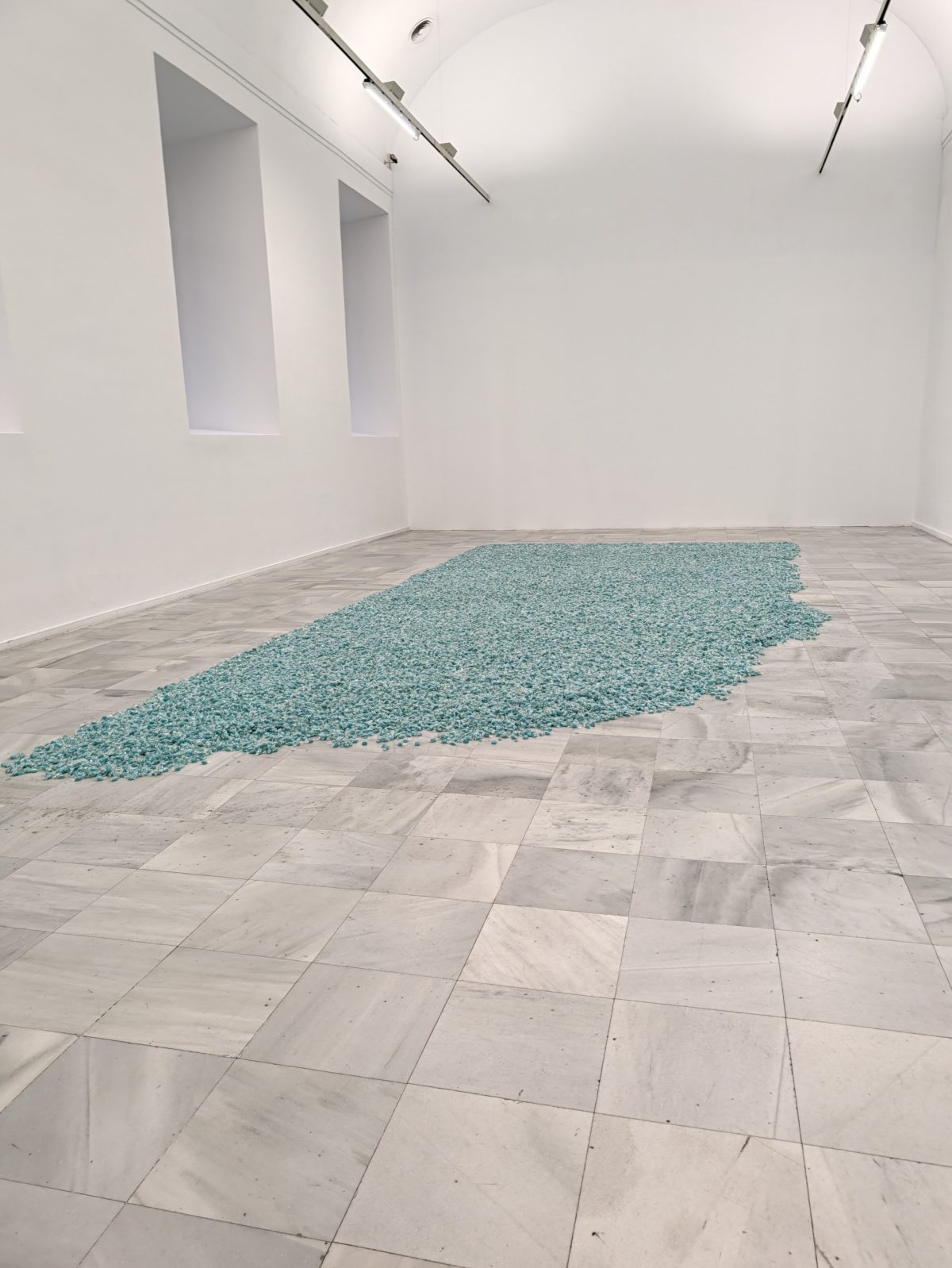
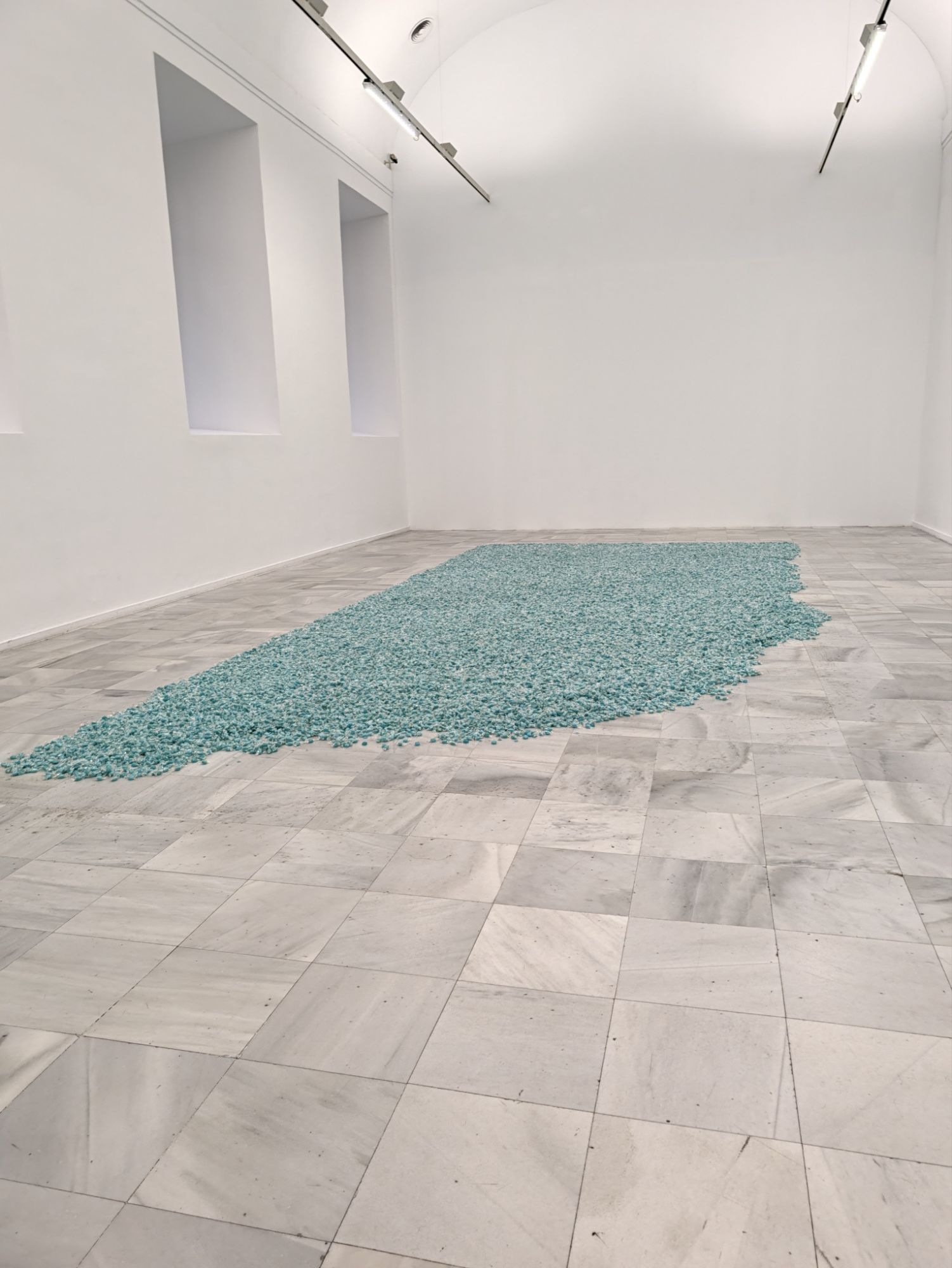
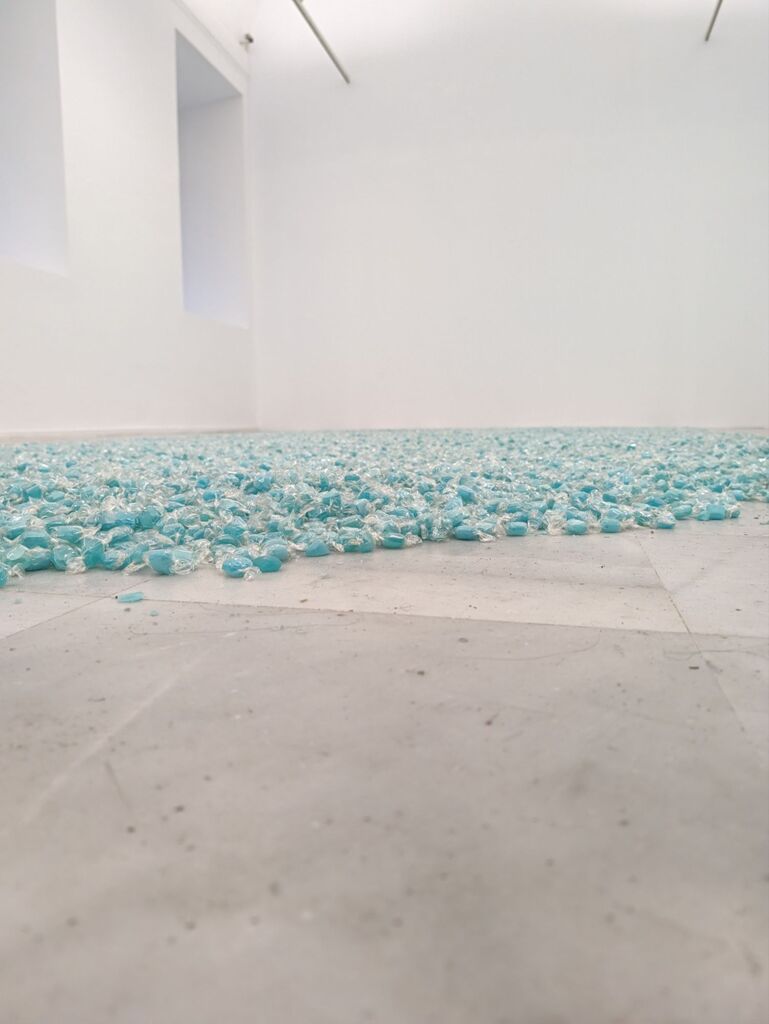
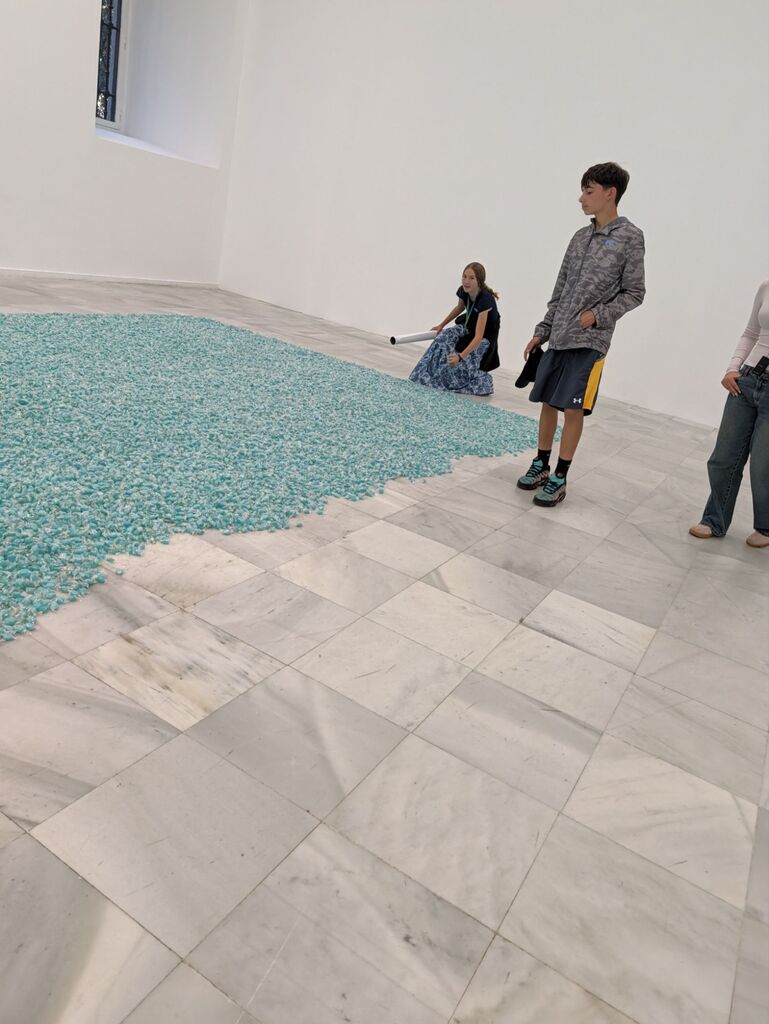
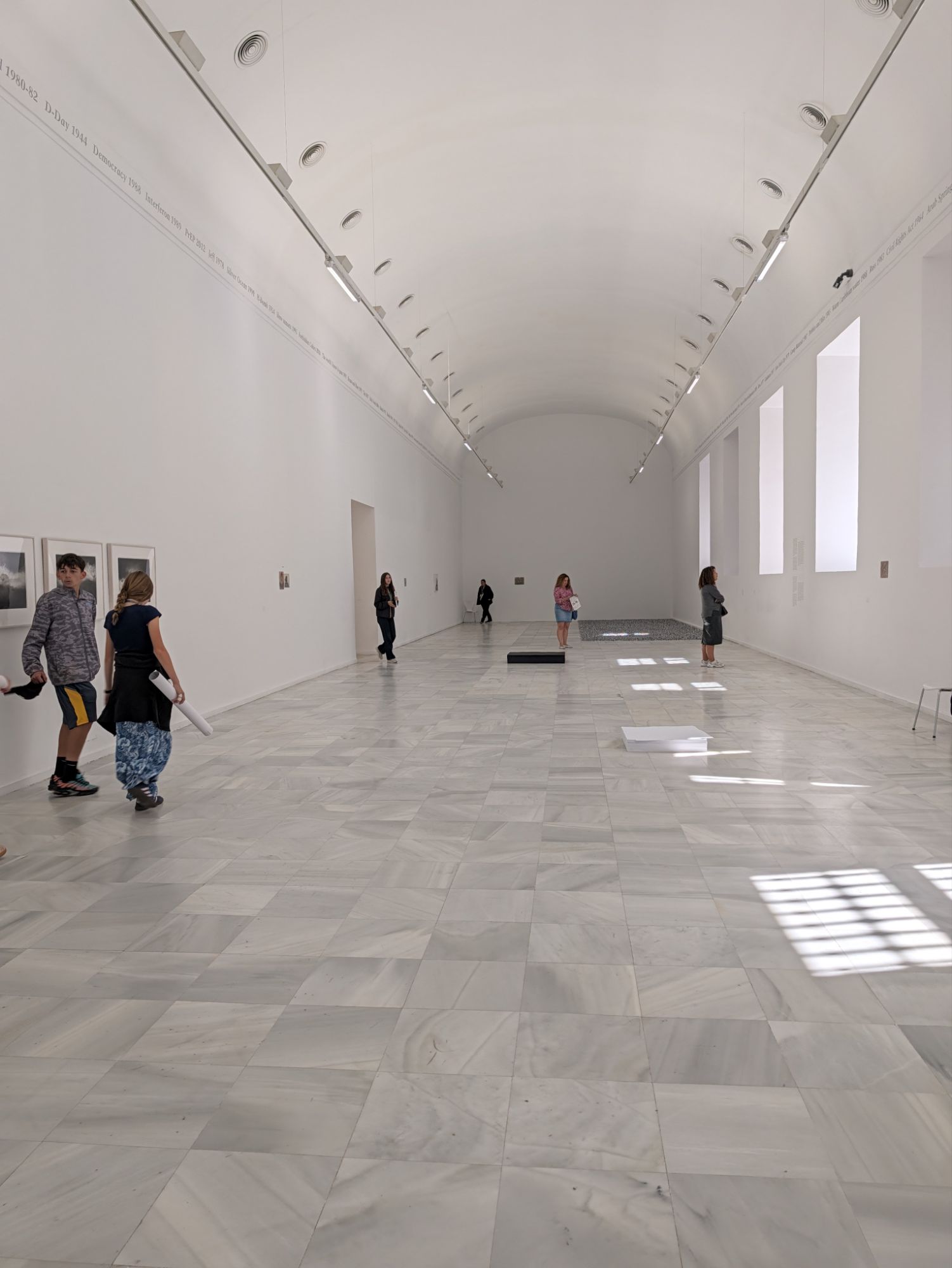
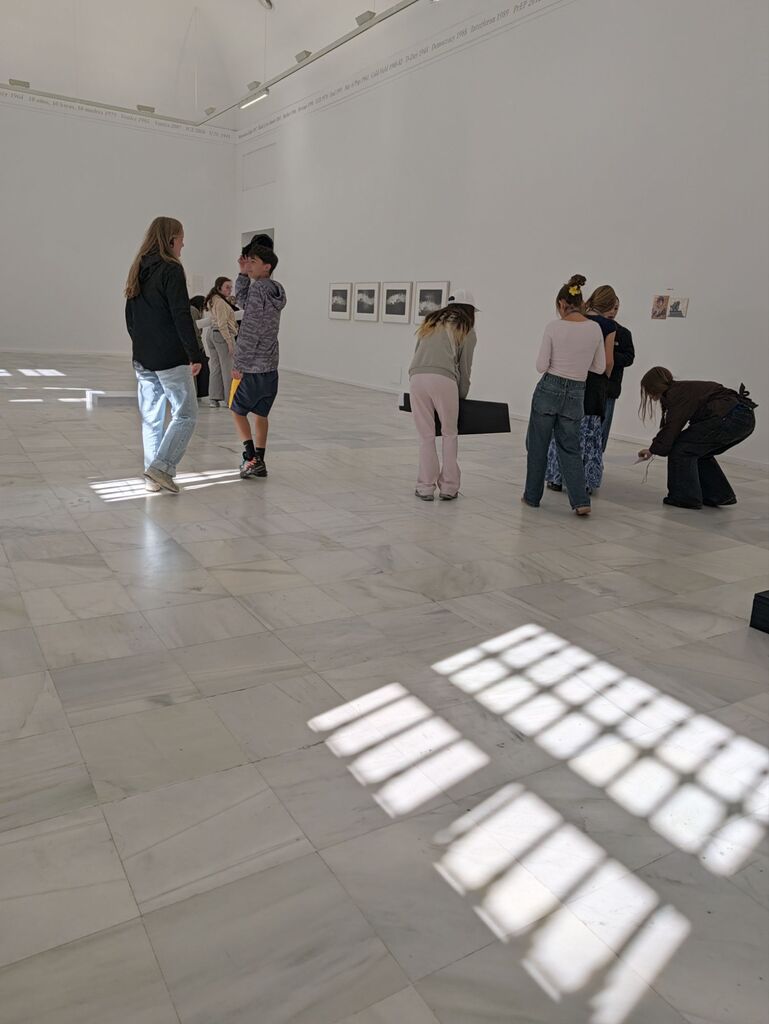
Room of blue candiesGetting fancy with my camera angle on the blue candiesSome children interacting with the blue candiesA long room with a rectangle of floor in the distance covered with black liquorice candiesCore tenets of displaying candy sculptures
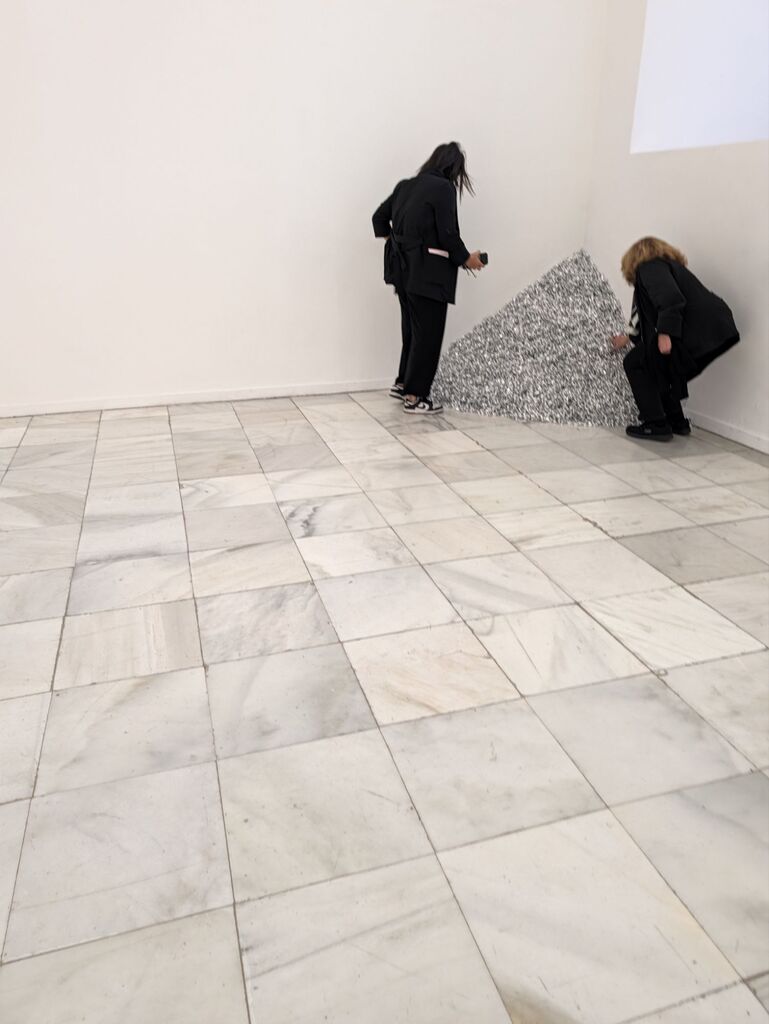
Two museum guards interacting with a pile of silver candies
Okay, so the candy sculptures are all both untitled and have names. They are all an infinite supply that you can take from, but they also all have an ideal weight (or ideal height, or original weight).
I’d been wondering how this would go because the last time I was in Madrid, I went to the contemporary art museum and saw their display for Steal This Book with a guard to tell you not to even think about stealing one of their many copies.
There were three of the candy installations in this exhibit. The blue ones had a room all to themselves right when you enter the gallery. It’s a beautiful room, well suited to making this feel significant. There are three kids arguing when I get in that you really can take the candy and then grabbing a fistful. A guard comes over – with another guard, and they are like, “Yes, you can take them, but please maybe just two per person.” But even better was that they then had a long conversation (of which I didn’t catch any) about the exhibit and the artist that looked very serious and a little intimidating to the kids.
The room with the liquorice candy was still pretty full and nearly square to the corners. I suspect that’s specifically because of the unpopularity of the flavor.
And then there was the silver wrapped candy that looked especially… huddled into the corner. But just as I was thinking that, two of the security guards went up to it and filled up their pockets. This was the only one I took from because I figured the guards must know which one was the tastiest. I was amused watching the curator’s video above talking about the trust between exhibit and curator, and I clearly do not trust very much at all. But especially not when his interactive sculptures are …semioticly complex.
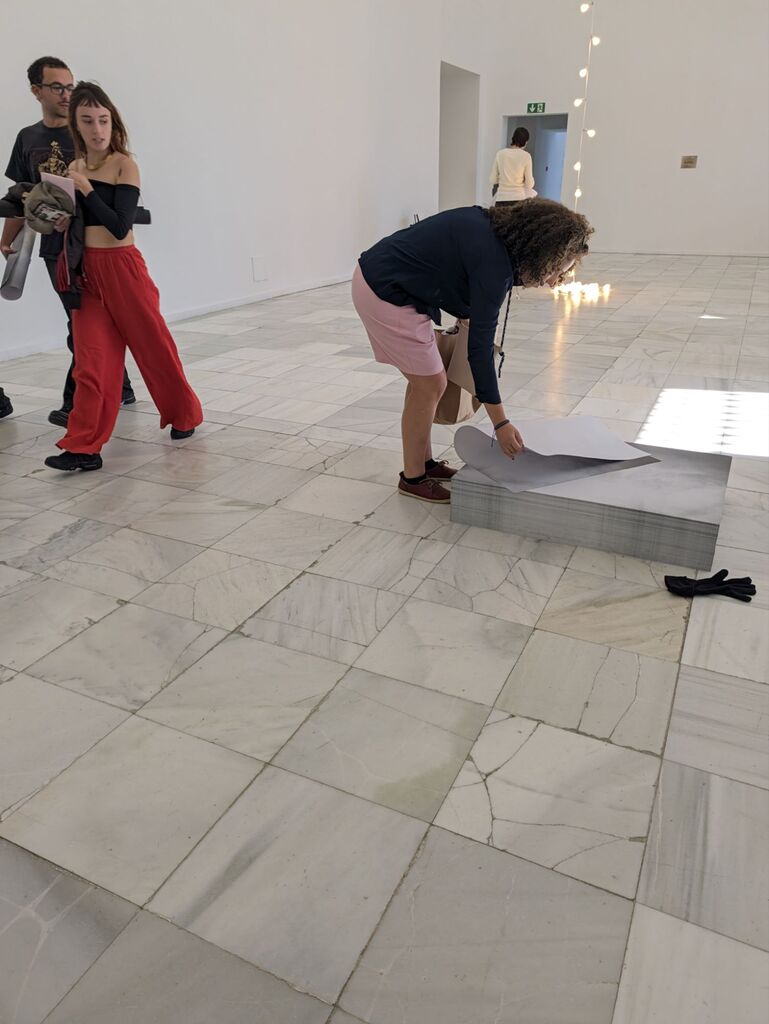
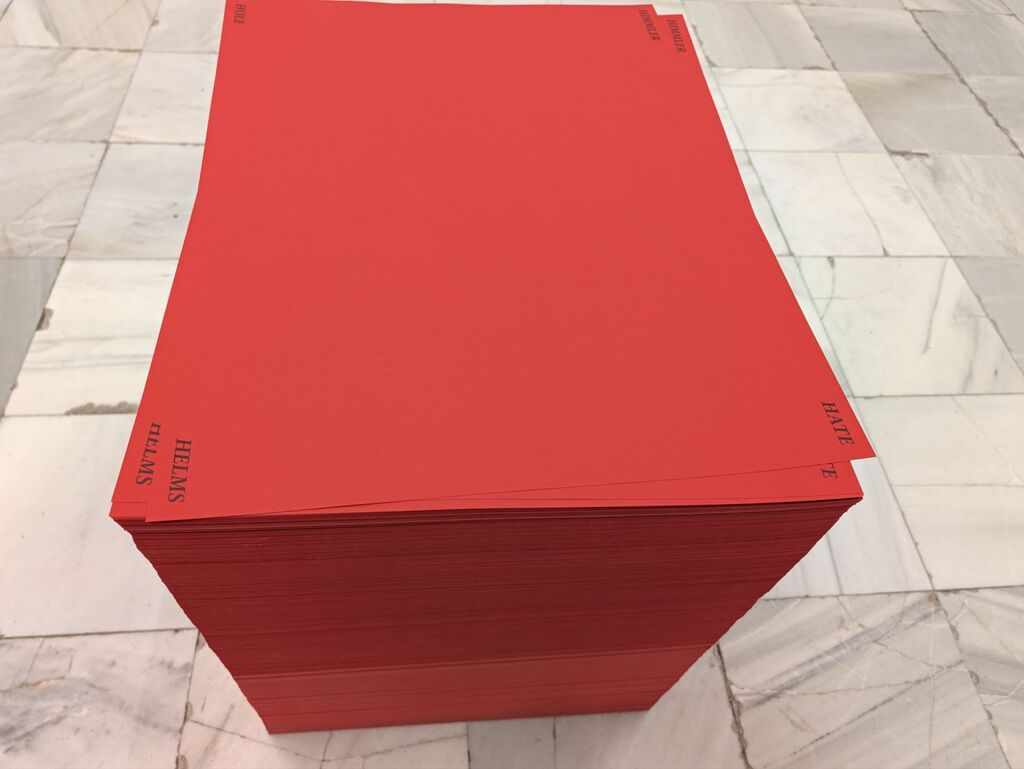
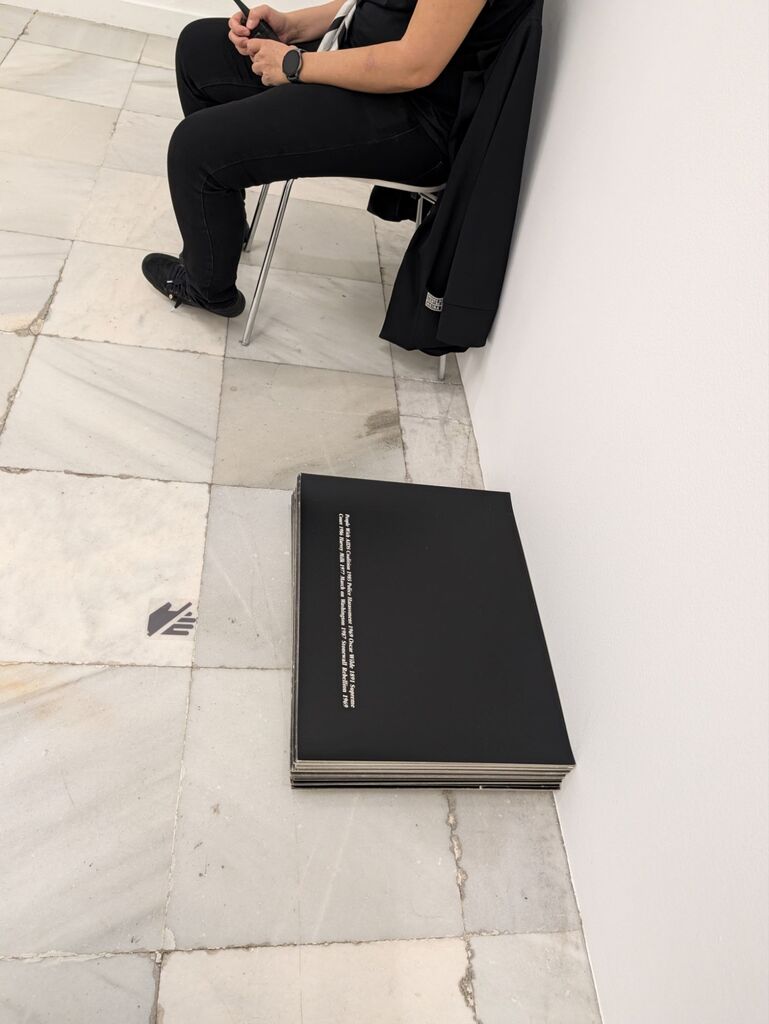
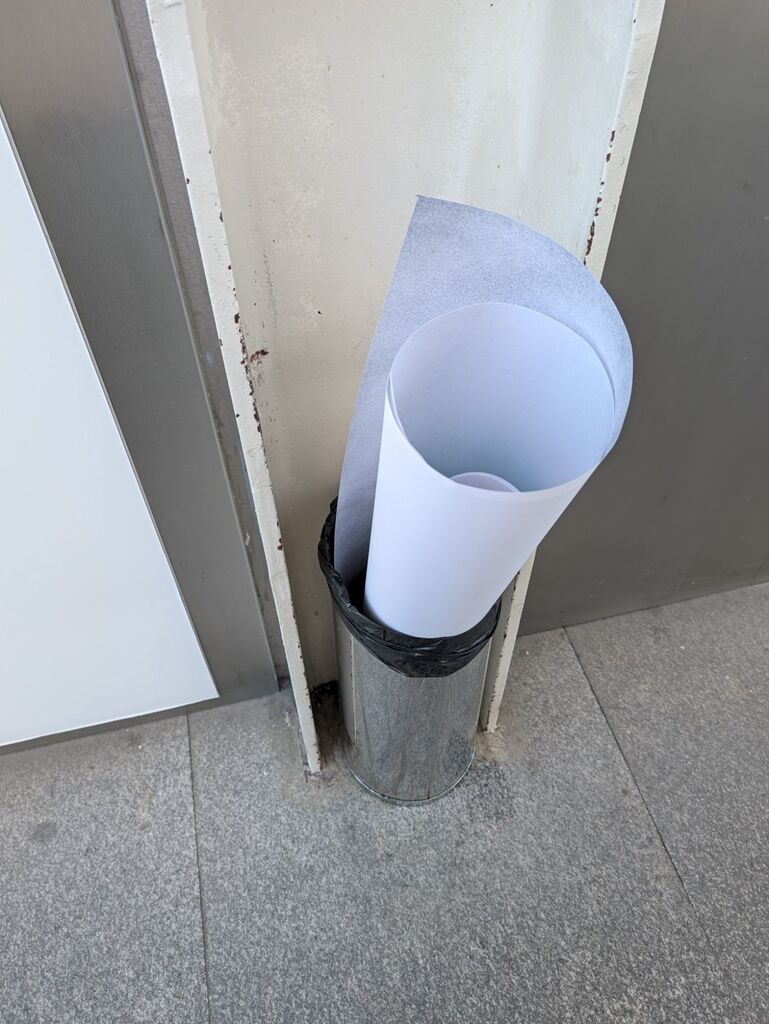
A person taking a printIf this paper were square, it would have made a terrible fortune telling pyramidThis one is not an unlimited supply.. There are 161 pieces and a sign (and guard) asking you not to touchNot part of the exhibit, but also part of the exhibit – what happens to the paper people take.Core tenets for paper stacks
There were also eight to eleven paper stacks (I didn’t count).
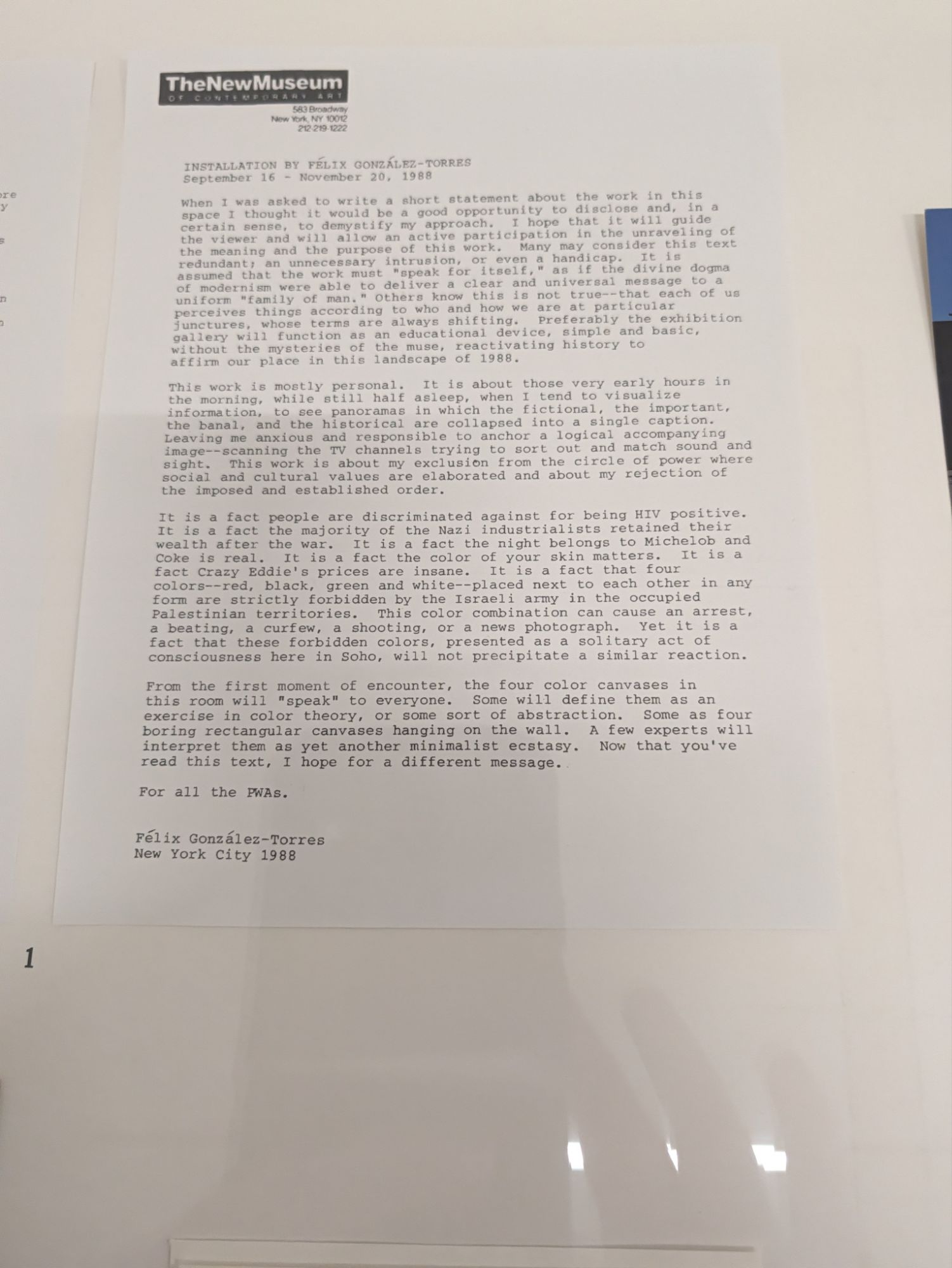
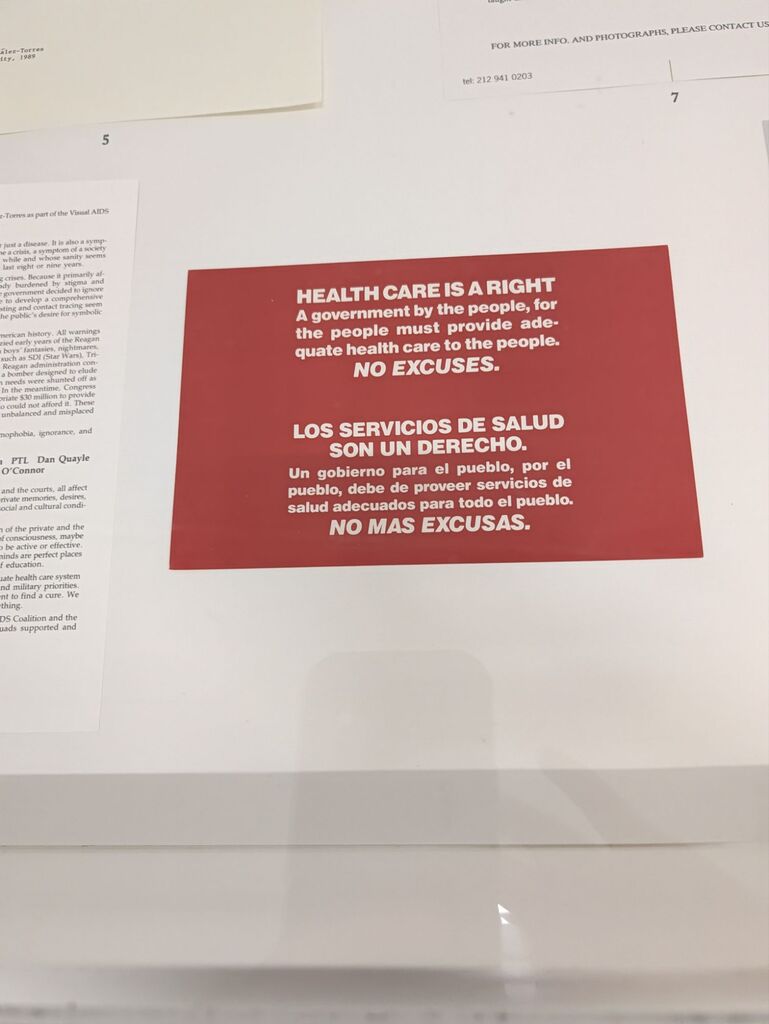
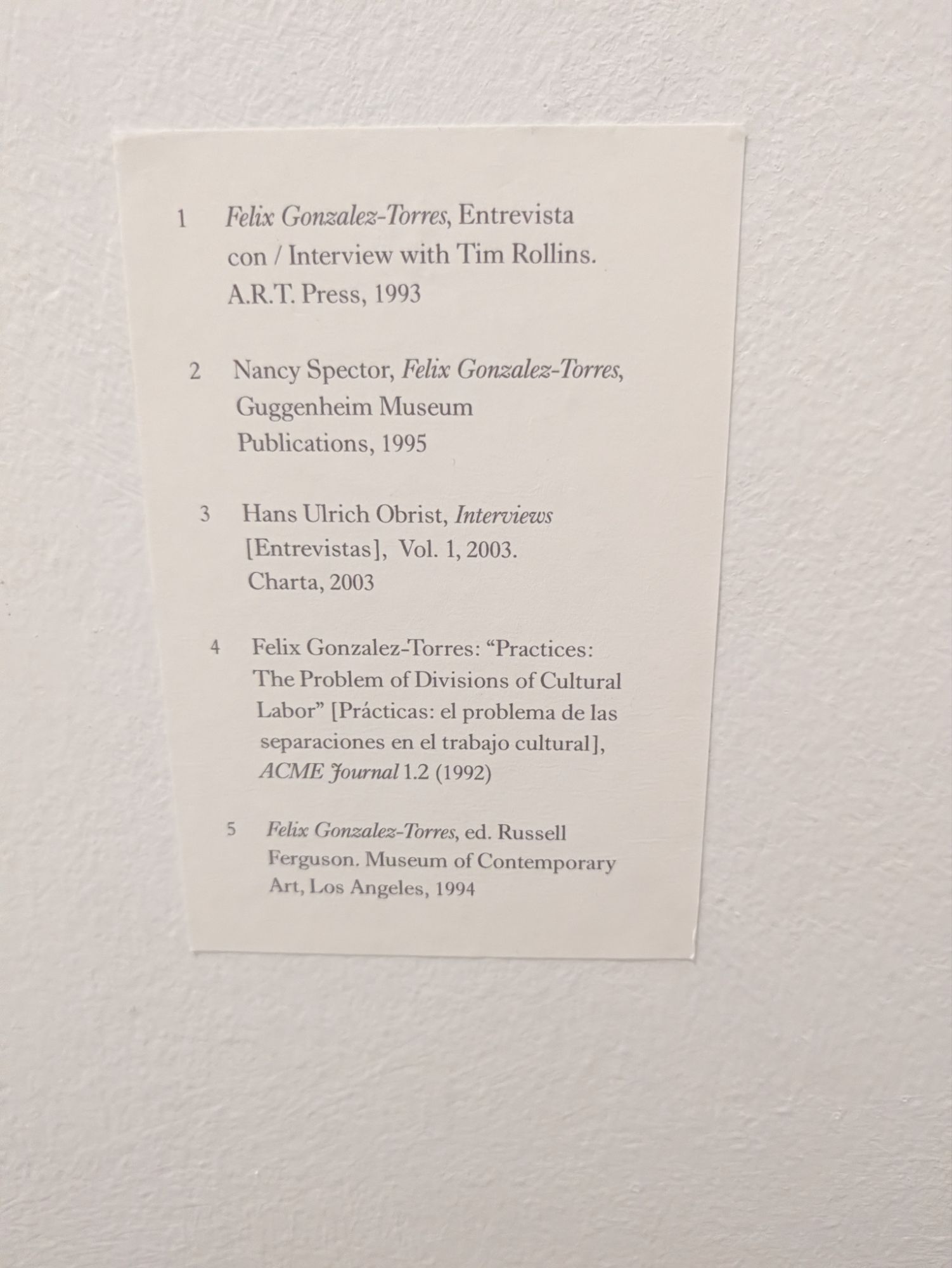
Little rod k mmCurtain of beads Paper on floor, prints on the wallStatement about the artProtest declaration that health care is a right. No excuses.Bibliography of books including interviews with the artist
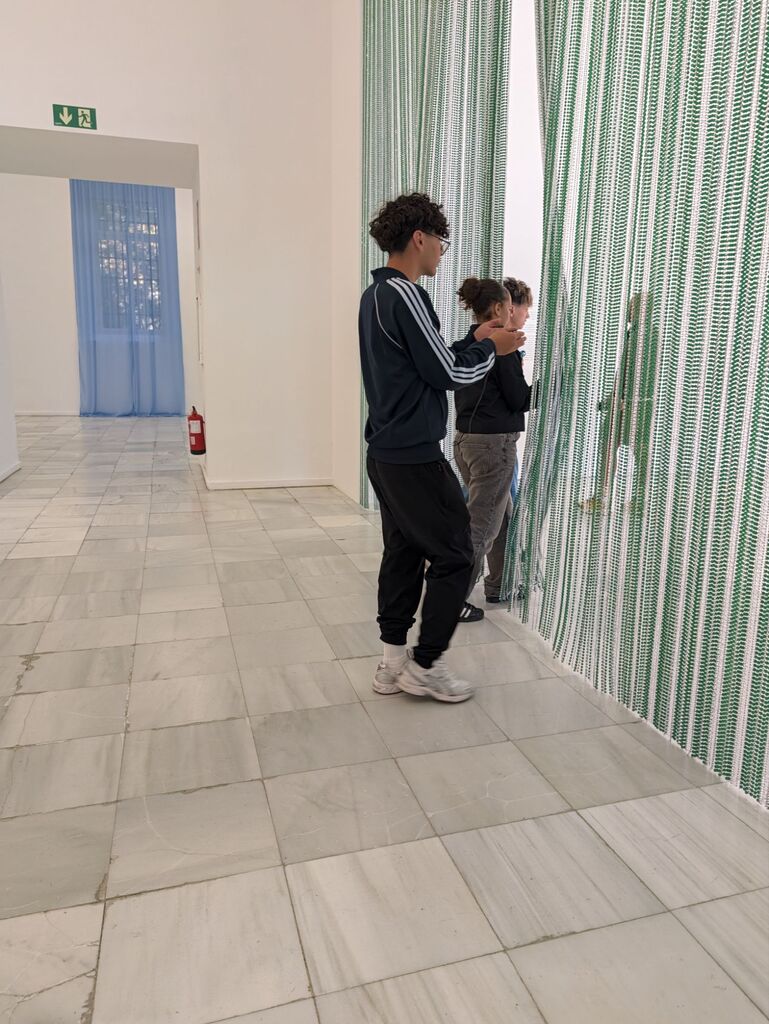
And several strings of lightbulbs in various configurations, including one square with a paired set of headphones with an mp3 player for partner dancing (tenets). And curtains of fabric (on windows) and beads (dividing rooms). The walls, and tucked into the corners of window niche, had newspaper / magazine clippings. And several other forms.
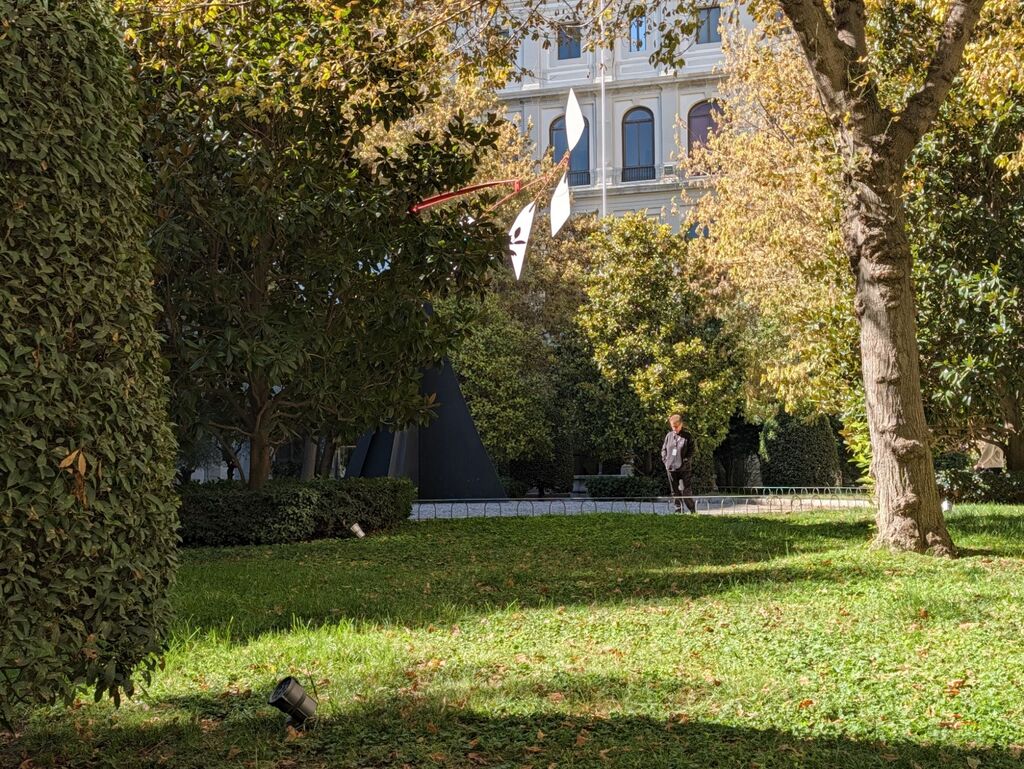
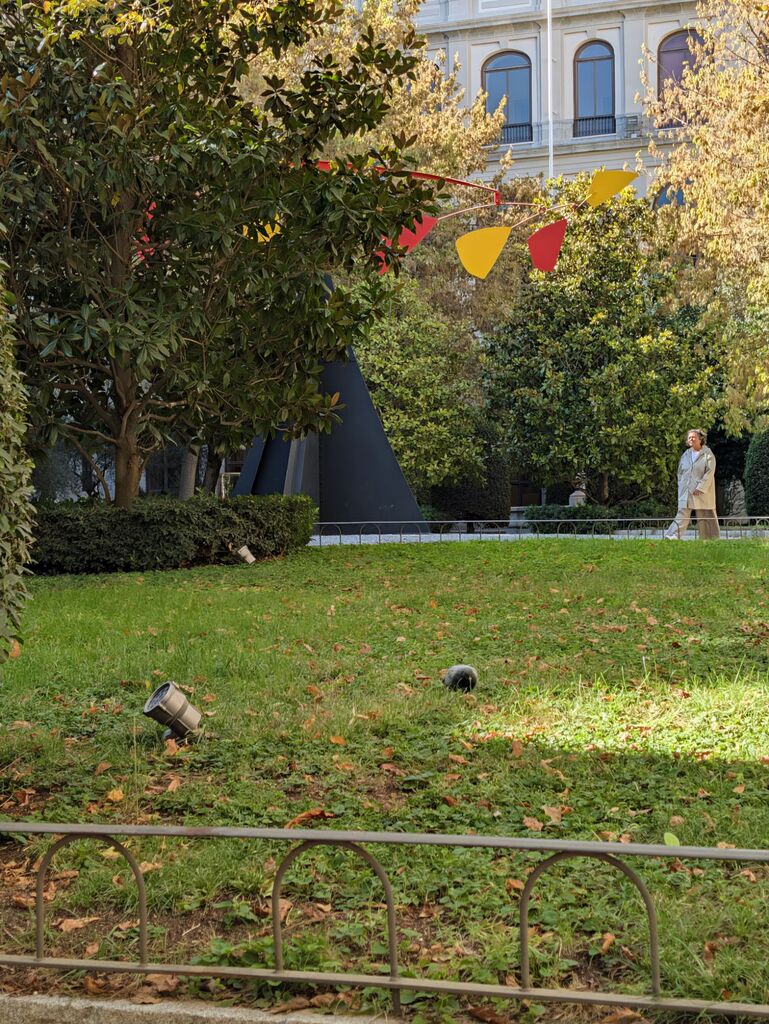
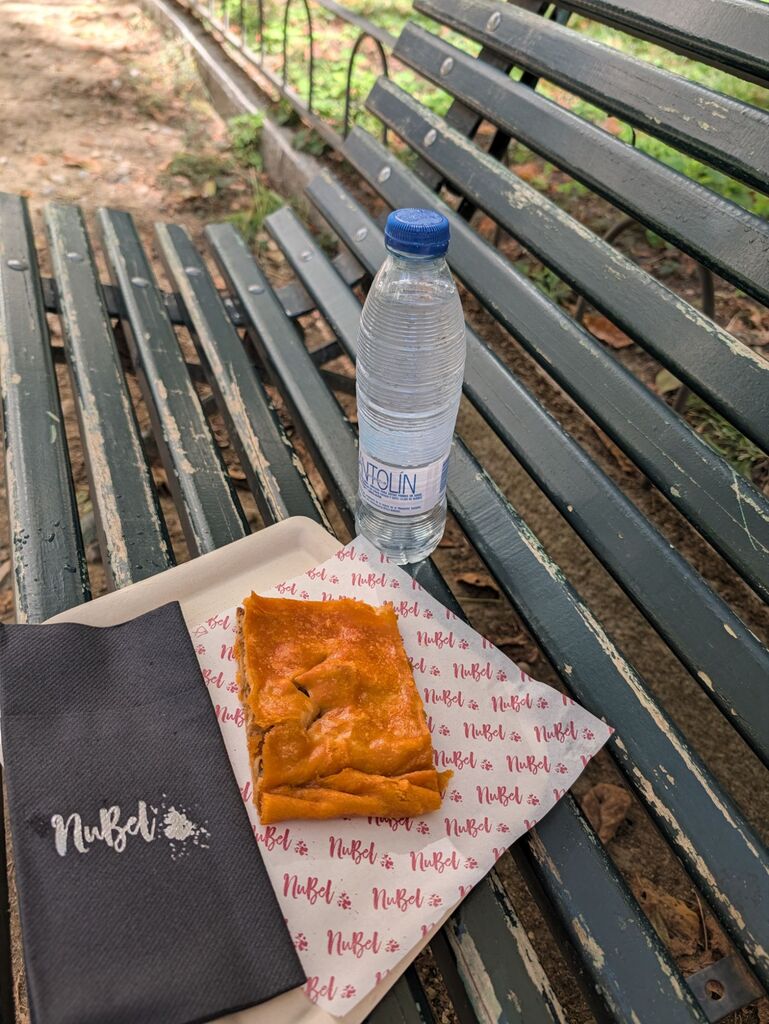
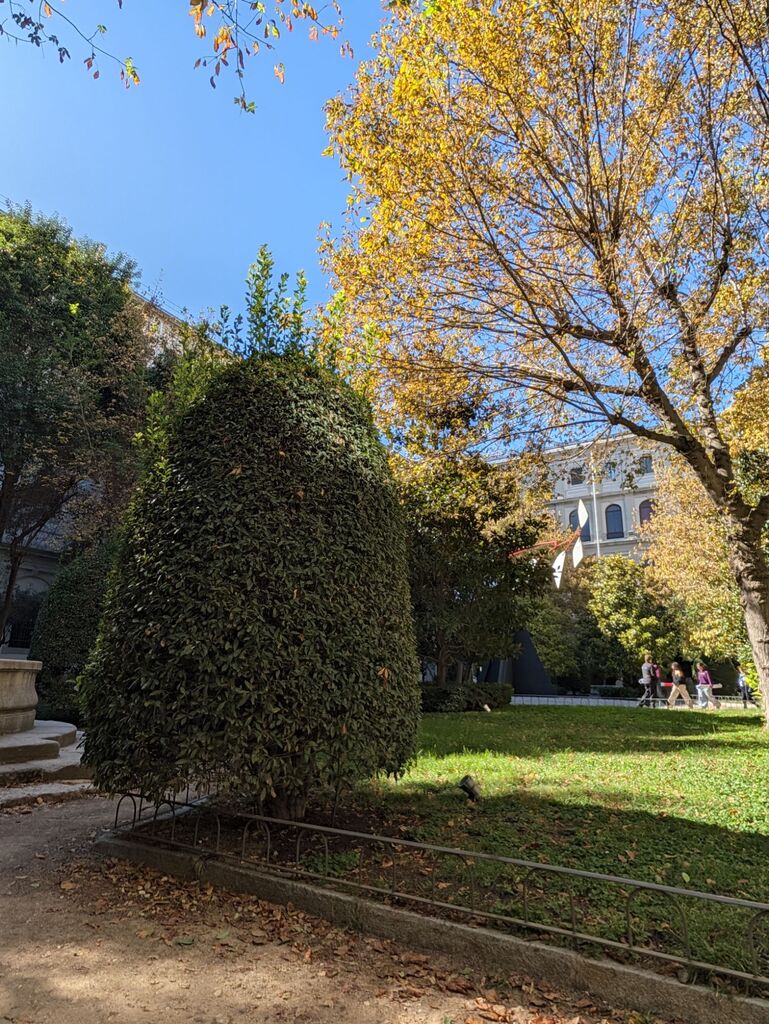
After that exhibit, I slipped into the museum’s garden in the interior courtyard and had a tuna pastry and a bottle of water.
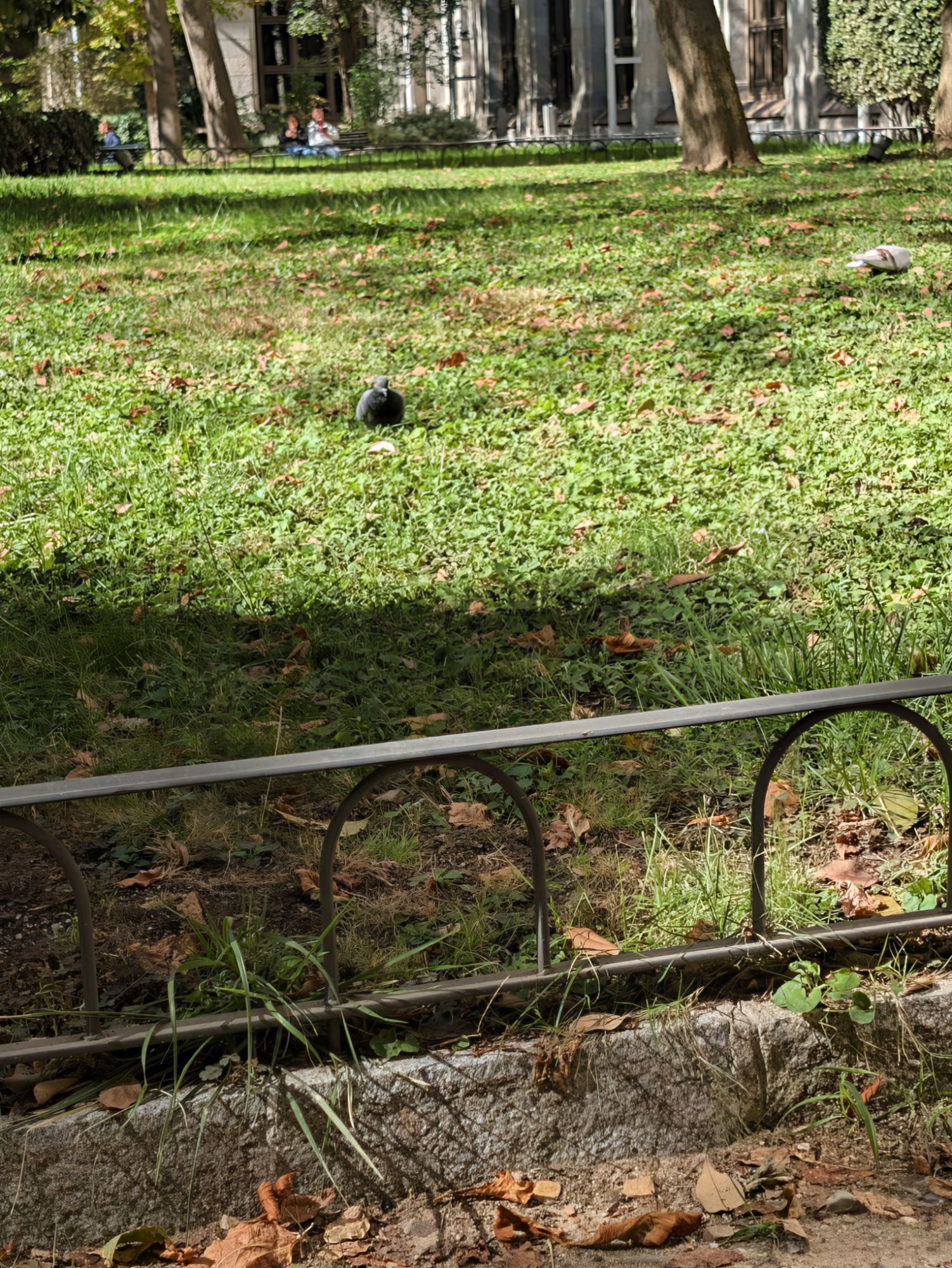
Pigeons on the grass, Calder the backgroundMore pigeons, the wind blew the sculpture around to the colorful sideSnack of pastry + waterI lived that even though the bushes were shaped, they still had freedom to break freeHello pigeon
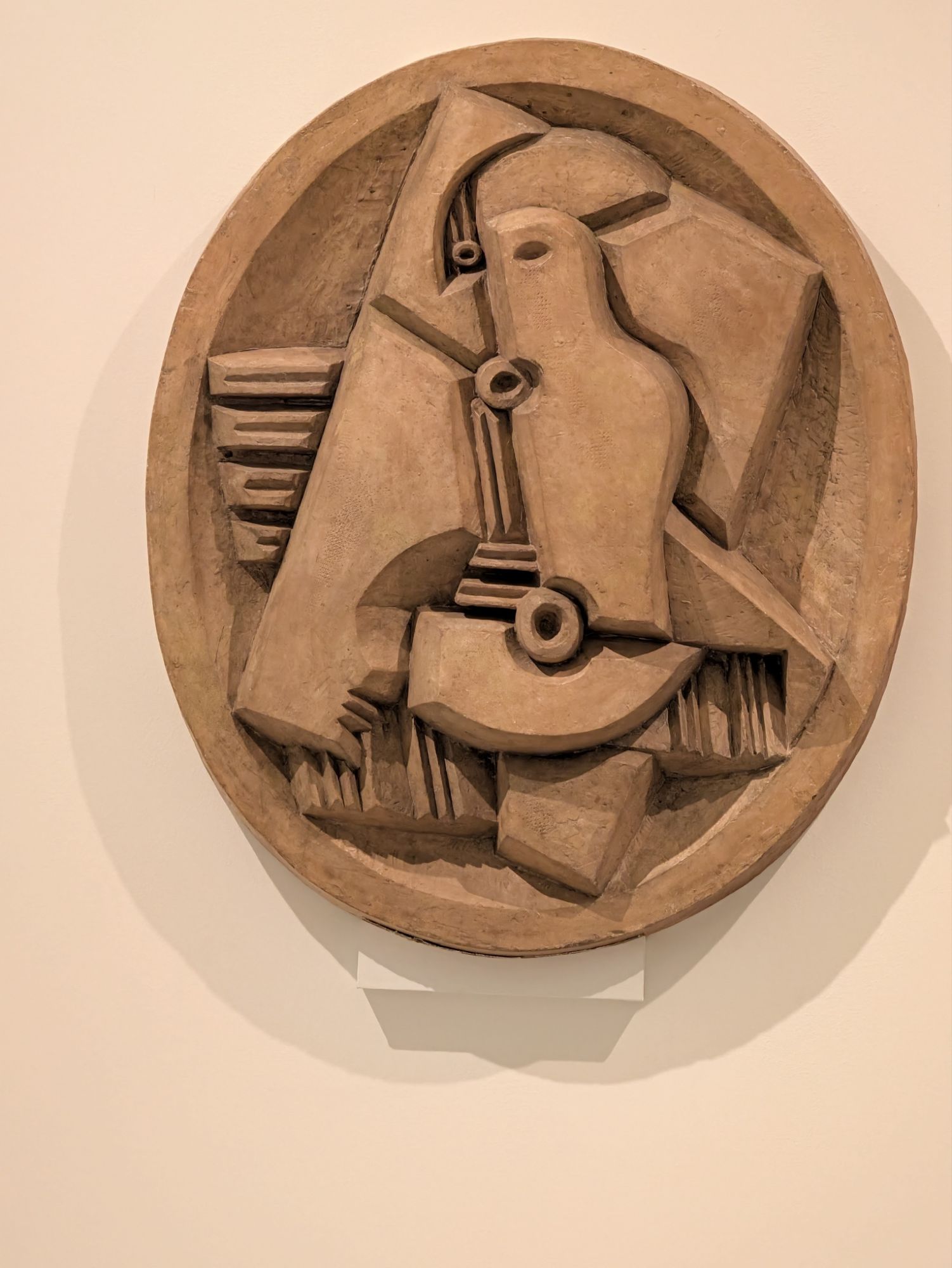
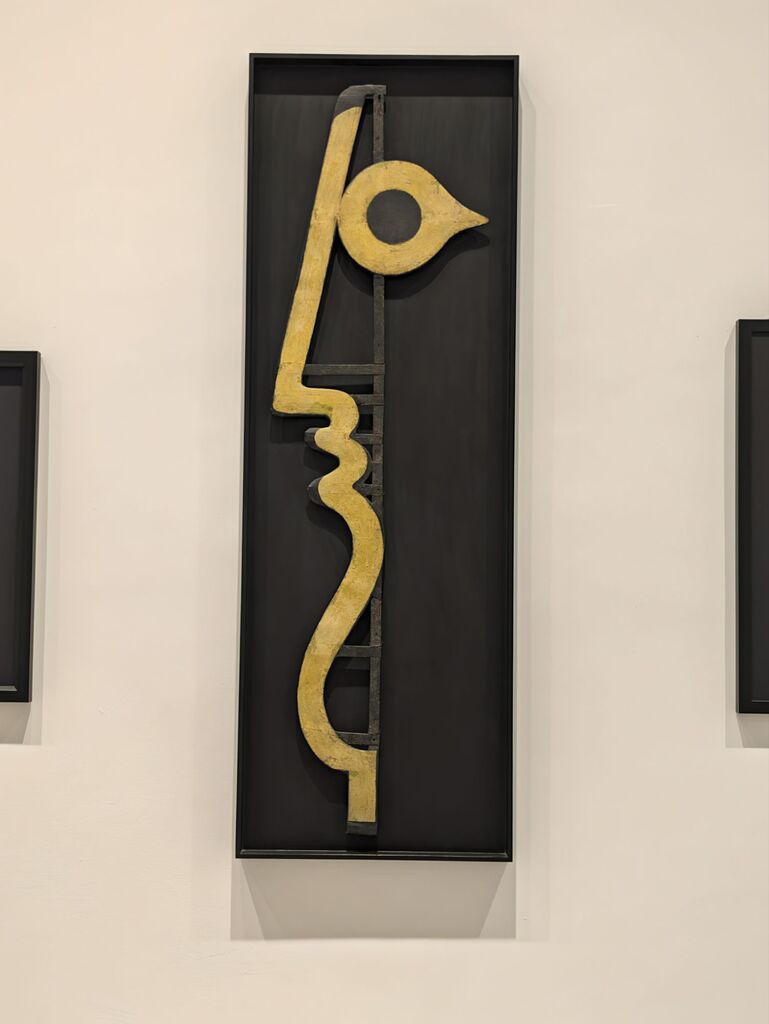
The museum as a whole seemed like a good home for this temporary exhibit. They had works by Picasso and Dalí and Miro. But the works were incorporated into a framework that addressed the rise of cubism and surrealism as a political movement.
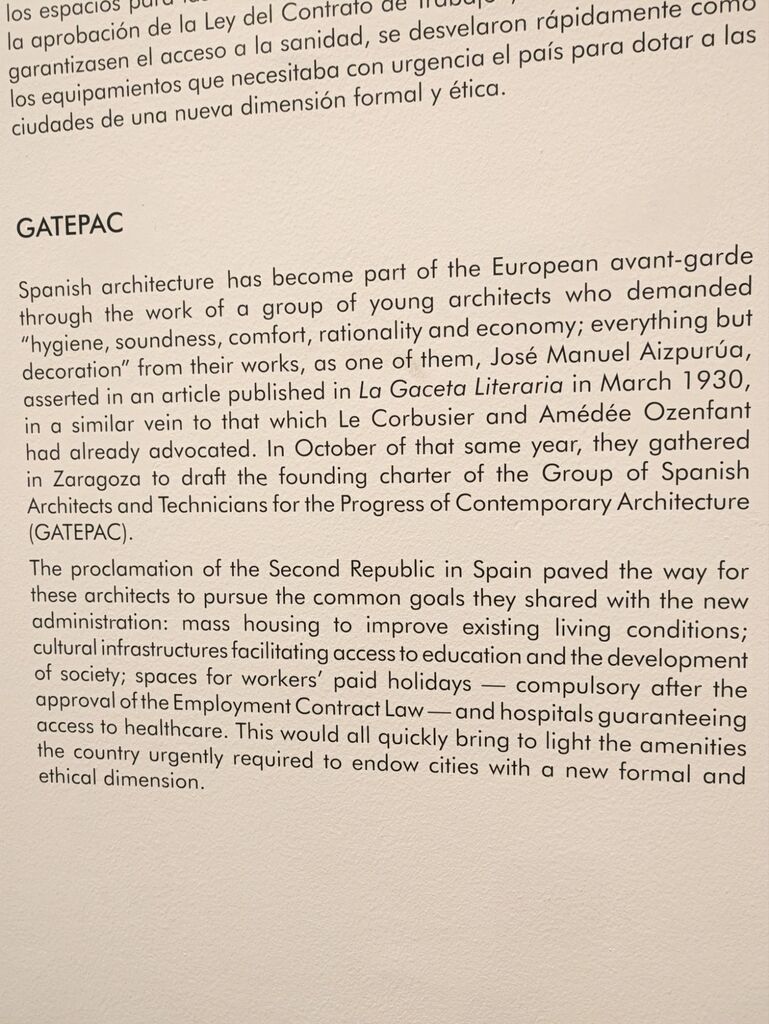
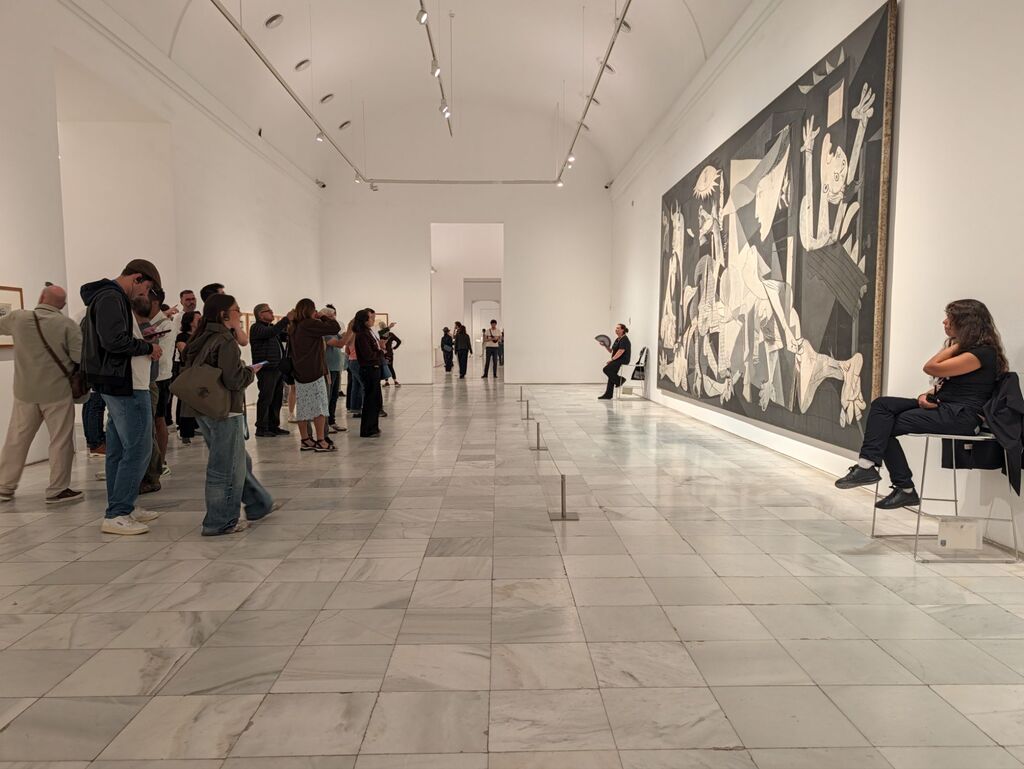
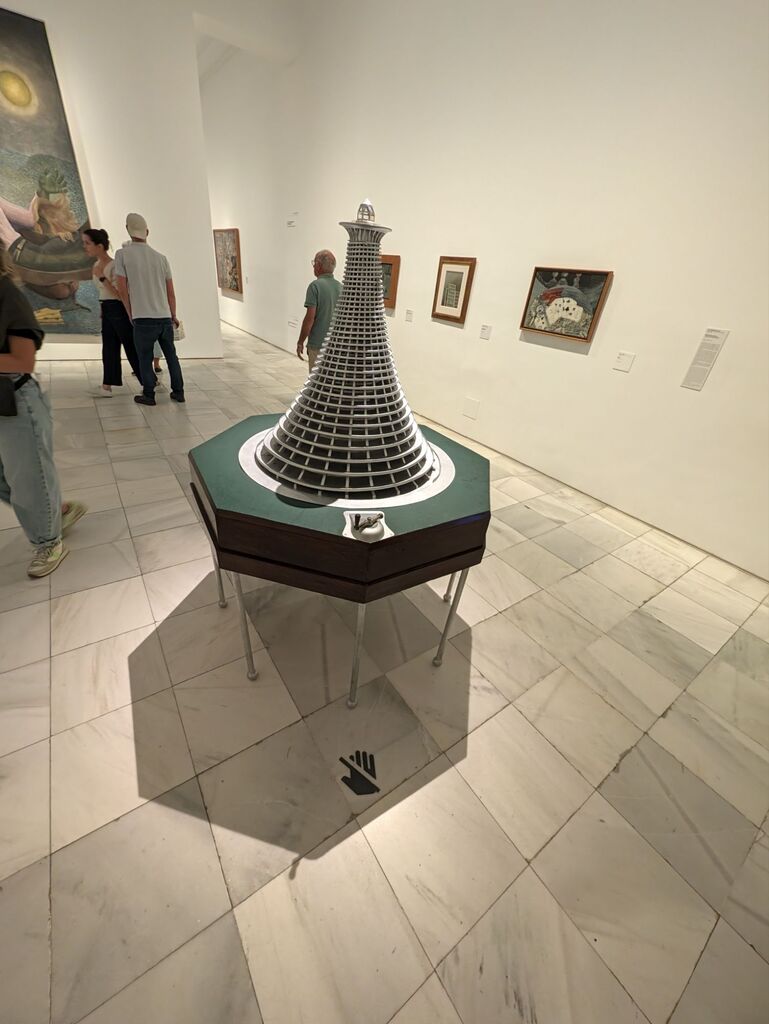
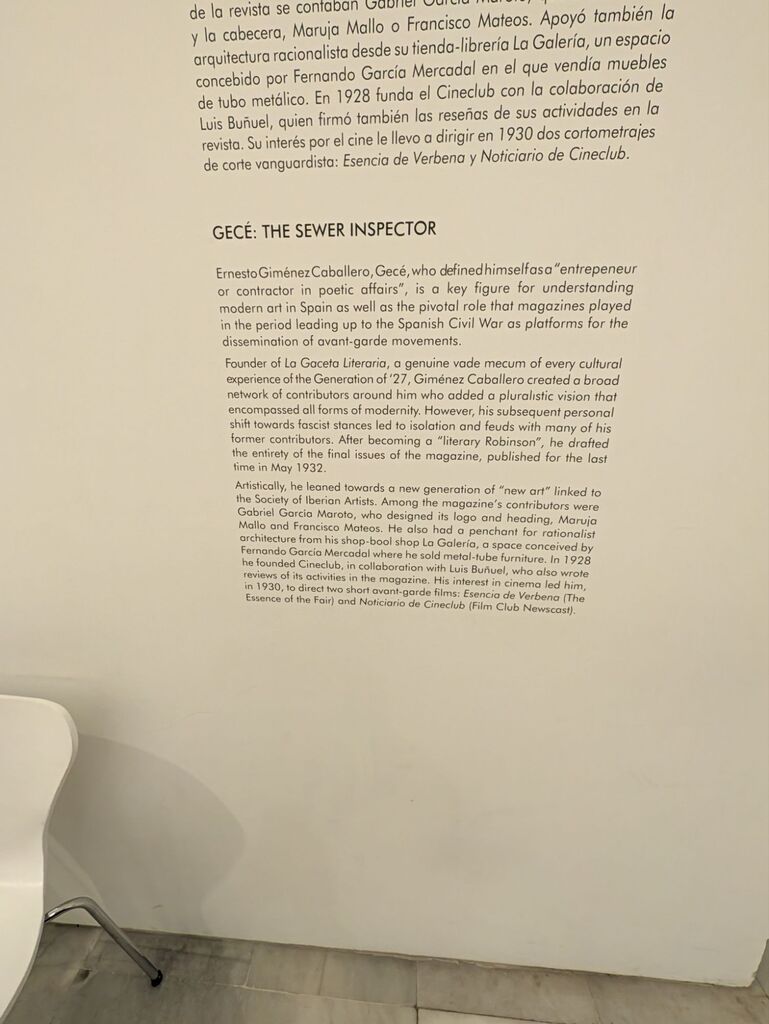
Jacques Lipchitz – Harlequin with Mandoline in Oval (1923)Architects committed to improved housing and public spaces for workers. And access to healthcare.GuernicaA experiment in steel, a moveable sculpture, with a crank, and a sign saying not to touchDrawing inspiration from many different trades
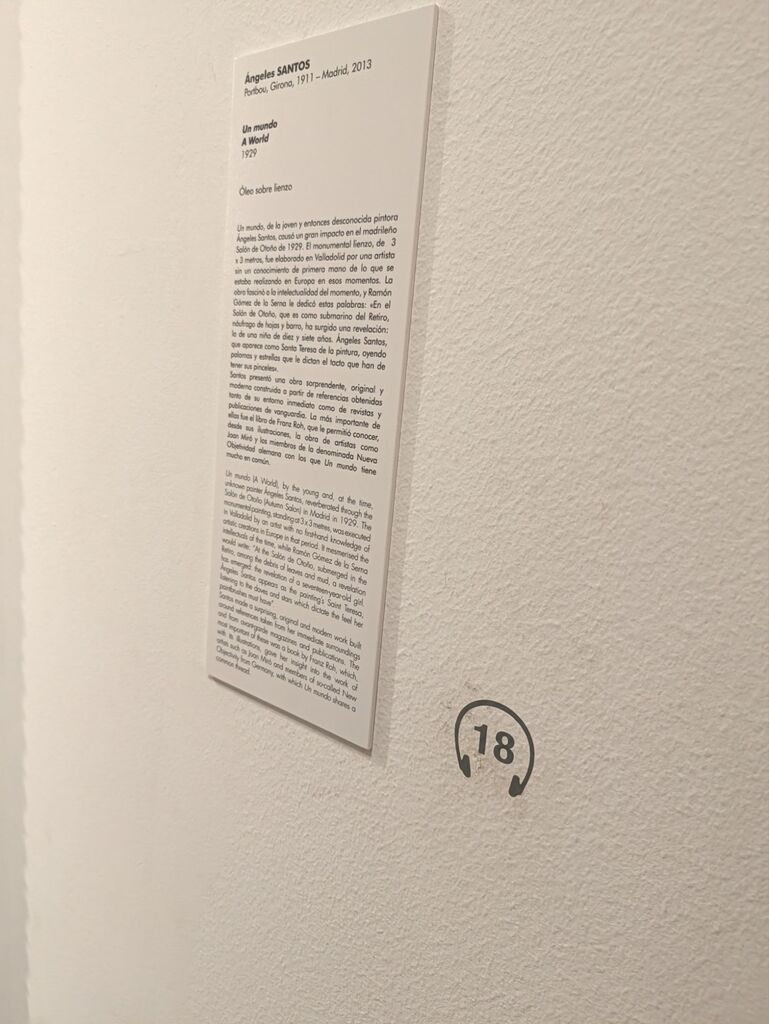
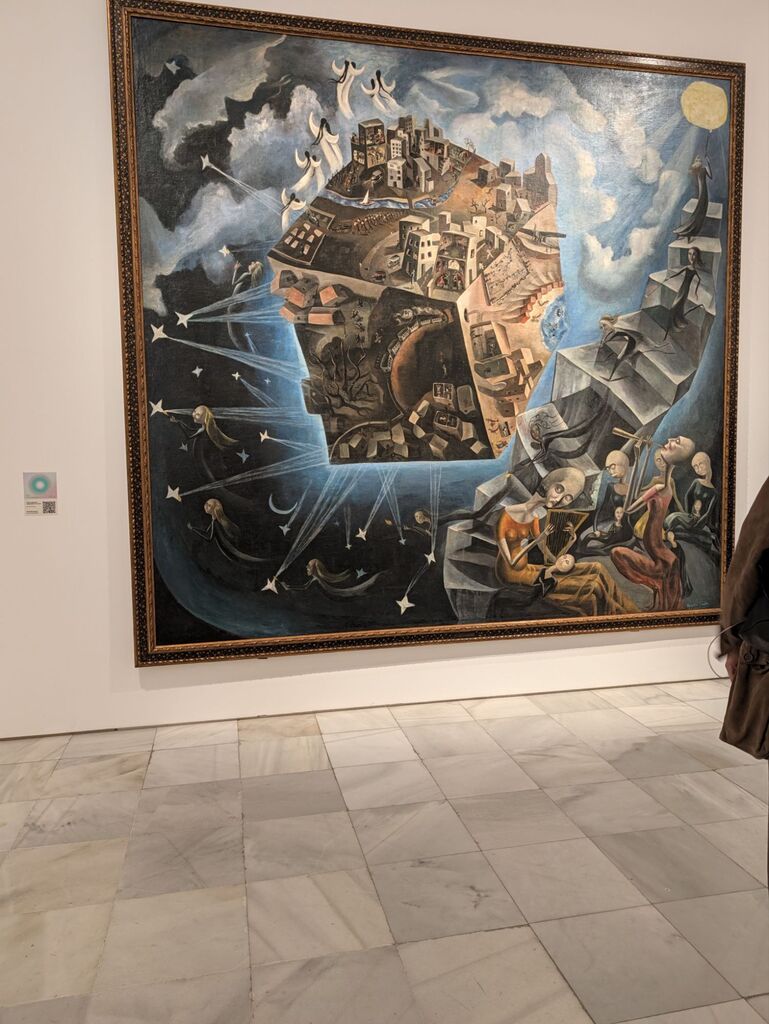
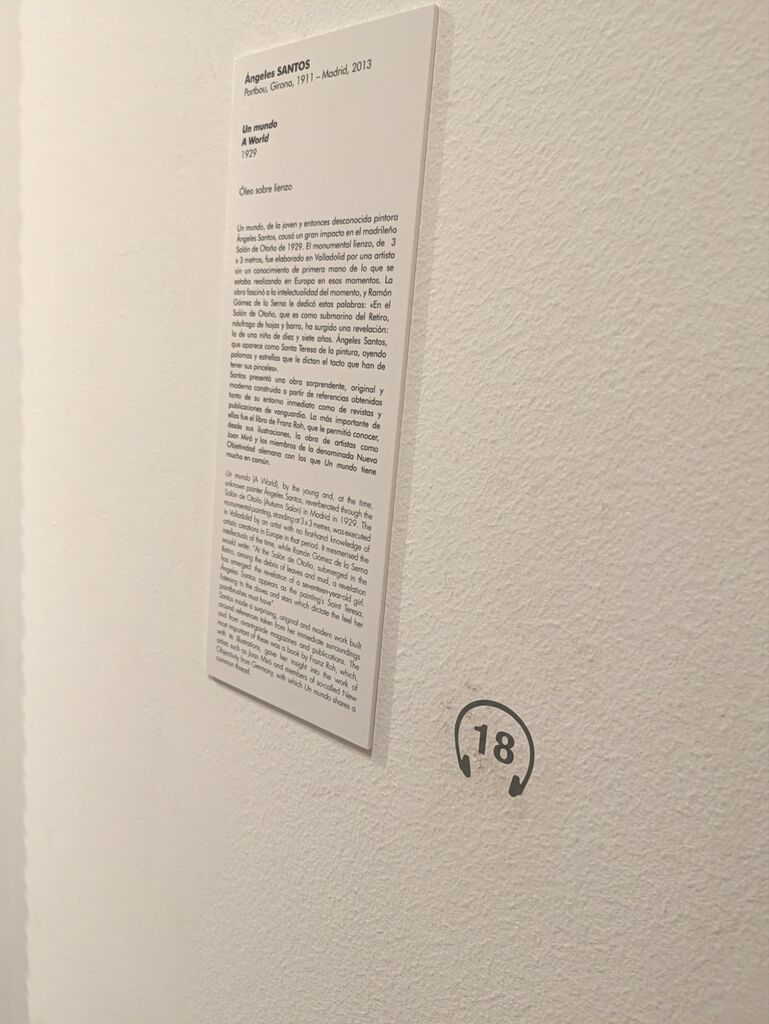
And just when I was tired of all of the men being men, there was this gorgeous work by Ángeles Santos and her other paintings.
Un mundo by Ángeles SantosThe gallery label for this art. It is very much about how everyone was shocked a 17 year old girl could paint with this level of confidence and skill
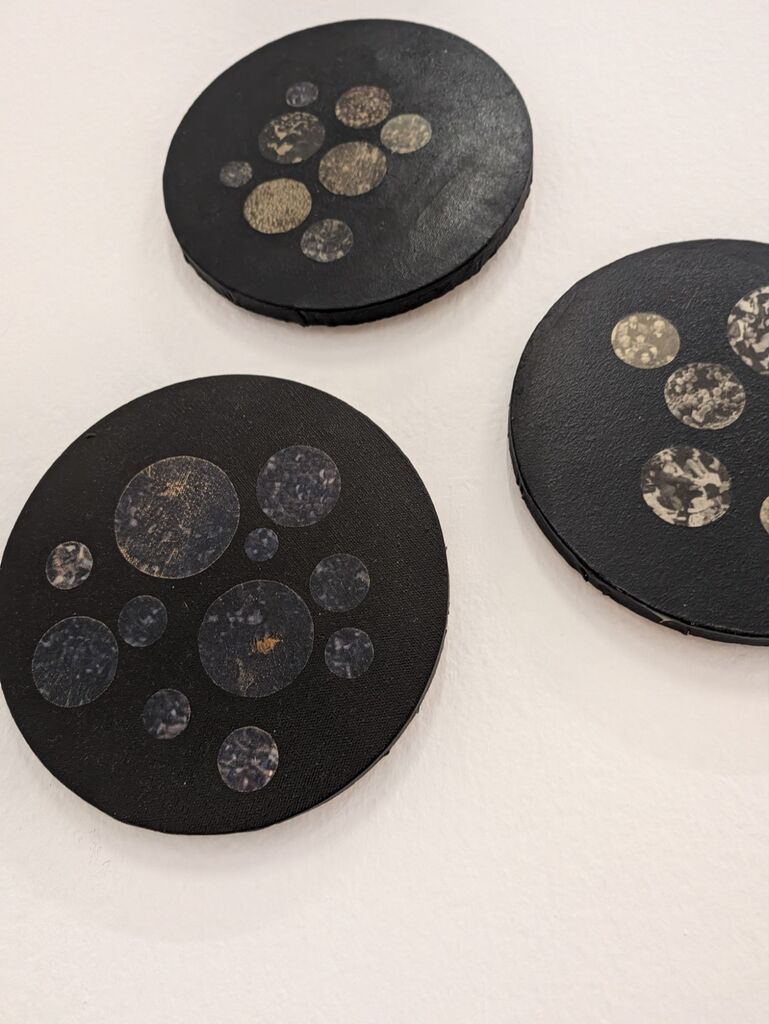
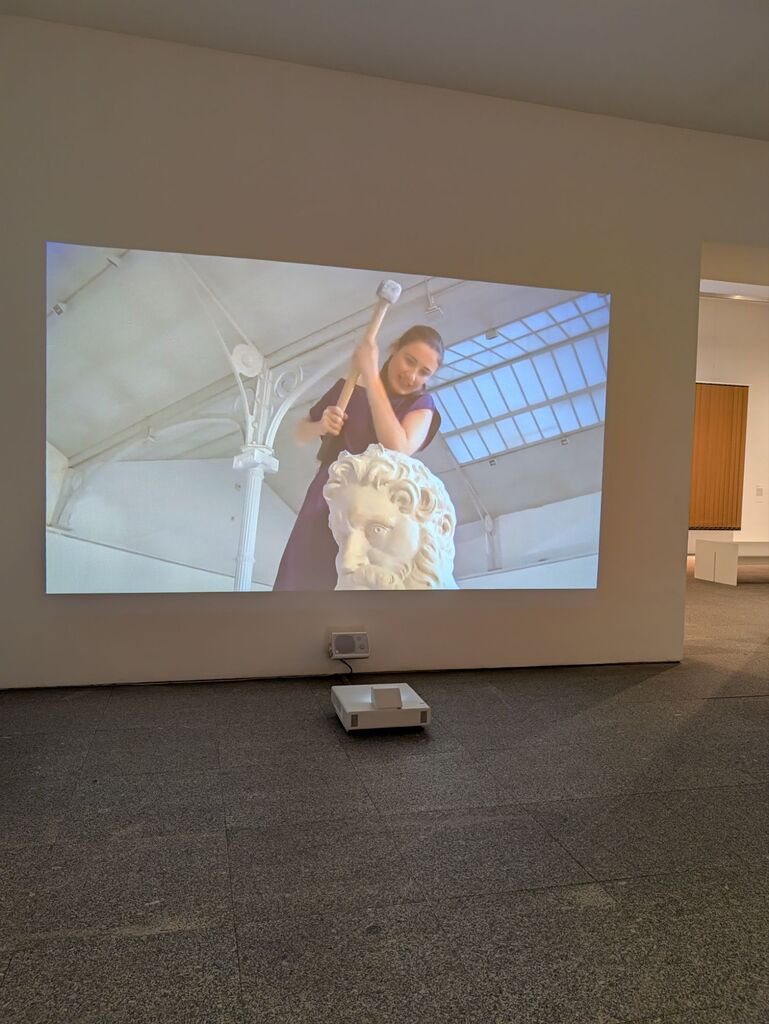
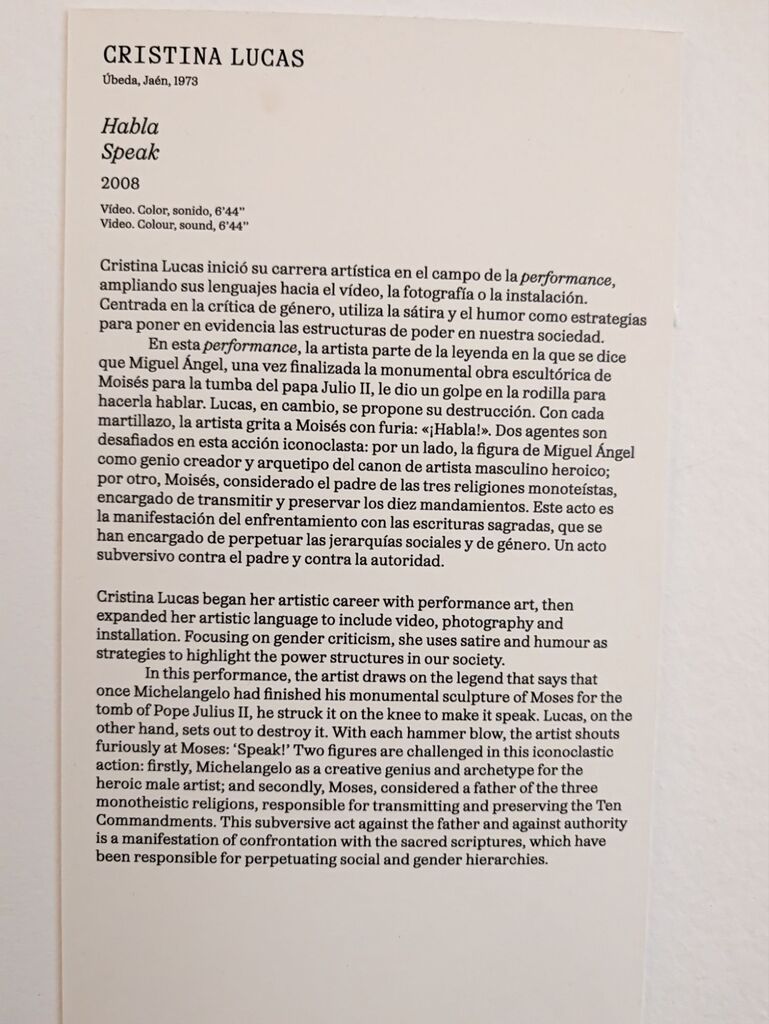
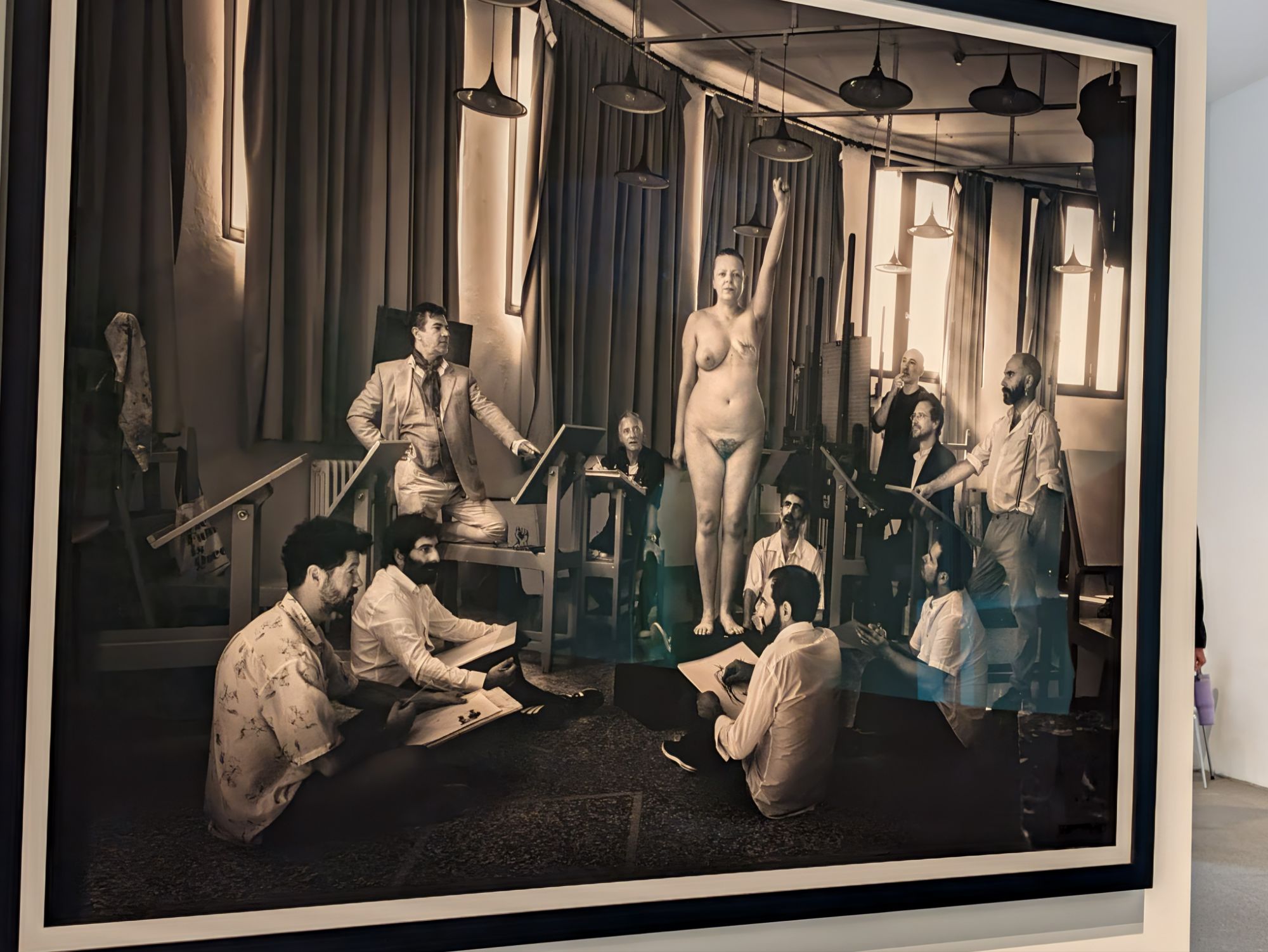
And then I ended up in the 4th floor which was half feminist women and half (all? mostly?) men reckoning with the HIV/AIDS epidemic. I took more pictures of the women artists because the art reckoning with HIV was harder to contextualize in a picture.
(this post doesn’t start vegan, but keep reading to the second attempt!)
I’ve been taking a class on food and culture in the Islamic Middle East, and my assigned country to research is Egypt. As part of this, I’ve been looking at Egyptian cookbooks.
I started with Egyptian Cooking: A Practical Guide by Samia Abdennour, published in 1984 by the American University in Cairo Press. It looked very sensible and traditional with bare bones recipes and no pictures. The cookbook inspired confidence that this is recording traditional cooking. There were 2 versions presented: one with veal and the other with beef, but all of the same ingredients and quantities for both. I figured I would give it a try.
Here are the recipes as published in the cookbook: MC 180 SANIYET BATATES, NAY FI NAY – Casserole of potatoes (1) 1 kg potatoes, peeled and sliced 2cms thick 1/2 kg beef 4-6 ripe tomatoes, peeled and chopped coarsely 12-15 garlic cloves, halved diagonally 2 onions, sliced thinly 2 cups tomato juice salt and pepper
Cut beef into bite-sized cubes. Put all the ingredients together in an oven pot, cover with seasoned tomato juice and cook in preheated moderate oven for 1-2 hours.
MC 181 SANIYET BATATES – Casserole of potatoes (2) 1 kg potatoes, peeled and sliced 2cms thick 1/2 kg veal 3-6 ripe tomatoes, peeled and chopped coarsely 12-15 garlic cloves, halved diagonally 2 onions, sliced thinly 2 cups tomato juice cooking oil salt and pepper
Peel and slice potatoes 2cms thick. Cut veal into small cubes. Peel and chop tomatoes coarsely. Peel garlic and halve diagonally. Slice onions very thin, keeping all items separate.
Saute onions, add tomato juice and cook for 10 minutes. Add [meat,] garlic and seasoning and cook for another 10 minutes.
Arrange sliced potatoes in lightly-greased oven dish, bury the meat mixture among the slices and cover with the cooked tomato sauce. Bake in slow oven for about 1 hour.
Now I didn’t have a full kilogram of potatoes handy and was only cooking for 1 person, so I scaled the recipe down a bit.
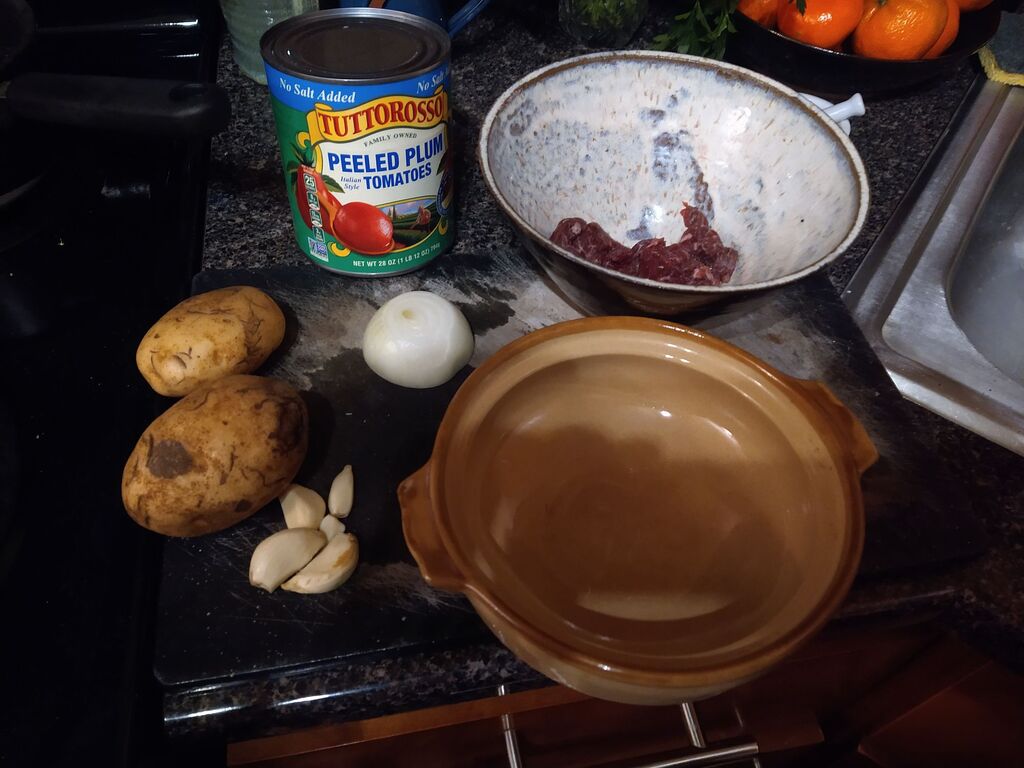
mise en place with an empty donabe, 2 sad potatoes, 5 peeled garlic cloves, 1 small peeled white onion, 1 can of peeled plum tomatoes, and a bowl with small cubes of beef
I had 2 russet potatoes that were not in great shape. (I had purchased them on delivery instead of looking them over in the store, and this batch was damaged. The delivery place gave me a full refund for the potatoes after I sent them a picture. Then I split up the bag with a few people so we could use them up before they went off. So I washed them and peeled them and sliced them into thick rounds and put them in the casserole dish. And this is where I had my first misgivings – when I’m building a dish like this, I usually like to put the onions between the bottom of the dish and the main meat (or in this case potatoes) so that there’s less worry about sticking and burning. But we’re trying to follow the recipe here!
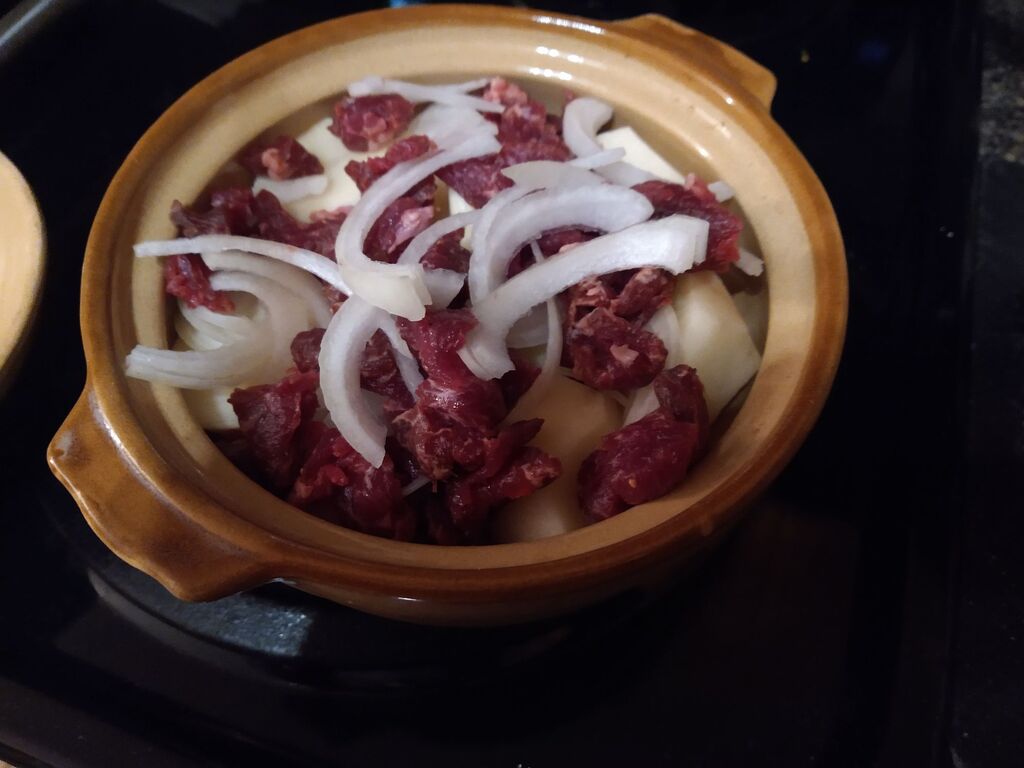
Donabe filled with potatoes with small beef cubes tucked all around and thinly sliced onions on top. There are also garlic slices in there, but none are showing in the picture.
Once I had a solid layer of potatoes in there, I started tucking the garlic pieces and the small beef cubes around the potatoes. And then I (foolishly!) decided to not get another pan dirty by precooking the onions in the tomato juice, like in the second recipe, and just add them directly the way the first recipe says/implies. I added the tomato juice from the pan and sliced some of the tomatoes on top. Then it went in the oven!
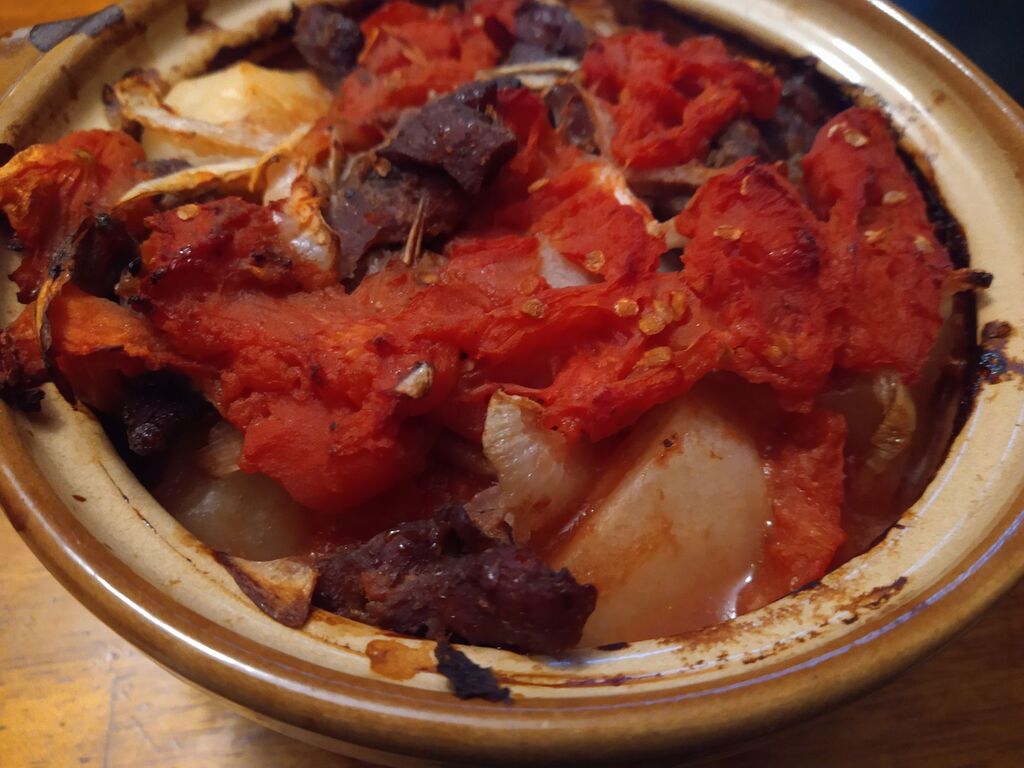
donabe with a cooked dish with potatoes in thin liquid and you can see the other ingredients – tomatoes, beef, and onions – looking a little dry and cooked with some small amounts of burning, especially right around the edge of the bowl where liquid bubbled up the sides.
After about an hour and a half, it was smelling pretty good and like food, so I gave the potatoes a poke with a fork – they were still fairly firm, so back they went for another half hour. Then I waited for the potatoes to cool enough to eat and I was very optimistic about this dish.
It was terrible! The potatoes might have been cooked, but they were not soft and none of the sauce had penetrated to flavor the potatoes. And the onions! I don’t know how, but the onions tasted even more strongly of raw onion flavor after cooking than they did before! Nothing went together and it put me off of using that whole cookbook!
But this should be a viable dish! It sounds so simple, stable, and reliable. So I went looking to see if it appeared in other cookbooks. Of the ones I checked, nothing particularly close appeared.
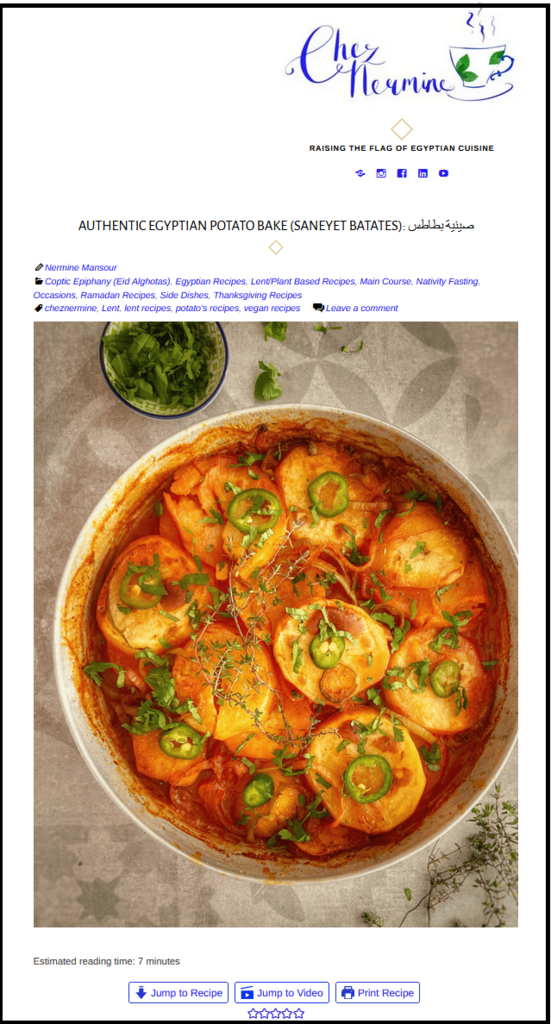
screencapture of the start of Chez Nermine’s page about Saneyet Batates – site linked to picture if you want to click through
And this was more like it! With detailed instructions, discussions about ingredient varieties, and even a video recap. So this time I made it for lunch with a friend. She has been having chemo on Friday afternoons and then I’ll pick her up and make a meal before the nausea kicks in. It has all of the fun of dining out with none of the risks of dining in public while immunocompromised. So I asked her opinions about the ingredients, and she asked for minimal garlic and onions and that it not be particularly spicy, so those are the big changes here.
Using an 8″x8″ casserole dish, I started with some oil in the base. And then I added about 1-2 Tablespoons (not measured, just was left in the container I had) of dried shallots (to replace the fresh onions) and the spices – this version called for spices, so that’s exciting – ground coriander (the last one the ones I dried from my 2025 garden), ground cumin (from the Egyptian cumin a former couchsurfer had brought me!), dry oregano (also dried from my garden), and a generous sprinkle of paprika (a little more generous than the recipe because I’m trying to use up that container). And then that got kind of mixed together.
This time, I was using a fresh bag of yukon gold potatoes. Even though the directions say to slice one inch thick, looking at her video I decided to slice them closer to half an inch thick. And then I sliced up some fresh bell peppers without any spiciness to them. That gets tossed with the spices to distribute as evenly as possible.
I still used the same kind of canned whole tomatoes, so I first poured out some of the liquid and mixed it with tomato paste and vegetable soup base. Then I sliced the tomatoes on top again and poured the enriched liquid over everything. The whole large-sized can was perfect for this size casserole dish.
And then I cooked it – first on the stovetop and then in the oven. But for much longer than called for because my friend’s appointment ran later then I’d been expecting. By about an hour and a half. I had been planning the switch to the oven for right when I left the house, but it ended up almost completely finished before she even called me for a pickup. So I made sure there was enough liquid and that the heat was just high enough to keep a low bubbly simmer but low enough to not dry out or misbehave while I was out of the house.
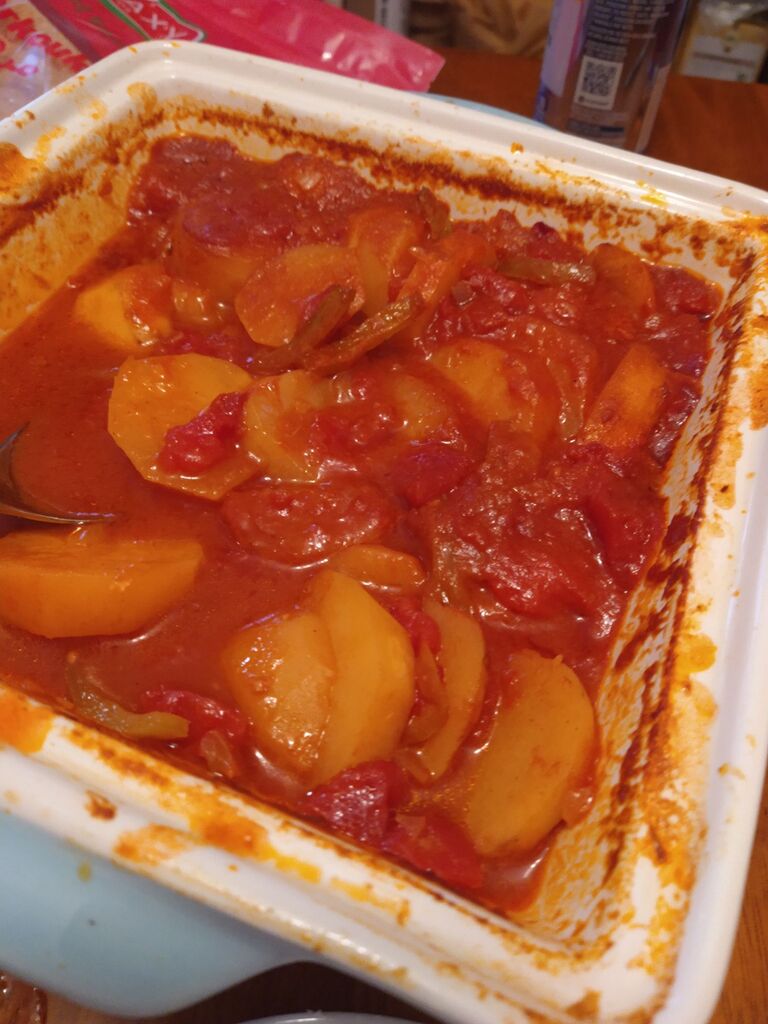
Finished dish of tomatoes that have turned orange from braising in the tomato sauce and small chunks of tomato and pepper in a saucy base.
We came back in the house, and the smell was amazing! The potatoes were very hot, but that gave us some time to chat while waiting for it to cool.
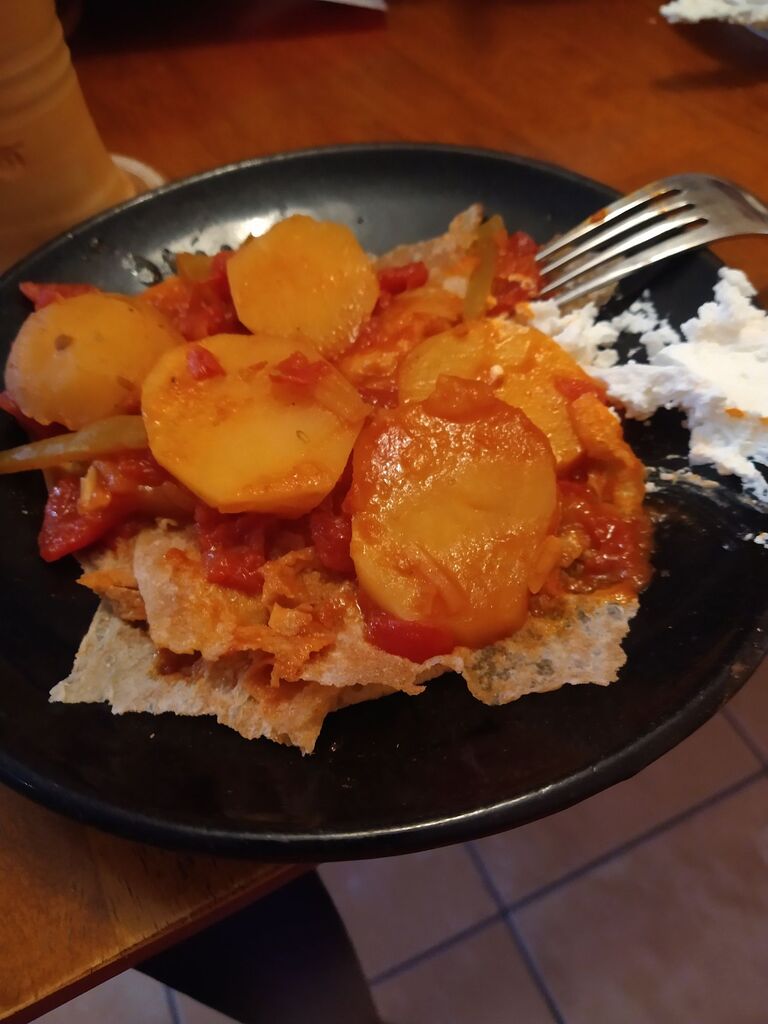
I still had a little ruqaq (an Arabic thin crepe-like bread) left from an experiment, so we used that as a base layer to soak up the sauce. And we had feta brined white cheese on the side.
A plate made up with the potatoes on top of a layer of soaked flatbread and some white cheese on the side
This version ended up amazing! A+ Would make again. The spiced tomato broth flavored the potatoes all the way through, and it was just the right amount of warm and comforting without being too heavy for lunch.
Let’s also do a quick roundup of Egyptian food blogs I found:
Chez Nermine: authored by Nermine Mansour, who was born in Egypt, a former Egyptian diplomat (her husband still seems to be a diplomat), and lives in Virginia (united states). Oldest recipe posted 17 August 2017; most recent recipe 3 April 2026. Primarily Coptic, she has recipes tagged for Christian, Islamic, and Jewish holidays and includes both vegan and meat. Has a recipe for macarona forn, saneyet batates, koshari, and molokhia. Tagline is Raising the Flag of Egyptian Cuisine. Likelihood of using: 10/10 (see above)
TheEgyptianCook: Signature cooking by Muhammed Elgammal, but posts and videos are made by a team and his site has a merchandise store “in development.” He is an Egyptian-American Muslim who resides in the United States. Oldest recipe posted 11 December 2023; most recent recipe 17 November 2025. Has a recipessddd for macarona bechemel, baked potatoes and lamb, koshari, and molokhia, Recipes are fairly meat heavy, but includes vegan kofta (as well as beverages and desserts). Likelihood of using: 1/10 (autoplay videos)
Scarf Gal Food: Simona Afifi does not have a separate “about” section, but does sprinkle anecdotes throughout the posts. Diaspora Egyptian with actual experience making and buying food in Egypt, posting from the united states. Oldest recipe posted 21 April 2015; most recent recipe 13 December 2021. Has a recipe for macarona bechamel, saneyet batates, koshari, and molukhia. Likelihood of using: 6/10 (most likely this recipe for easy ful starting with canned beans)
The Egyptian Kitchen: abissada was 1st generation born outside Egypt and lists her location as France, but she has visited Egypt. Earliest recipe posted 18 January 2010; most recent recipe . Has recipes for macarona bil bechemel, koshari, and molokhia (first posted recipe). Likelihood of using: 3/10
Food of Egypt: References christian and Islamic holidays. Oldest recipe posted 28 July 2010; most recent recipe 1 August 2013 (posted to facebook through August 2015). Has a recipe for molokheya. Likelihood of using: 2/10 (too many intrusive ads)
Cleobuttera: Tasbih is a food blogger in Egypt who specializes in pastry and baking. Oldest recipe posted 11 November 2014; most recent recipe 25 August 2019. Best web design, includes a section of which major publications have referenced her blog. Likelihood of using: 7/10 (would be higher if I were more of a baker/confectioner)
If you’ve ever grown peppers, you know they can be quite prolific.
I usually grow at least once variety I can dry, but I’ll admit that I still haven’t used all of my dried peppers from last year. Or the year before that.
Growing purple peppers in a pot on my porch
These purple peppers were not a variety I was familiar with, but they rounded out an order to get free shipping from one of the Etsy stores I but small plants from (yes it sounds like a weird source for plants, but it has worked surprisingly well the last couple years). The listing called them a Buena Mulata pepper and I did not look them up before buying.
The fruits have been delicious and I love them on sandwiches or with eggs. There’s a zing of spiciness, a hint of fruitiness, and a medium amount of meatiness. And a lot of them! This is just from one single plant, two harvests about a week apart.
I just looked them up for this post, and it looks like if I leave them longer they will turn red and dry well. So that’s probably what I do for the rest of their season.
A pint jar of purple peppers being pickled (by means of fermentation)
For this experiment, I boiled the pint jar, a jar weight, a fermentation lid, and the ring to hold8 the lid on.
Once I pulled the jar out and let it cool a bit, and I started off with two fresh bay leaves and two pinches of Egyptian cumin.
I washed the peppers and peeled off their stems without cutting into the skin. I also peeled about 4 cloves of garlic.
Then I wedged the peppers in as tightly as I could with the garlic cloves popped in randomly as I went.
This time I weighed my water and tried to get 4% salinity, since I might a well try a more proper pickle. I also added a little sugar because I find sugar pairs well with spicy, and I’d read that too strong capsaicin can inhibit fermentation, so I figured a little extra food wouldn’t hurt.
We’ll see!
Update Sunday 3 August 2025: the peppers are fermenting and have lost some of their color.
I have not yet tasted the peppers.
3 jars of pickles. In back is a half gallon jar of cucumber pickles. The middle one is a 20 ounce jar of spicy green and banana peppers. In front is the pint jar of purple peppers.
But I did start a whole other batch of peppers pickling! This new batch used some of the brine from the cucumber pickles as the start.
The new batch also had fresh bay leaves and brown mustard seeds as seasoning, but I also added some fresh sage. This was a mix of all the other peppers, so some banana peppers, a lot of Korean gochugaru style (still green) peppers… And a third one which might also be the Korean peppers or might be something else
I know everyone else has already gotten excited about fermentation pickling and I am slow. But I’ve now got an abundance of cucumbers coming out of my garden, and it’s too many to just quick pickle.
I only took a picture of the assembled jar and none of the process of assembling it. Maybe more pictures later as it ferments. Right now the half dozen cucumbers in a large jar are bright green and packed tightly. – Sunday 28 July 2025
So I started off looking for a recipe that wasn’t all about the dill (because it’s not my favorite flavor – it’s fine, but if there’s a choice I’d like to pick other things). I ended up on this blog – https://www.blessthismessplease.com/easy-fermented-pickles/ (site has medium intrusive advertising) which seemed like it prioritized good advice over a specific recipe. The one thing I’ve read other places that it did not mention was trimming the blossom end of the cucumber to reduce softening. Is that advice only relevant to vinegar pickles? I went ahead and trimmed the tips while washing them.
I got half gallon jars this year just for canning. They don’t fit anywhere in my shelves, so I’m going to have to fill them all up with pickling this Summer I guess. *goals*
My largest dutch oven is an oval, so ikt will fit the half gallon jar for boiling and sterilizing – I put a hand towel on the bottom to cushion the glass. I also boiled a glass weight and a burping kid that fits wide mouth canning jars at the same time.
After I pulled the jar, I decided to let it cool. Unlike water bath canning, there was no direction to heat up the brine at all, and I guess that might kill the bacteria we want. So if everything going into the jar will be room temperature or cooler then the jar should also be room temperature.
The instructions say to add something like bay leaves (ideally fresh) for the tannins (and flavor), so I did. Then I added a mix of coriander seeds (from last year’s garden), brown mustard seeds, and a few nigella sativa seeds. Oh! And two bay berries!
Then I stuffed about half a dozen cucumbers inside – the middle one poked up a bit and there was still a lot of headspace, so I cut up the last cucumber into chunks – so I’ll get to find out how both cut and whole cucumbers work.
Only then did I remember the garlic cloves I had peeled, so those got squeezed in wherever they would fit.
I used 1 sixteen ounce bottle of water with some salt added as would fit in the freshly opened bottle. That filled the jar about 3/4 of the way up. I did not measure the cucumbers or the salt. And I was a little worried it wasn’t quite salty enough, so I refilled the water bottle halfway with tap water I had already boiled (and let cool) with a slightly higher concentration of salt to top things off.
The instructions said to top with either a weight or a cabbage or grape leaf in order to keep the cucumbers submerged. So I figured why not both!
And then I put on the burping lid and have set it on the corner of my kitchen counter that’s not next to the stove or the dishwasher. It doesn’t really get dark there, so I threw a kitchen towel over it.
Now for waiting and seeing what happens!
Edit Monday 29 July 2025: I think it’s looking like a healthy start to this pickle
The green color of the cucumbers has started to dull. Some of the spices are floating. The edge of the cabbage leaf still looks somewhat crisp. The water is slightly cloudy, but not bad
Edit Sunday 3 August 2025: I’ve opened the jar and used done of the brine to start my next batch of pickled peppers.
I tasted one of the cut sections of cucumber that I used to fill in the top, and it tastes like a pickle! Crisp and tangy! I also ate the cabbage leaf I had stuck in the top.
Week old cucumber pickles
The liquid is definitely cloudy, which is what was foretold as the result of using iodized salt. Cloudy picking liquid is more disappointing than I thought it would be, so I guess I’ll be sticking with plain salts in the future.
There is no mold and there’s no yeast film at the top, either. Everything smells and tastes good.
I am also disappointed in these fermentation lids – they do have enough flexibility to bulge with fermentation gases, but the lids are not self burping as promised. I keep having to loosen the rings to let gas out.
I could probably move them to the refrigerator now, but I’m more excited about the experiment than about pickles, so I’m going to keep them going and see what happens.
I boiled the jar weight before putting it back into the jar.