Warning: Undefined variable $show_stats in /home/jdqespth/public_html/wp-content/plugins/stats/stats.php on line 1384

Pennsic

I haven’t been to Pennsic in about eight years, but I had been planning outdoor cooking experiments and making garb the whole time, so I had too many options to pick from rather than too few.

One of my big goals was to get photos of all my Pennsic garb, but like always, I hardly ever had my phone out and ended up with very few pictures from the two weeks.

My first packing plan was to only take the hottest weather clothing and use the extra space for more cooking plans, but then I was lucky enough to check the weather forecast twelve hours before I would leave because it had changed a lot from the long range forecast! Apparently we’d be getting all the weather, including some cooler temperatures.

And once I was there I hardly even cooked because one of my campmates has devised a whole meal plan for war and I could barely offer help with dishes and some side dishes.

When I was cleaning out my refrigerator if perishables before I left, I turned all of the lingering perishables into quick pickles.
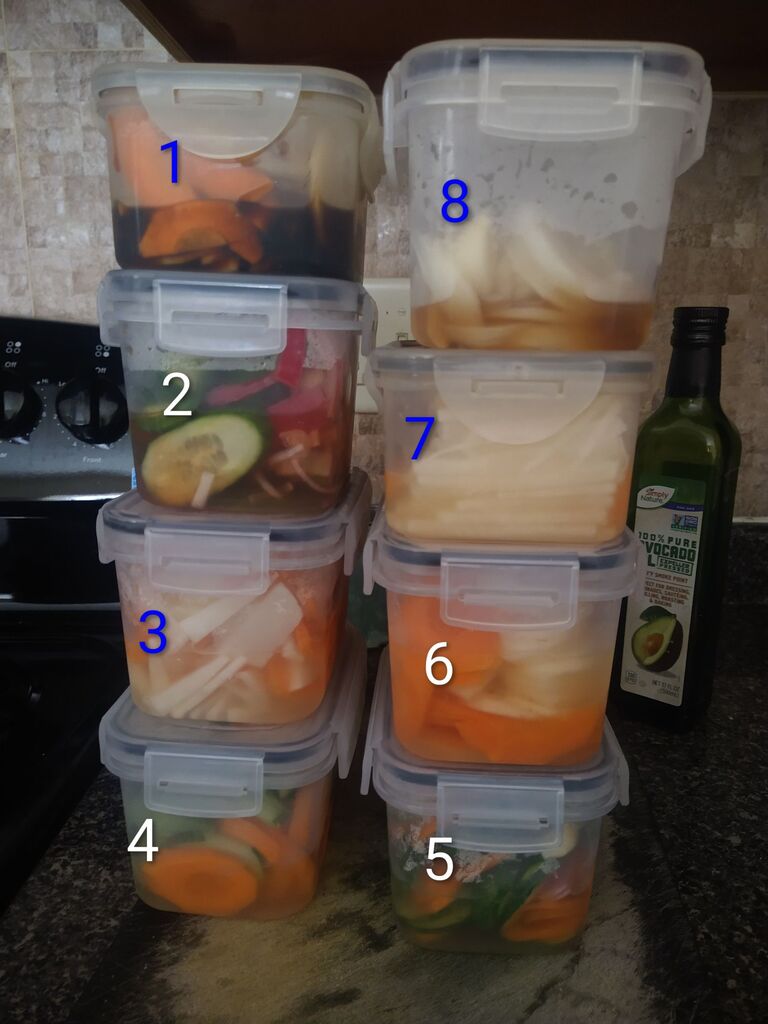
Eight small rectangular plastic containers with locking lids that could be stored in a cooler without leaking. They’re numbered to match with the descriptions below.

I was working with five big carrots, one and a half daikon radishes, 1 garden cucumber, 8 persian cucumbers, 1 purple onion, 1 yellow onion, 3 Vidalia onions, and 2.5 heads of garlic

1) carrots, daikon, yellow onion in black vinegar
2) cucumber and purple onion in red wine vinegar
3) a chunk of ginger in the bottom, carrots, and daikon in rice vinegar
4) carrots and cucumbers in rice vinegar
5) carrots and cucumbers and purple onion in rice vinegar with a dried chili
6) carrots and daikon in seasoned rice vinegar
7) fine matchsticks of daikon and carrot in rice vinegar
8) Vidalia onions, garlic cloves in malt vinegar

My other preparation ahead of time was to make little gifts I could give to camp mates and people displaying their Arts & Sciences research in competitions. I’m very proud of myself because I always forget tokens of appreciation.
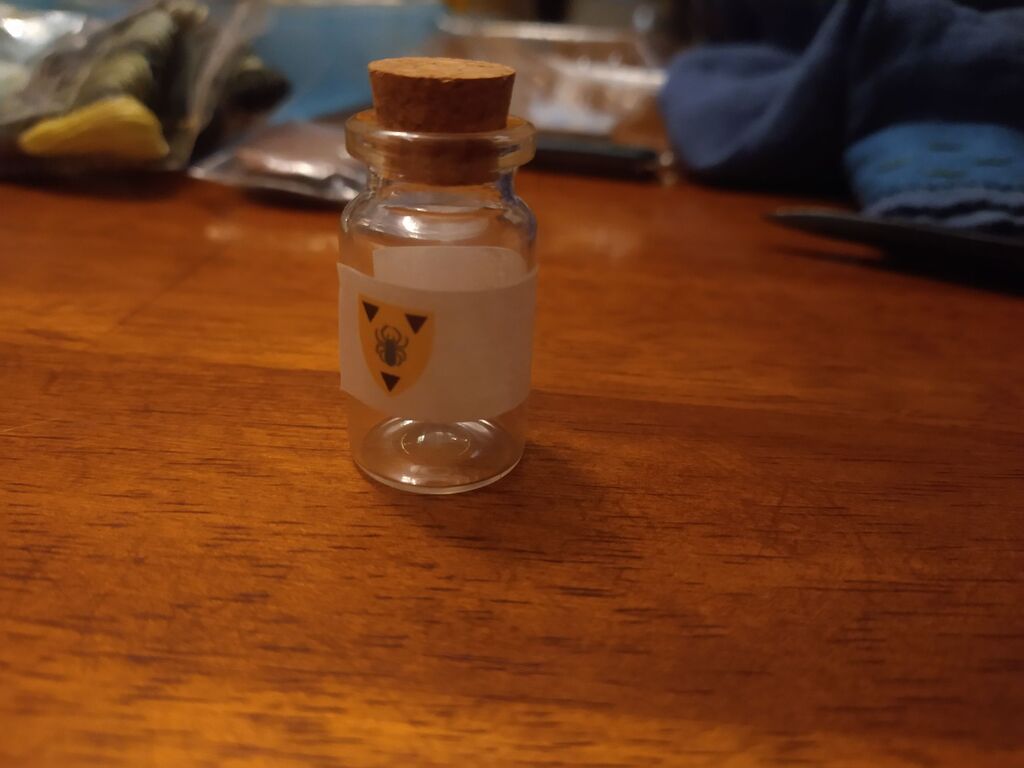
Proof of concept before assembling then at scale

I bought tiny glass jars with corks, and then I special ordered some washi tape to make a personalized label – and ended up getting the spacing perfect!
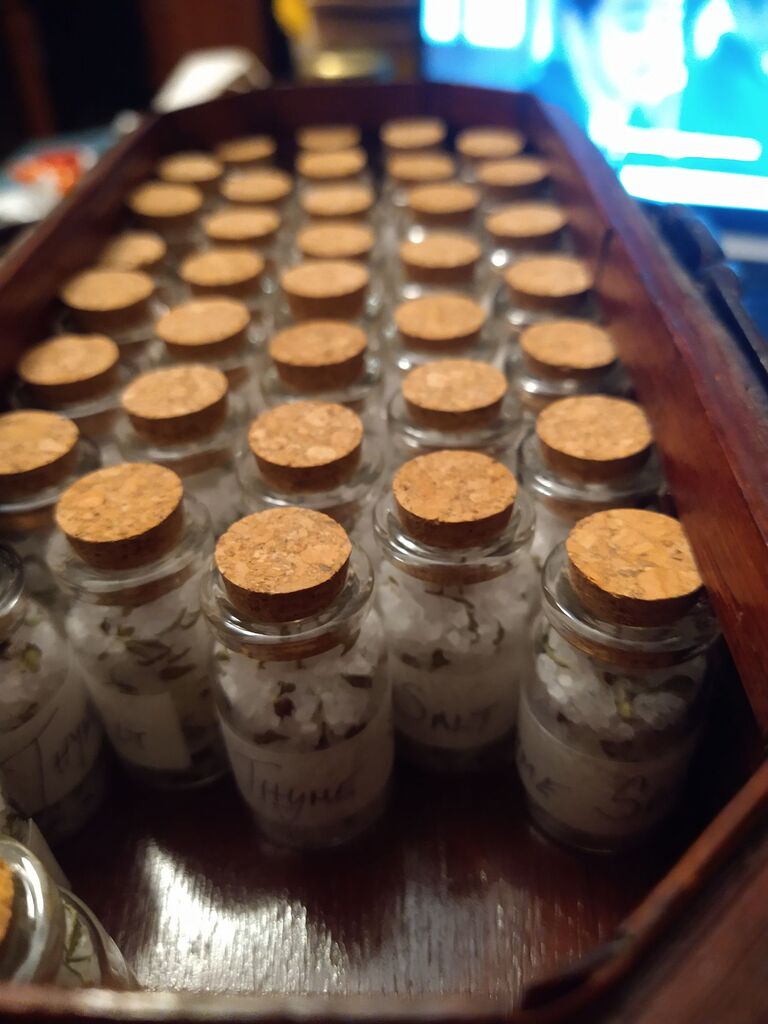
So I made 80 bottles

A few years ago, a retired former coworker of mine gave me some flavored salts that she had made (mostly with dried citrus zest), and that seemed like a reasonably stable gift that most people would not be allergic to. And I have been harvesting and drying more thyme from my garden thanks can use it give away, so that was that I decided to flavor my salt with. As for which salt to use, I’ve been very excited recently to have found a coarse salt that ALSO has iodine, so that was my choice (and yes, I did tell people about the iodine). And that was VERY well received as a gift. I’ll need to think of something similar to do next time I go.
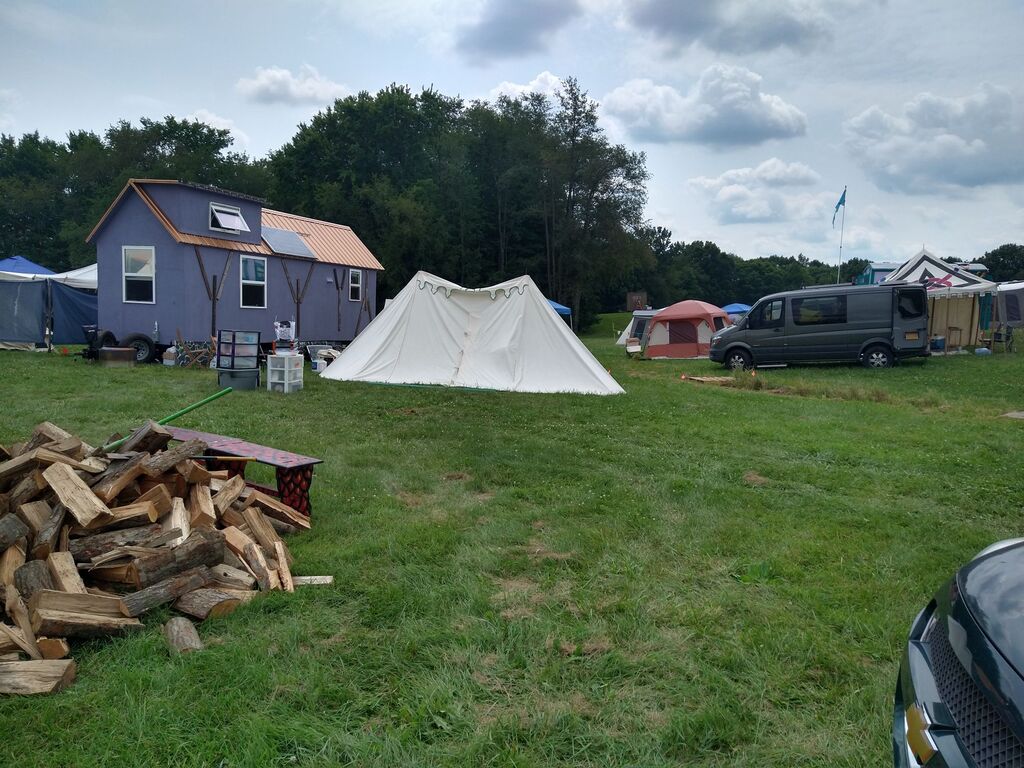
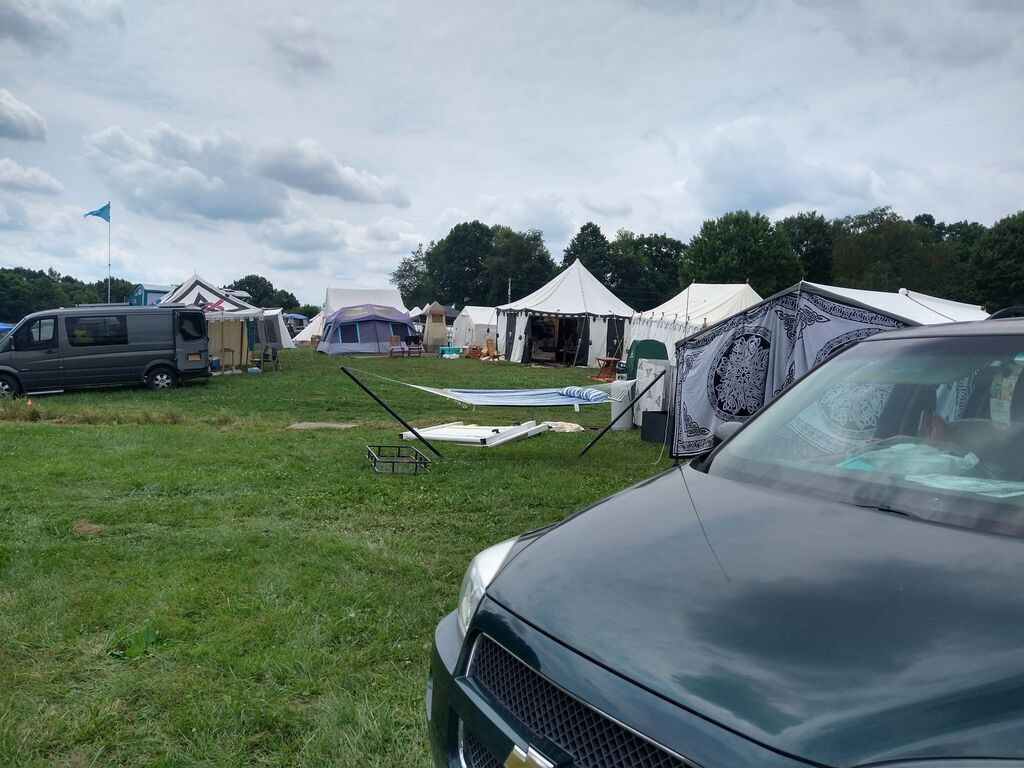
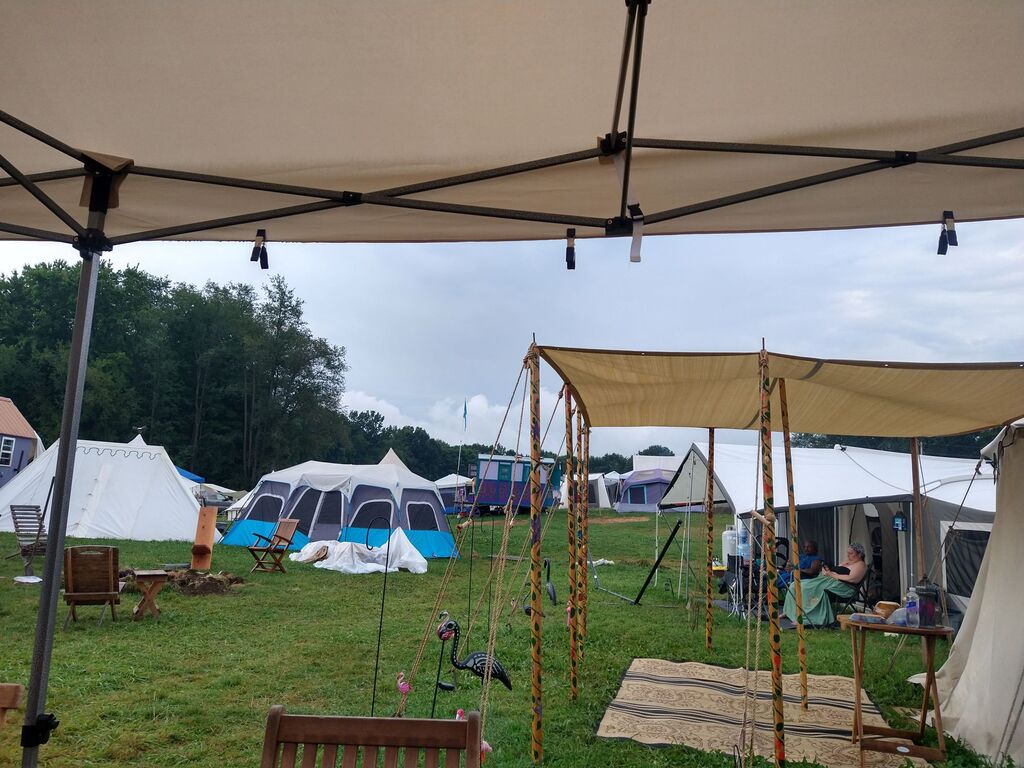
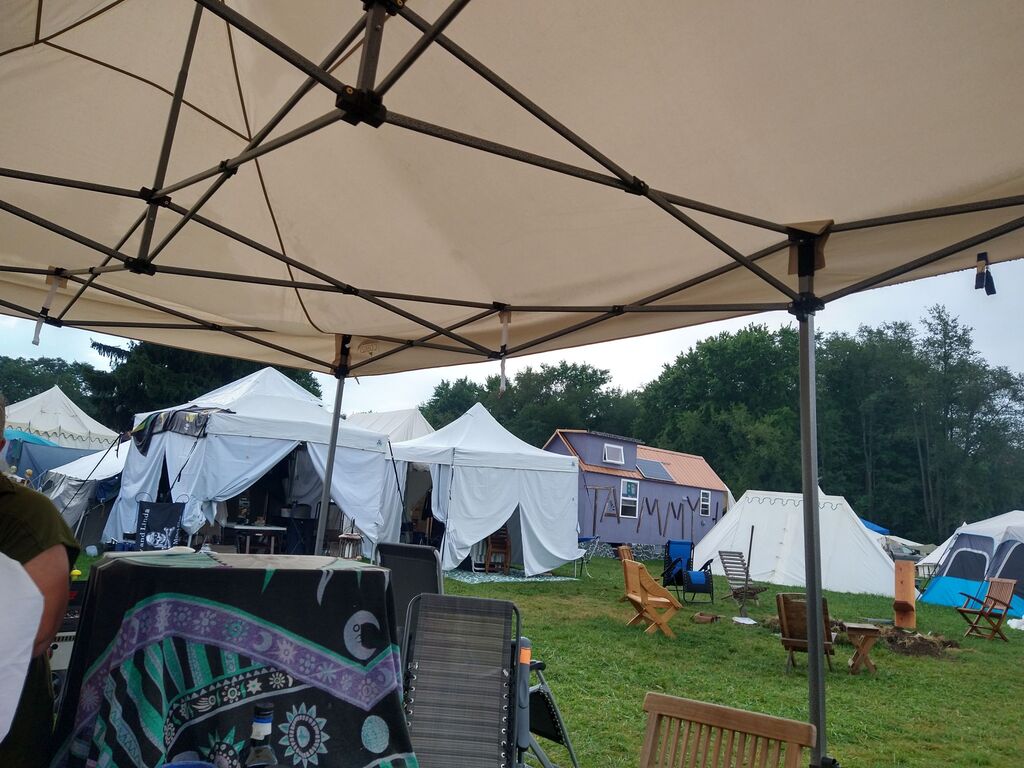
I took some pictures of setup the first couple days because I am amused by the tents with the big vehicles next to them. My car went to parking as soon as I finished getting my rent up and stuff inside. I don’t know if you can see it in the pictures (I can because I know it’s there), but we camp with a small river that has been cut in the middle of the space. I ended up having to park on one side and carry my stuff to the other side. But the advantage of having a river is that when we set up our shower, we don’t need to dig separate drainage! (But we do need to clear the weeds and from the trench to make sure it flows smoothly)
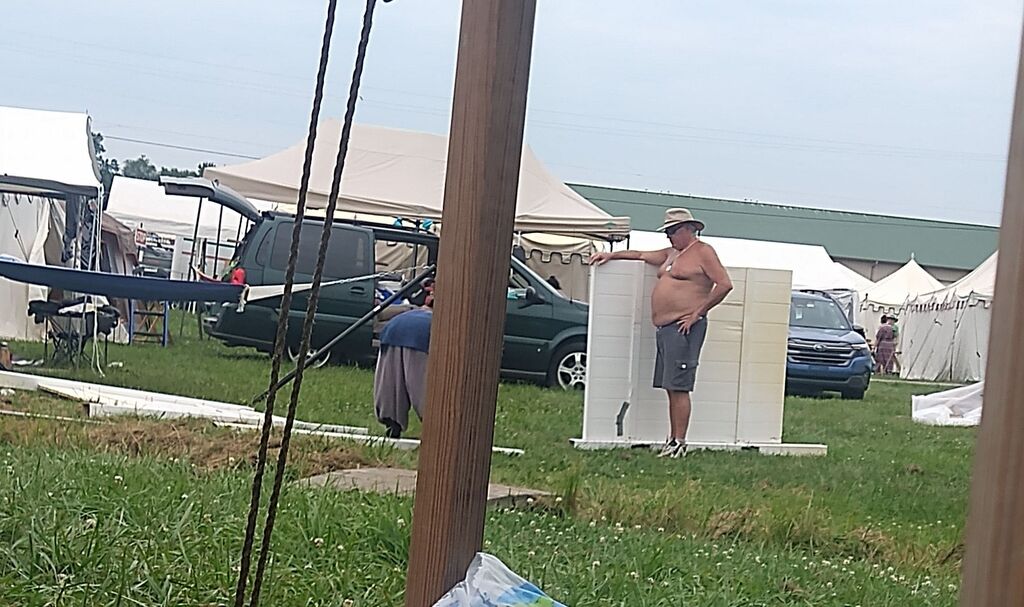
Campmates setting up the shower walls

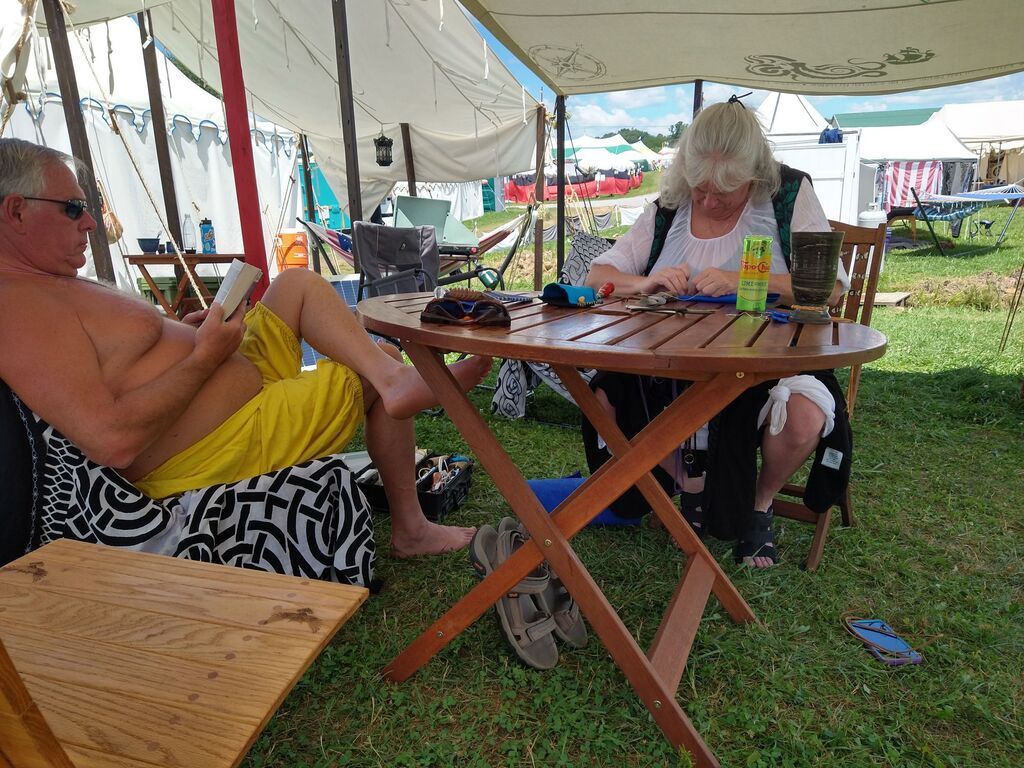
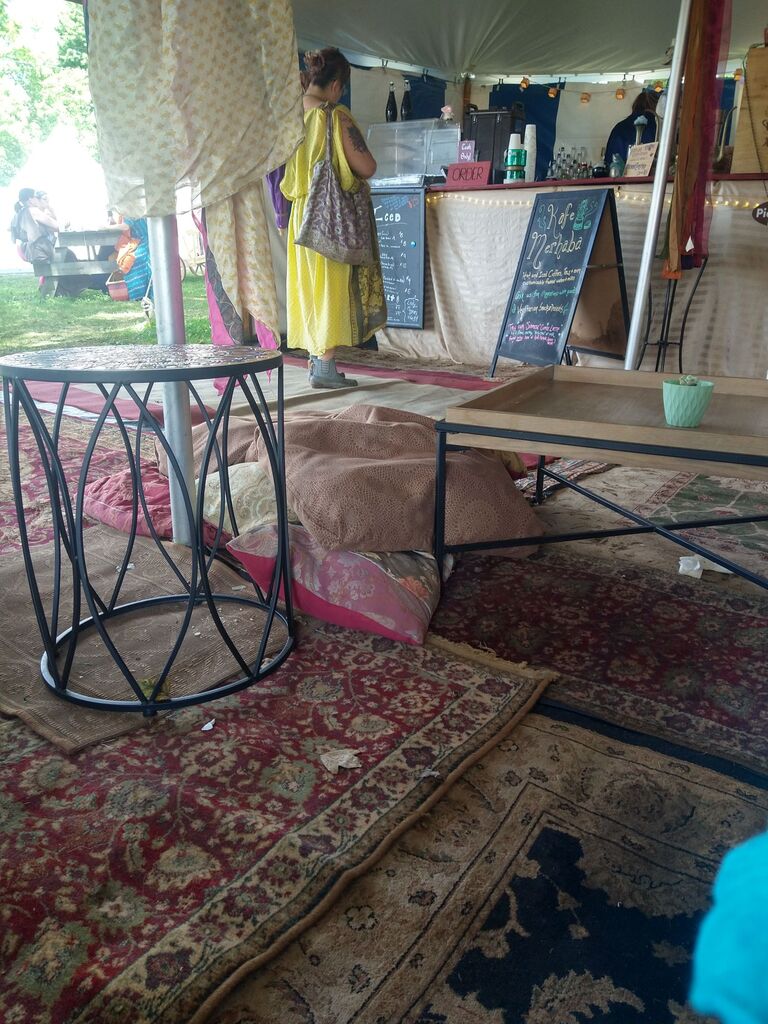
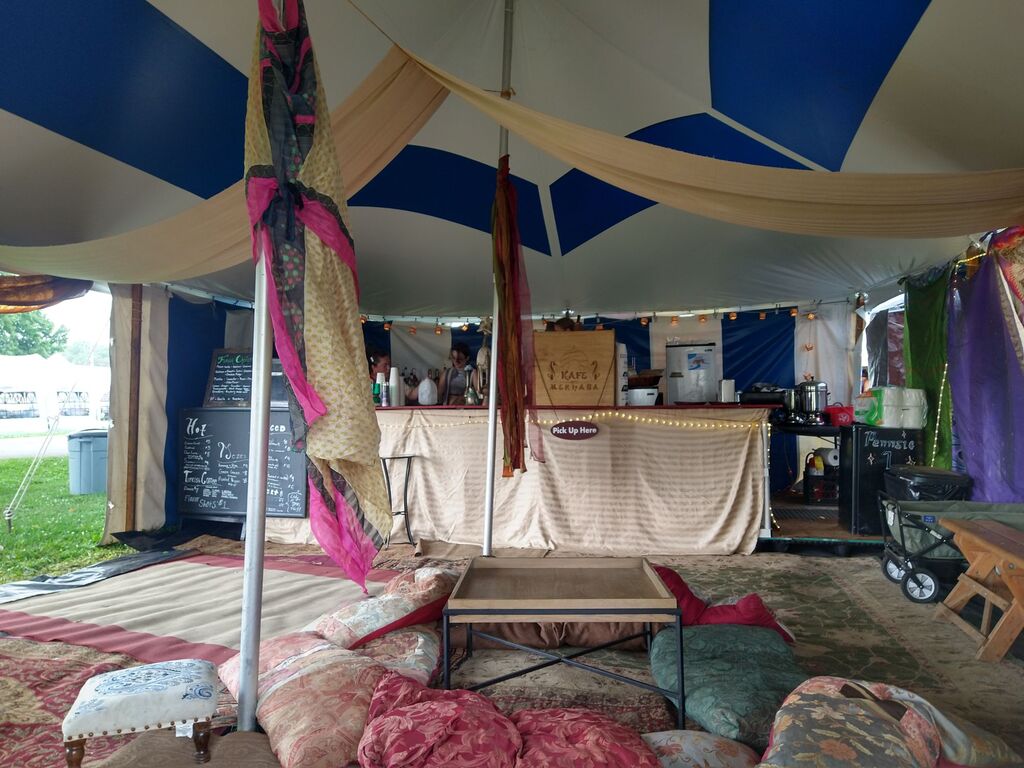
I didn’t end up taking any classes this year. I’ve had a very low activity couple of years, and I was finding that just hanging out near camp, staying hydrated, and slowly stretching and strengthening really helped. But there were people I had wanted to see, and I did get to see them regularly  and I also got spend time hanging out and sewing during the hottest party of the day at my favorite temporary Turkish coffee shop: Kafe Merhaba!
The only cooking experiment I did manage to do was making white rice in an unglazed clay pot over a charcoal brazier. And it didn’t happen the way I thought it would (with two steps at two different heat levels), but instead I just guessed that it was time to peek and see how it was and it was a already done. Did I remember to time the process? No. So I have no idea if it can be replicated. Did I take pictures to document the experiment? Nooo… But I think some of my camp mates did.
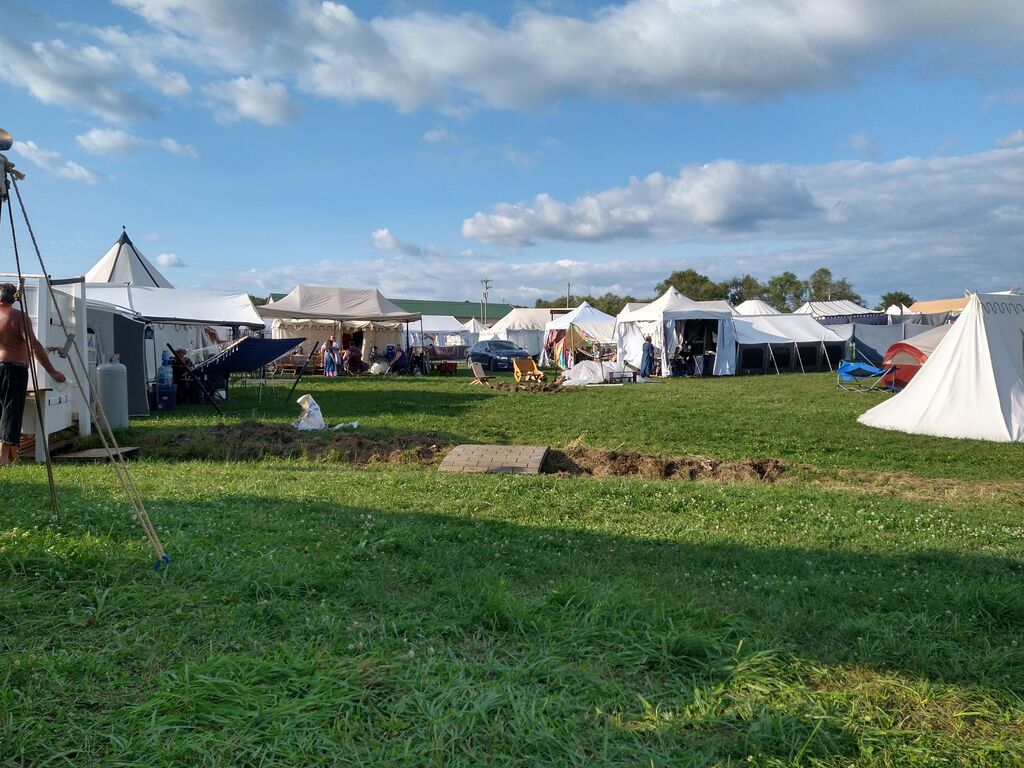
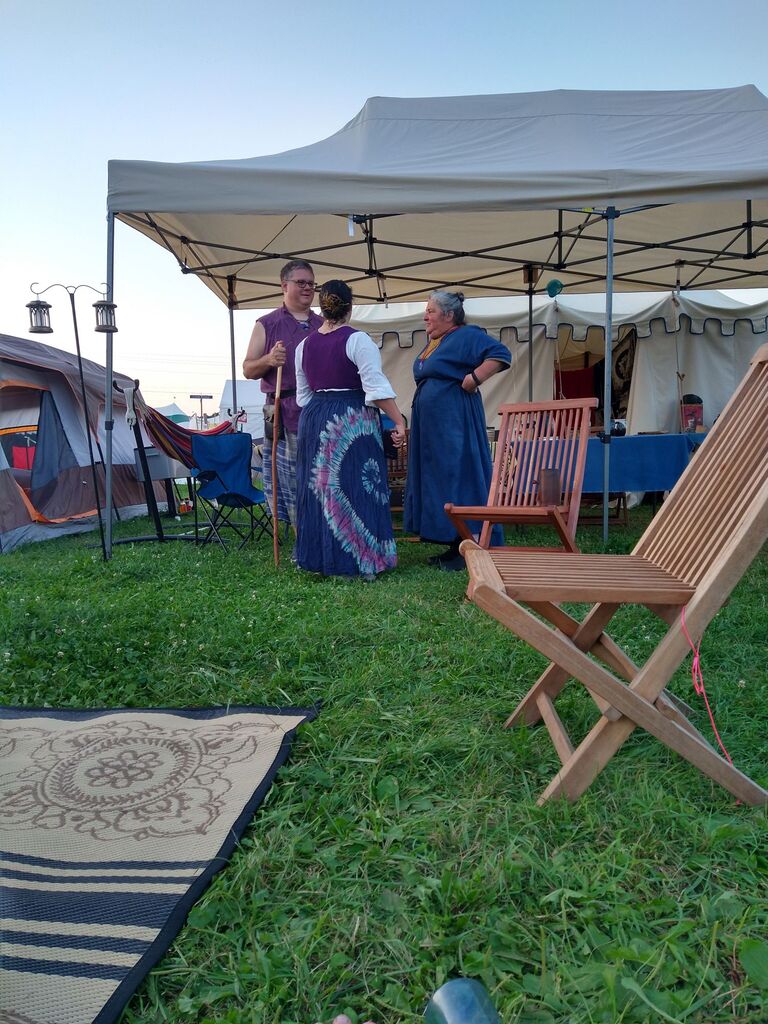
It was a lovely and cozy two weeks spent with some great people I only see when I can get to this event, but there’s no other group of people I would rather camp with.

I did do one new thing this year. I volunteered to help with scoring the A&S competitions (both the main one and the one out together by the collegiate discord. Since I’m still fairly new, my task at the big competition was to review the comments given by the team of judges to make sure they were not rude and did not contain offensive language. It was a fun team to work with, and I’m glad the competitors get to have that level of protection.
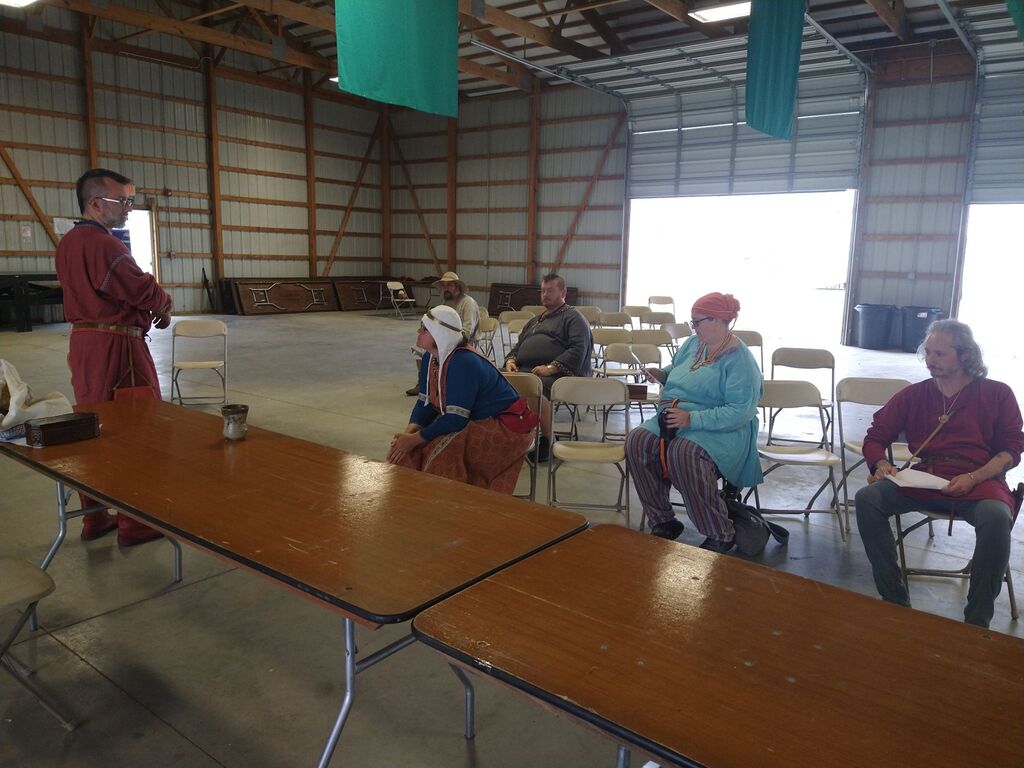
For the college level competition, we only had three entrants and almost a dozen judges eager to support the collegiate participants. We decided to switch from a competition to just giving commentary and feedback because all three were spectacular and there wasn’t much point in trying to rank them.

I think I’ll try to help out with both of these in the future as well.

But that was my Pennsic experience for this year.

Ova Elixa – Eggs dressed with fish sauce

This is another Roman recipe. I made it for Noisemakers IX.

So a lot of SCA events just have a bowl of hard boiled eggs in the shell – pretty much for people to fill up on when they aren’t adventurous for weirder dishes. So I found a recipe that would make hard boiled eggs one of the adventurous dishes.

These were served cut into quarters and already drizzled with the sauce, and a side pitcher so you could add more sauce, if desired.

Ova Elixa: liquamine, oleo, mero vel ex liquamine, pipere, lasere – Apicius VII, xix.2

Boiled eggs with a sauce containing fish sauce, olive oil, red wine, black pepper, asafoetida

So for the fish sauce, I ended up being convinced by my favorite cheese mongers to try BLiS barrel aged fish sauce. And I chose this dish to use it on because I thought the woodiness and the eggs would go well together.

We strewed the plate with baby arugula so the eggs wouldn’t shift in transport from the kitchen to the buffet.
The pitchers with the sauce were made by Brunissende.

And this was at the very start of the buffet so that it would be like the sources in a Roman dinner party – from eggs to nuts – but I forgot to put out the nuts in the end.

Laterculi: Poppy Seed Pop Tarts

Okay, so this is not an accurate redaction. Or, well, it’s about (slightly less) as likely to be accurate as anything else.

There’s a play by Plautus (Poenulus 325-6) there’s a reference to laterculi with the only description being that they are composed of sesame seeds, poppy seeds, (wheat) flour, and nuts.

Okay, so the name is also descriptive. It’s the word for bricks or tiles.

Some people take this description and match it with gastris, a food from Crete described by Athenaeus as walnuts, hazelnuts, almonds and poppy seeds, with fruit, honey, pepper and white sesame seeds. That will lead you to redactions both simple and amazing.

Now that last gastris redaction – which looks to me like a seedy fruitcake – would be perfect to make in an 8″ x 8″ x 2″ shape that was not unlike a common Roman brick shape.

On the other hand, Athanaeus’ gastris recipe has fruit and no flour. But Plautus was very clear that flour was involved in this project. Flour would be easy to add to the gastris because the nuts are working in a similar way. But it’s also leeway to go in a completely different direction.

One could make candies out of the honey and seeds with just a bit of flour.

Or! And here’s what came to my mind as being kinda fun – you could make pop tarts and call them tiles.

Okay, so pop tarts. First place to go is Smitten Kitchen‘s homemade pop tart recipe.

Next the filling. I liked how La Spelonca separated the poppy seeds and the sesame seeds. It both made them look more dramatic and kept the flavors clear and less like bagel toppings. So tentative working plan is to have two different flavors of pop tarts: Poppy Seeds and either almonds or walnuts or both; and Sesame Seeds and either hazelnuts or pistachios or both.

Okay, so poppy seed filling is a thing. But my first google search yielded only recipes that called for milk… but the Romans mostly ate their dairy in the form of cheese. It just didn’t feel right.

So I kept looking and loved this one that described the method and thought process beautifully and clearly – cook poppy seeds with a minimal amount of water, grind, cook again with honey and sugar.

Okay, so first I have to find the poppy seeds. So off I go to Amazon. And the first review right off the start informs me that real bakers look for unwashed poppy seeds for a richer, nuttier flavor and a better texture. Well, okay. So off I go looking at the unwashed poppy seeds and their reviews. And then things started to get weird. There was some division, but also some overlap, between the bakers and the people making poppy seed tea. And some of the people making the poppy seed tea seemed more interested in the color of their tea than the flavor, but others loved the flavor. Erm… And then I got to the ones talking about how ‘effective’ their tea and/or baked goods were. And there was the one who assured people that the reviewer really could tell that these poppy seeds were unwashed because there was plant material included as well. Ummm… I object! Because if I’m baking and there’s plant material, don’t I then need to wash the poppy seeds? But it wasn’t all double entendre and drug references, because there were still people staunchly championing the unwashed seeds while listing their preferred baked good and their baking credentials. But then I got to the one that was all, “I just made the best batch of muffins ever. Now I’m off to take a nap.” And I just. Now I have no idea whether kolaches is actually a baked good or just a wink and nod drug reference in the land of amazon reviews. So I still haven’t what to buy for making a large quantity, but I picked up half a pound of what are definitely washed seeds at a spice shop in the Italian Market.

So poppy seeds and water in a small saucepan. Check. Going well. The poppy seeds take on moisture, darken, and swell.

Grind the poppy seeds… doesn’t go so well. I put some in my mortal and grind it with the pestle… and it goes okay, but every time any utensil touches the poppy seeds there’s mess left behind. And so after a few desultry grinding attempts I figure I might as well see if I might like the consistency of it not ground all that much. So I put it all back in the saucepan and add the honey. And then add more honey because honey was more common that sugar back in the day. And then panic! Because the honey just liquifies and everything becomes sloshy. And cooking it more doesn’t make it any drier. And what if I really needed sugar to get a good paste because of how honey is like an invert sugar? Eh, whatever – let’s refrigerate what I have and see how it moves tomorrow. Plus I’m going to add nuts to it.

And the paste is fascinating! I used a fork to move it and it’s sort of a non-Newtonian liquid. Woo!

Okay, so crust. Filling. Assembly!

I got a friend with skills and a marble rolling pin to help with the first set of rolling out (I’m hoping I can use my pasta roller when I’m on my own). I rough guessed a size that’s smaller than pop tarts. My goal is to find a size that stretches my supplies while still being large enough to not get grabbed by the handful. One or two should be an intuitively obvious portion size. These ended up about 4″ x 3″ (and I think I could go a smidge smaller and have them about the size of poker cards).

I did one batch with just an egg white wash for sealing and one with a beaten egg. I think I’ll go with the beaten egg for future versions (because simpler to brush and more efficient use of stuff).

About 2 teaspoons of filling lumped in the center. And then I spread it out with my fingers because everything else seemed to just get coated in seeds more than helping to move them where I wanted. I left 1 cm margin. I can try getting a narrower margin, but too narrow might lead to disaster. And then I crimped the edges sealed with a fork and poked holes in the top.

I started the oven at 350F. And then after 10 minutes with no obvious cooking I popped it up to 425F. Total cooking time was 25 minutes, and that was a little too much (very brown, some corners just starting to burn, still entirely edible and hella tasty). Then I looked at the recipe, which was 350F for 30 minutes. So I just panicked too early.

When they were cooking, there was enough butter in the dough to lead to puddles of bubbling fat that were almost frying the pop tarts. So not okay for a toaster! But it was kind of sexy on a lined sheet pan.

When you bite in, the first taste is browned butter. And the second bite is also butter with a bit of pastry. When you get to the filling, it’s amazing. The nuts and poppy seeds are a lovely texture among the crispy pastry flakes and I’m not going to worry about grinding the poppy seeds at all for the future. And the honey is a great balance to the butter. It’s sweet, but not too sweet. They’re going to make the best breakfast.

So plans for the future:

* reduce butter per 2 cups of flour from 1 cup to 3/4 cup (12 tablespoons)

* try rolling out with pasta roller

* Cut to 3.5″ x 2.5″

* Poppy seed & almond is great. Also try sesame seed & hazelnut.

* Make 75 of each flavor; 150 total. Freeze before baking.

More Roman food

Fair warning – there might be a lot of posts all in a row. I’m planning a ancient Roman menu and am going to be putting my thoughts together here.

Starting off with 2 main sources – Apicius, which I’m familiar with, and Mark Grant’s Roman Cookery (which references ancient sources and then sometimes veers pretty far off, and I’ll need to go back and check his translations)

Outline (links to specific posts for each recipe to come later)

First thematic group

So this Roman Cookery book has a recipe for Ham in a red wine and fennel sauce (p.124-125) that’s described in the “Heidelberg Papyrus” which I haven’t tracked down yet. But it looks simple and tasty, and more importantly looks like it can be served on the side of either sliced ham as a preserved meat or ham as a cut of meat, cooked and sliced cold.

If the latter, there is an easy recipe for pork boiled in water with dried figs and bay leaves in Apicius (VII, ix, 1 & 2)

This would be lovely near Cabbage Salad that Grant (p.142-143) cites from Mnesitheus of Cyzicus, quoted in Oribasius’ Medical Compilations. Possibly also hard to track down. But it’s sliced cabbage in vinegar and spices. The closest recipe in Apicius (III, ix, 1) has you dressing the cabbage with salt, old wine (not vinegar), and oil. But most of his recipes have you cooking tha cabbage.

this group: gluten free, dairy free, fish free

second thematic group

Cucumbers in a quick refrigerator pickle (Apicius III, vi, 3) – I’ve made this before, and it’s pretty easy. Recipe does contain liquamen.

Olives & Celery – another Mark Grant recipe (p.74) from Columella – which should be significantly easier to double check. I want to take the serving of this as an olive and celery tapenade piped into celery logs

Hard Boiled Eggs – quartered and dressed with liquamen, pepper, and asafoetida (Apicius VII, xix, 2) and I figure there will be some plain eggs held back for less adventurous people and children

Patina of Anchovies – wash the anchovy, and steep in oil. Arrange in an earthenware saucepan, add oil, liquamen, and wine. Make a bouquet of rue and origan, and put it in. When cooked, remove the bouquet. Sprinkle with pepper and serve. (Apicius IV,ii, 11) – they were available for a good price and seem iconic for Roman food.

notes for this group: gluten free, dairy free, contains egg and fish

thematic group 3

Moretum is in Grant (p.72-73) citing pseudo-Virgil, but I’m also pretty sure the Apicius listserve has had copious discussions of this cheese, herb, and garlic spread with more than one ancient source.

Goat Cheese and Rice in Vine leaves – Grant (p.94-95) from a commentator on Aristophanes. Rice and cheese wrapped up in leaves, browned and fried in honey. For some reason the directions include unwrapping the rice as a stage, and that’s weird. So I need to look into that (and find an excuse to skip that step). This is a labor intensive reach recipe I might ditch. My plan is to make it a month or so ahead (possibly host a workshop to have several people help) and take it as far as browning the wrapped packets, and then freezing them. And then on the day of they can be reheated by frying them in honey.

Selection of white brined cheeses. Totally influenced by my trip to Istanbul, but I’d like to offer a couple different feta-like cheeses that have different flavor profiles.

Selection of crudite

  • carrots
  • asparagus (blanched – Grant p.142 from Anthimus)
  • endive
  • celery
  • broccoli rabe (if fresh and affordable)
  • sliced mushrooms

Lucanian Sausage (Apicius II, iv, 1) if my sausage making friend can get it done in time to smoke and age. This is supposed to contain fish sauce, and I’m torn between leaving it out and offering versions with and without… or making people suck it up and only try if they’re willing to have some fish sauce. Whatevs. Also considering whether it would be a good idea to have this on the table with the other pork products, but I like it with this group of food items more… will think about dietary restrictions.

Almond-stuffed dates (Apicius VII, xiii, 1) – which I’ve made often and are always well received

notes: gluten free, (possibly fish free – see sausage)

thematic group 4

Sesame Crackers – yeah… there are 2 drastically different hypotheses in Grant (p.154-155) from a short line in Athanaeus, so the end product is totally unreliable, but I’ve had an Alton Brown recipe for sesame crackers that I’ve been meaning to try for months now.

Honey & Sesame Flatbread (Grant p.97 from Athanaeus) would be a performance piece made hot the day of. Only if I’m feeling up to the added stress. One of the reach goals

Mushroom-shaped Bread (Grant p.53-54 from Athanaeus) is again pretty damn hypothetical. The sources just specify the shape and the things that make it different from a standard white bread recipe. But we don’t know their standard recipe. I’m willing to do some experiments and make some educated guesses, but this is something supported by archaeology as well as text, and the redaction looks like it would be easy to make in foil tins, which would make it super easy for this sort of setting.

Fried Dough with honey & seeds (Grant p.57-58 from Cato) is the performance piece my sausage-making co-conspirator wants to make. And since several people have offered friers it wouldn’t be too logistically complicated.

And then maybe some not roman at all honey butter for the bread, and olive oil with herbs.

notes: 2 recipes are dairy free, all the gluten, fish free, vegetarian, some dairy

breakfast set up

Coffee, Tea

Hydromel (Grant p.82-83 from Bassus) actually looks like it would make a good weak hot apple cider
1 part cider | 2 parts honey | 3 parts water

Seed stuffed buns (Grant p.106-107 from Plautus) Again, a very oblique mention. I’m thinking of these like miniature pop tarts stuffed with poppy seeds & almond or sesame seeds & pistachio – or something like that. And these would be something where we’d make it way ahead and freeze and then just pop them in the oven first thing when we go to set up. **expanded here**

~~~~~~~

Prep timeline

4 months – 1 week ahead
Cabbage salad (refrigerate in jars)
stuffed dates with nuts (freeze)
Lucanian sausage (hang dry / refrigerate)
Stuffed leaves (freeze)
Cucumber pickles (refrigerate in jars)
Seed stuffed buns (freeze)
make signs and labels for everything with all ingredients

week before
boil pork / find where to buy ham (vacuum pack and refrigerate)
hard boil eggs
make olive/celery tapenade
moretum
sesame crackers
double check your signs/labels

1 day ahead
crudite
– celery, carrots, mushrooms
– blanch asparagus
– cook sauce for ham/pork
– bake mushroom-shaped bread (maybe reserve a couple to bake on site for delicious smell and hot bread-ness)
– mix dough for flatbreads
– thaw frozen things
– triple check your signs and labels

Day of event

  • start coffee and hot water
  • bake seed buns
  • make hot cider hydromel – serve in crock pot
  • is there a mini crock pot for the ham/pork sauce?
  • fry dates in honey (can be done in a tray in the oven)
  • peel hard boiled eggs
  • fry stuffed leaves in honey (can probably be done in a tray in the oven)
  • quarter eggs and dress with sauce
  • slice ham/pork
  • fill celery logs with tapenade
  • arrange crudite and cheese plates, arrange all the other things, too, why don’t you?
  • how are we feeling about the fried dough and flat breads?