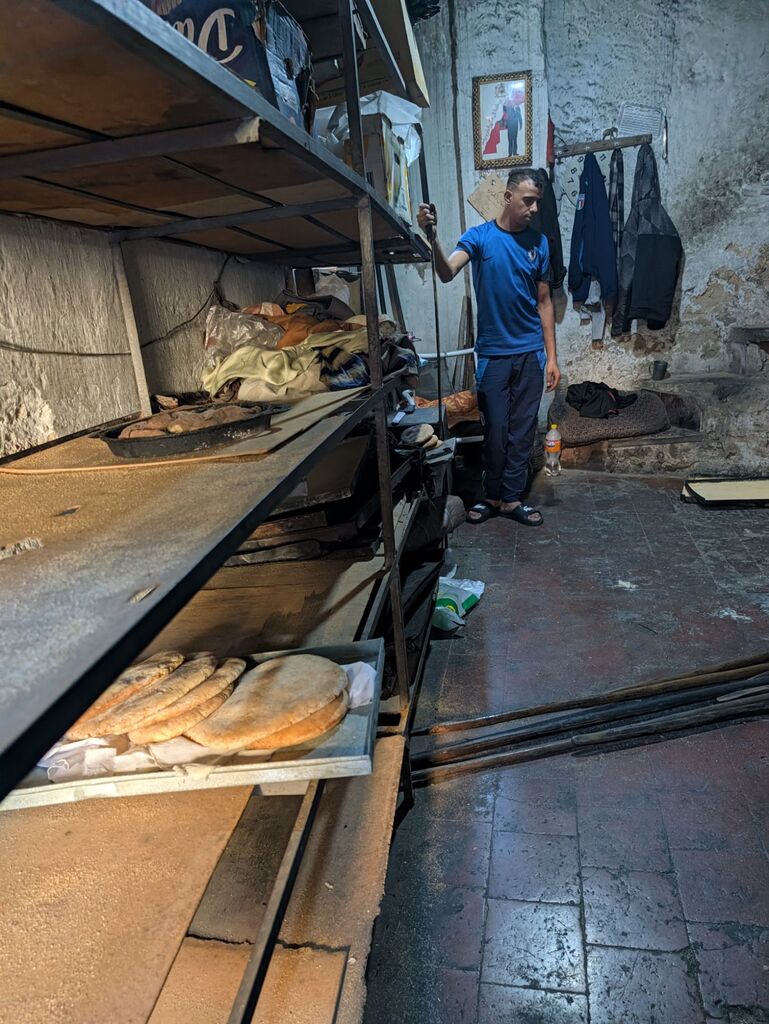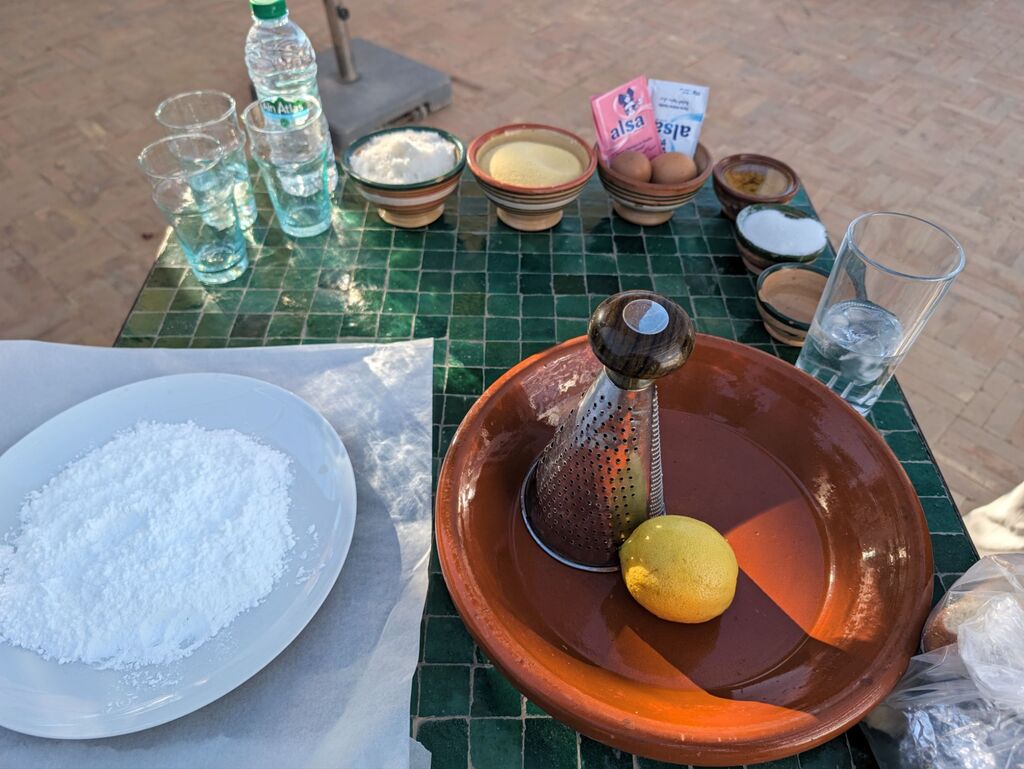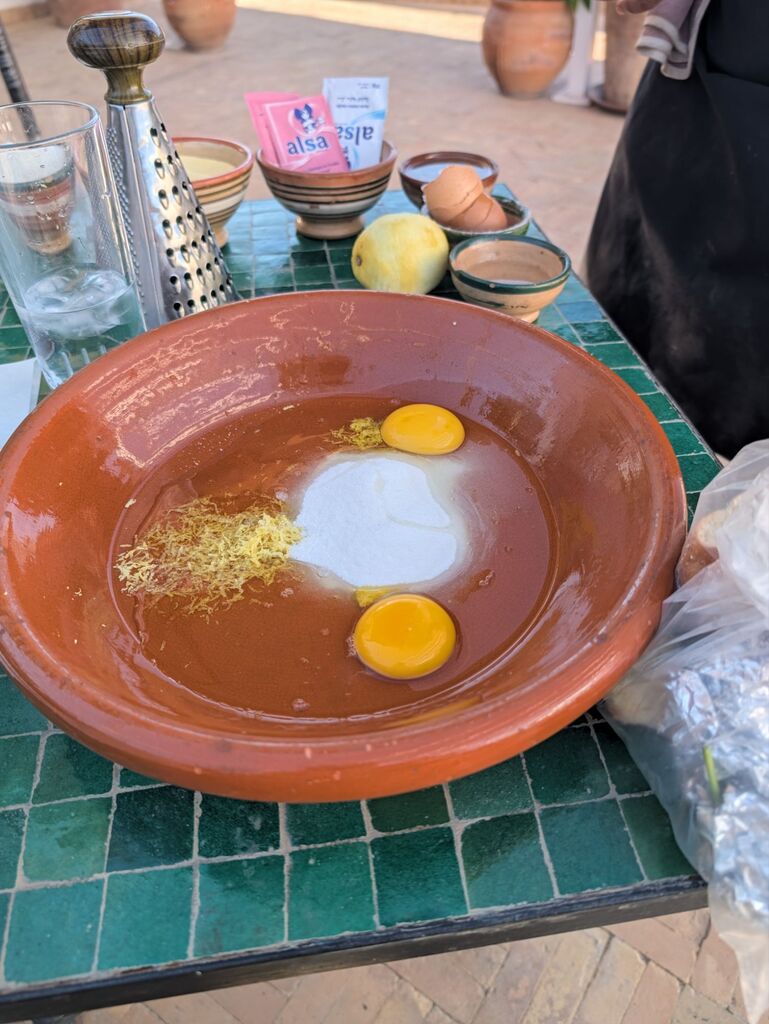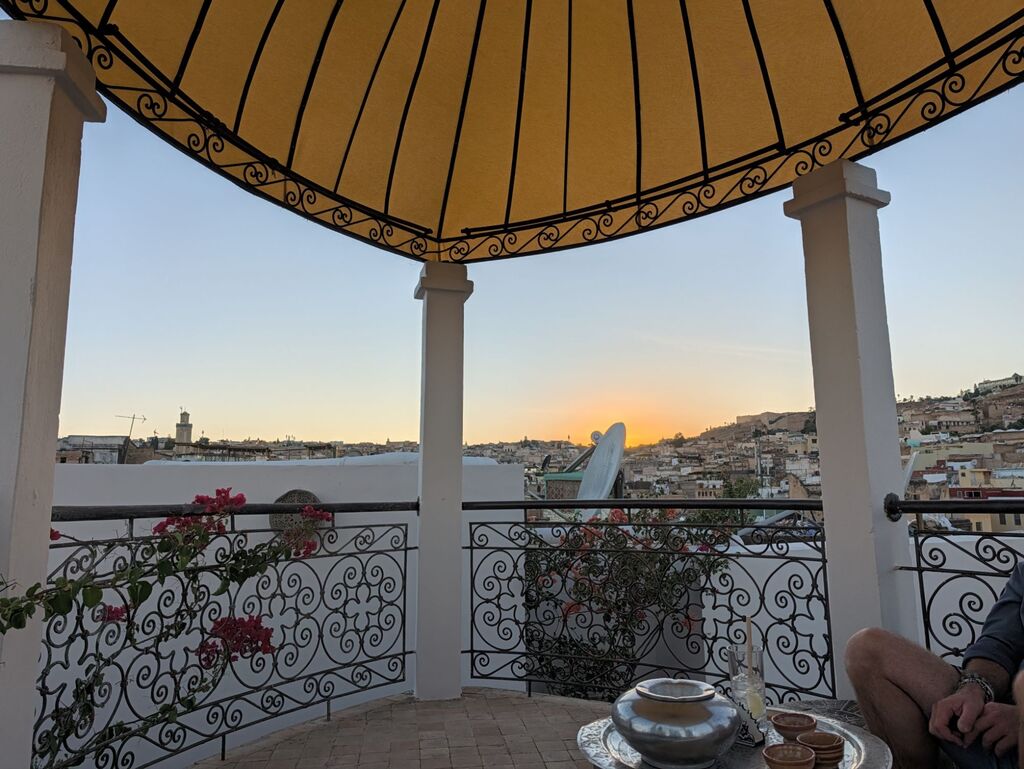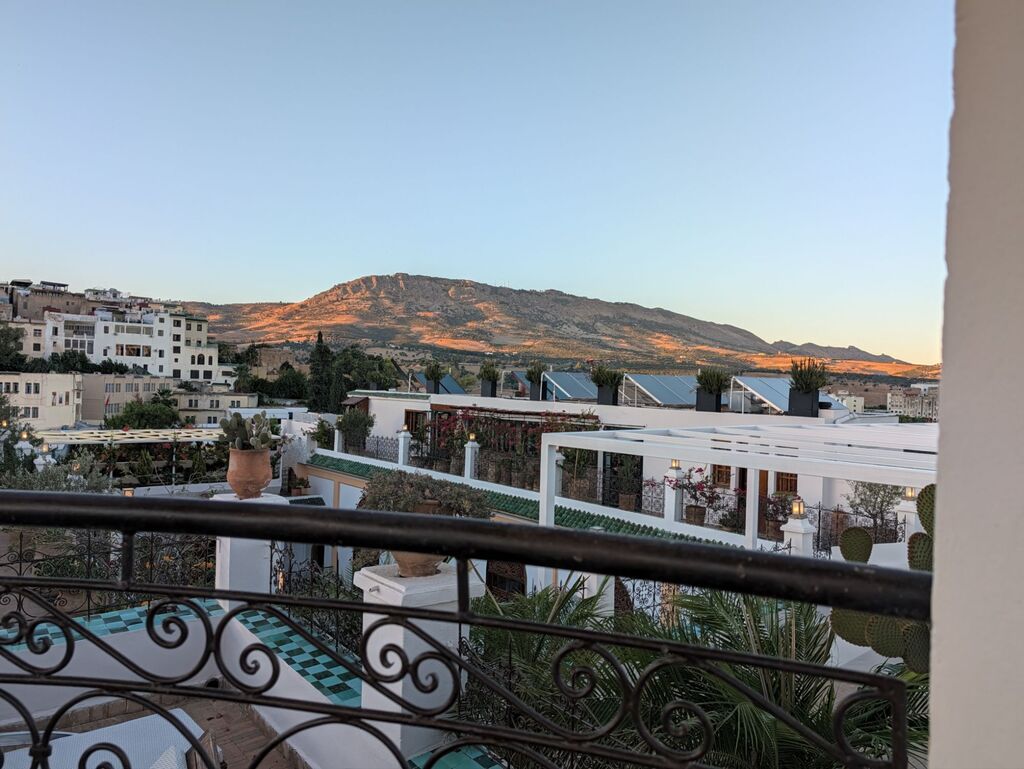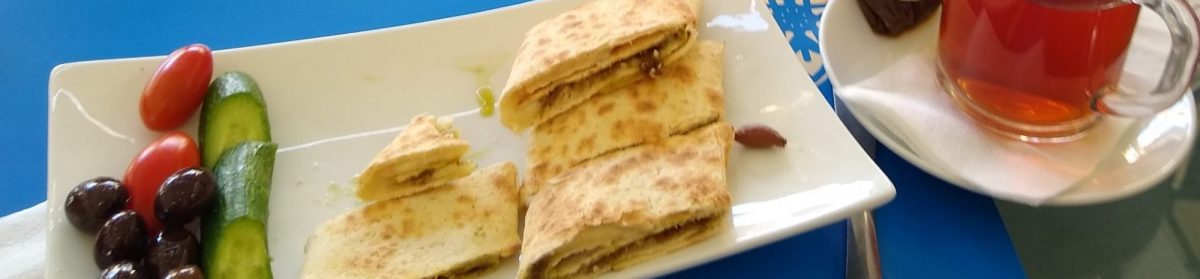
Check out at 11am, but flight isn’t until 8:30pm. Luckily Dar Hayati will hold my luggage and has arranged a taxi to the airport around 5pm.
Soooo… I decided to last minute sign up for another cooking class! This one through AirBnb just because that was easy and it was only $35.
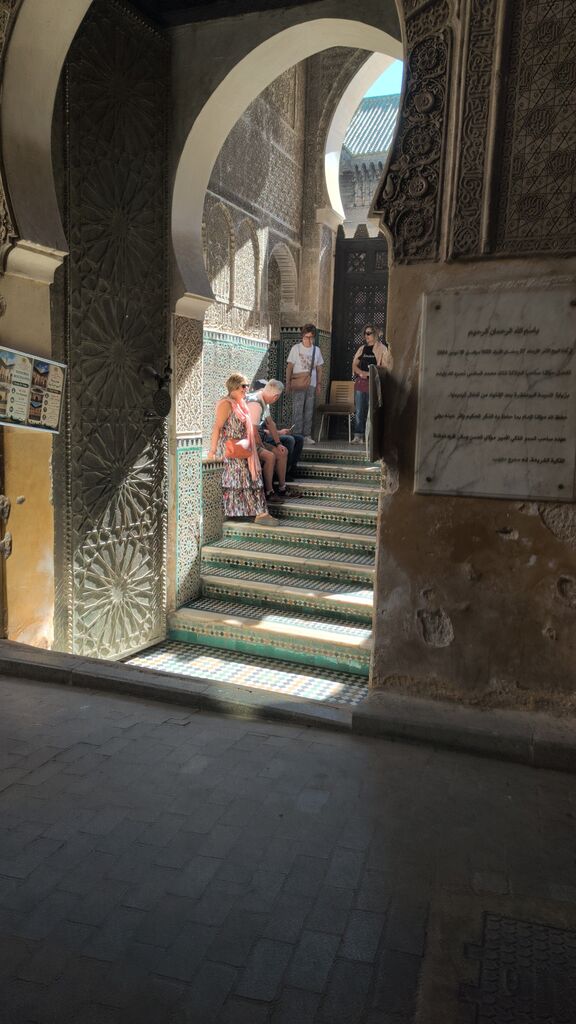
المدرسة البوعنانية فاس
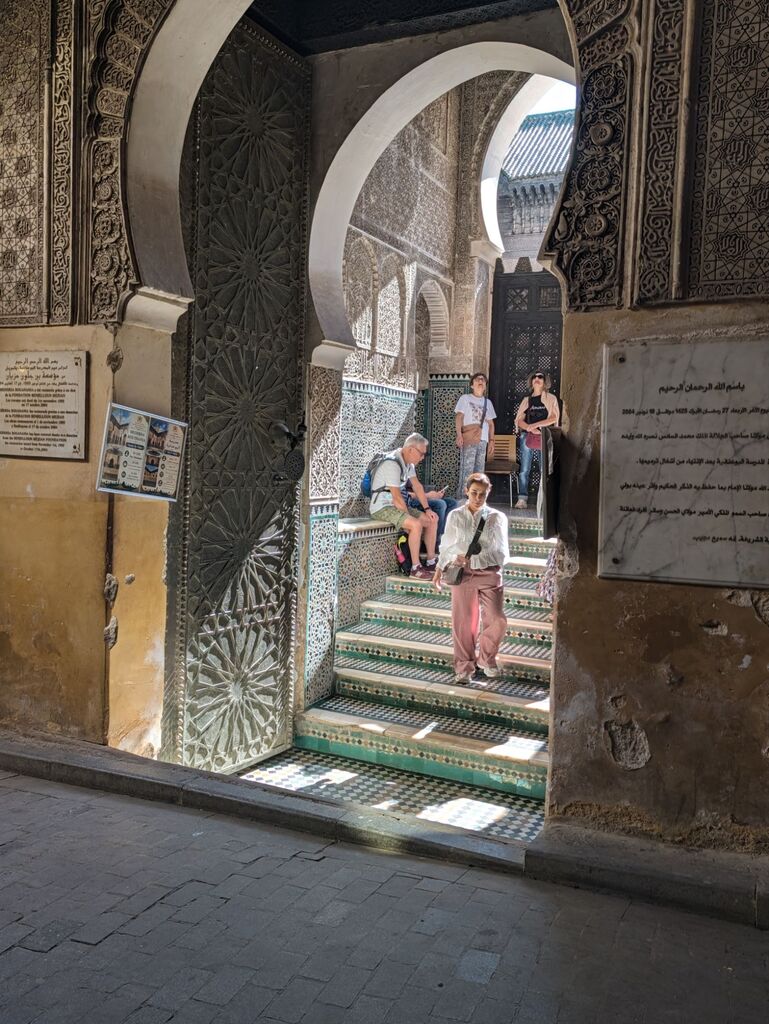
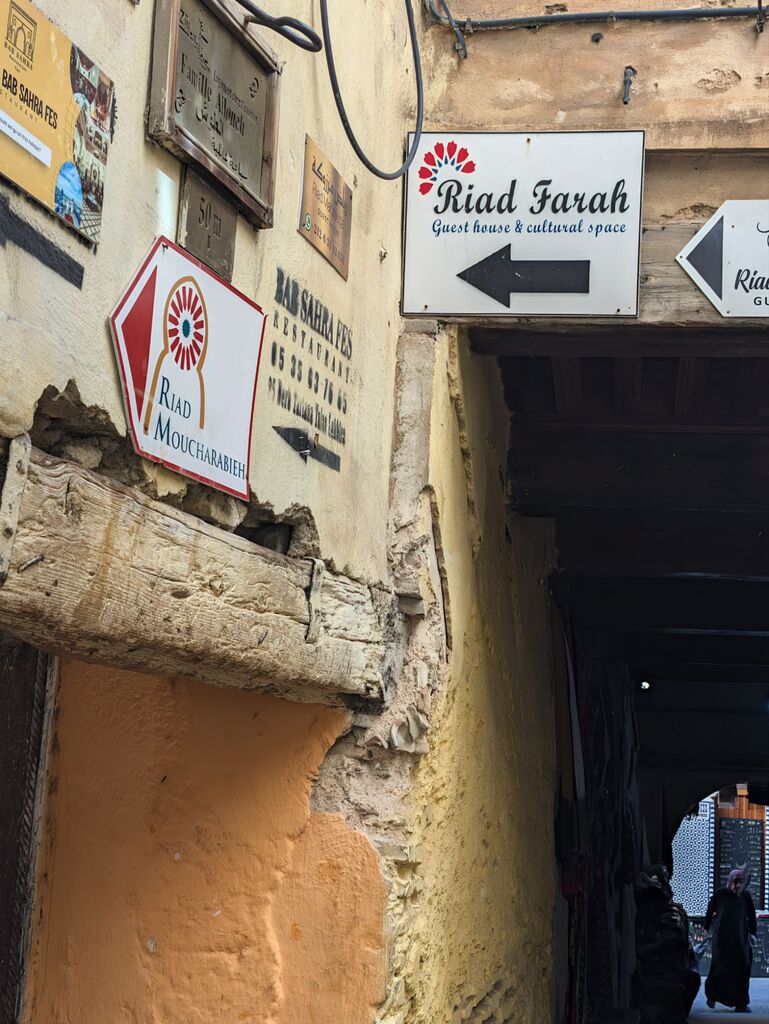
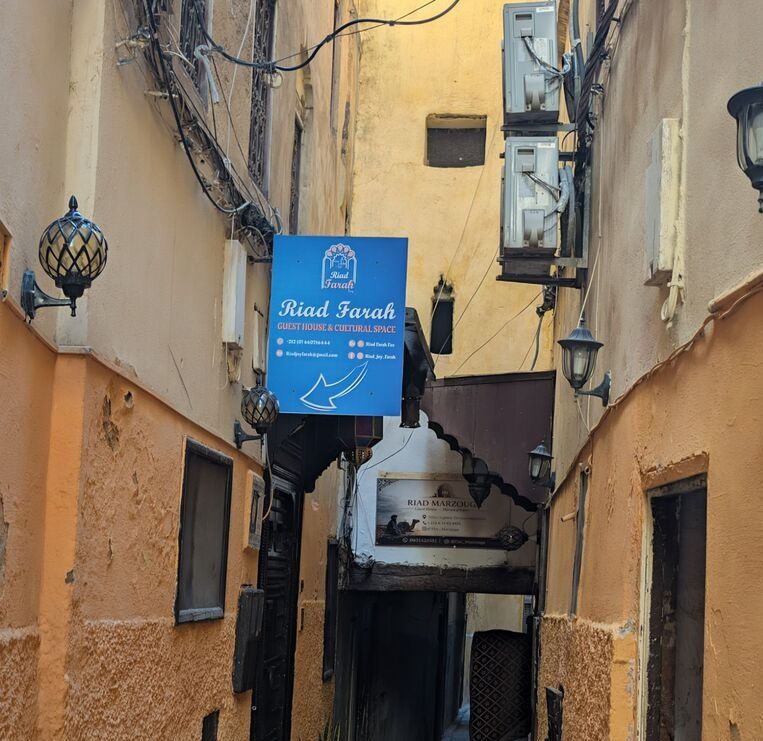
It was a little tricky to find the Riad with the class, but after waiting at the point where I was supposed to go to see signs pointing the way (the entrance to Bou Inania Madrasa), I went exploring and found the likeliest alley, and a little farther on ended up finding signs to the riad.
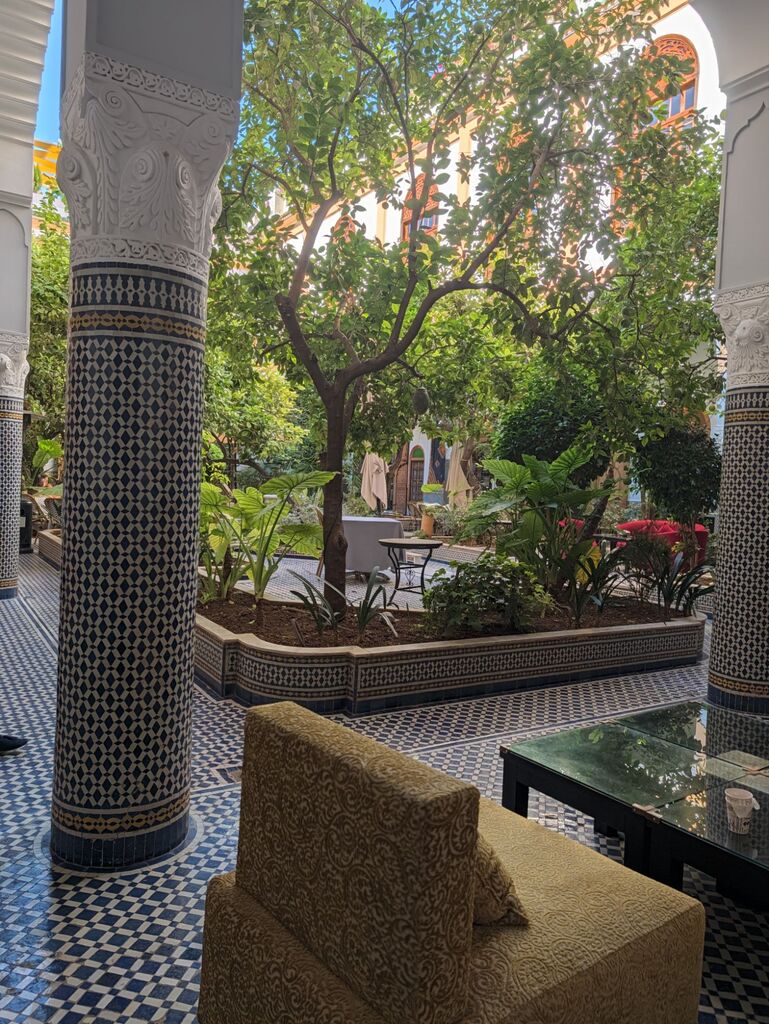
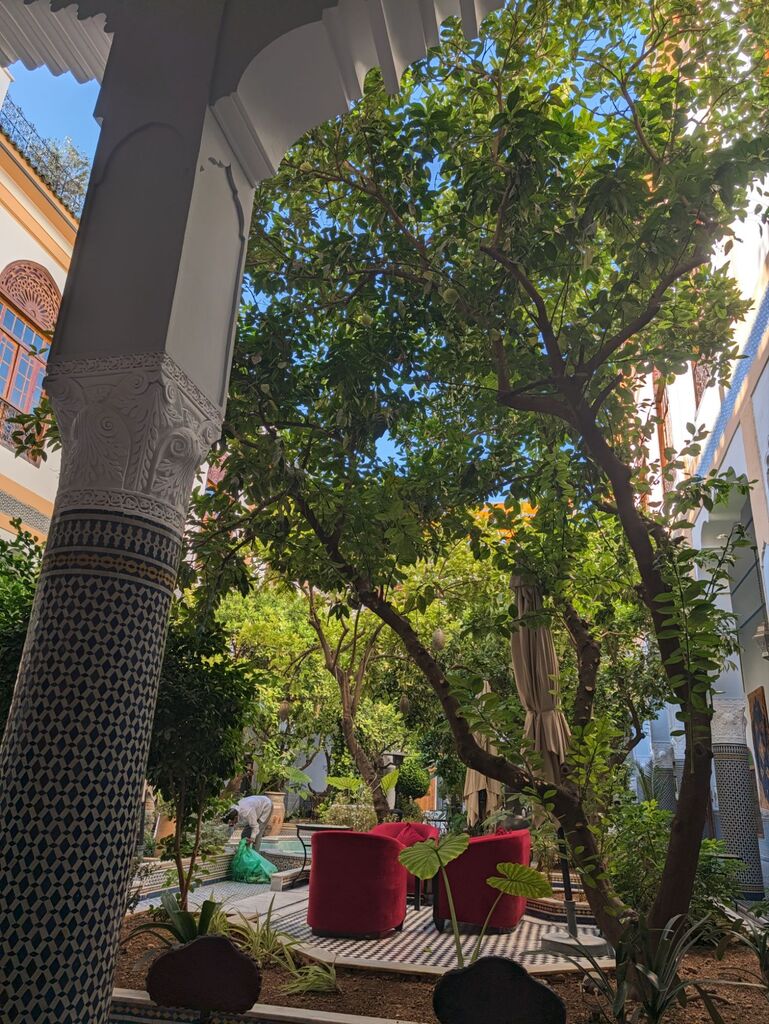
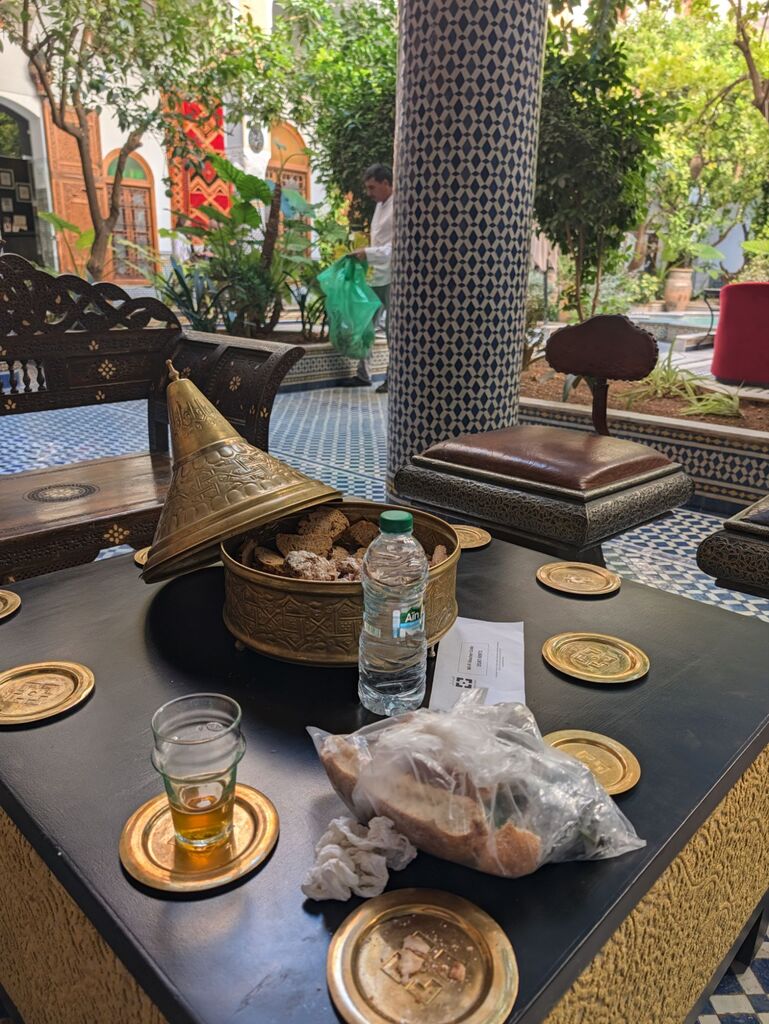
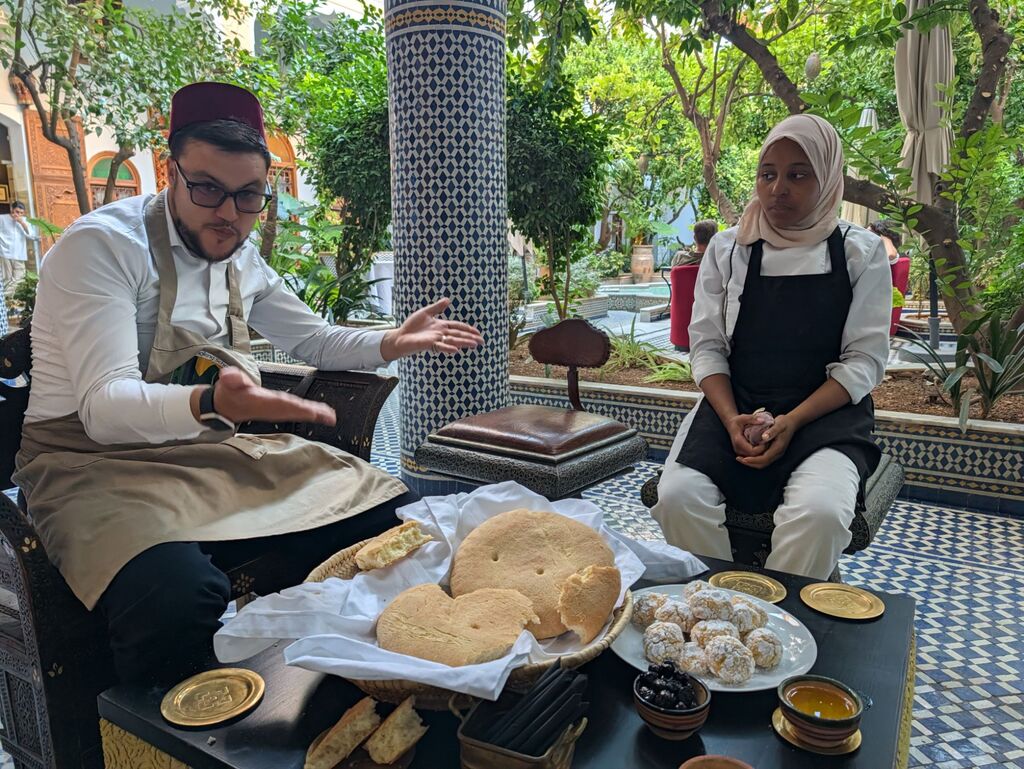
The friendly staff (named Omar) welcomed me, gave me tea and nibbles, and had me wait for Chef Omar, who arrived promptly for our 11am start time. We joined that you needed to be named Omar to work at this riad.
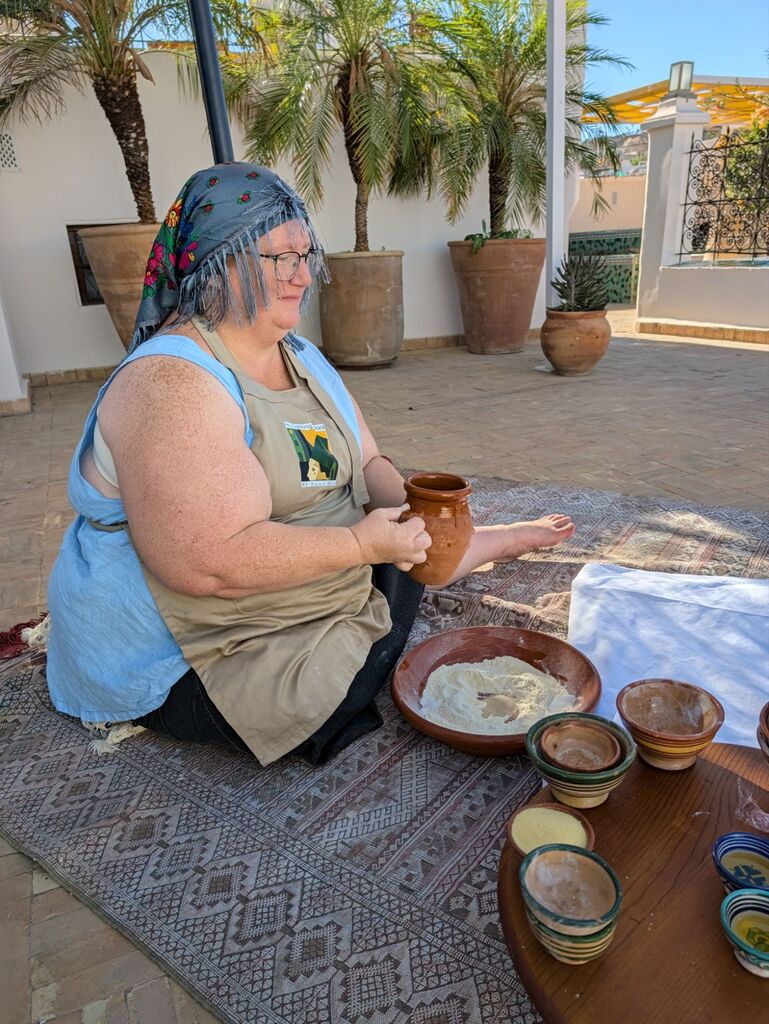
And the first thing the chef did when he came in was to give me a culinary history of Fes, which was fascinating – especially the Sephardic influences. And then he asked what I would like to learn, so I asked to learn couscous! And I decided to go vegetarian. We then covered that couscous is almost exclusively made on Fridays and traditionally had 7 vegetables to be properly balanced (any 7). But since we weren’t waiting for Friday, we might as well also include whatever vegetables were good in the market.
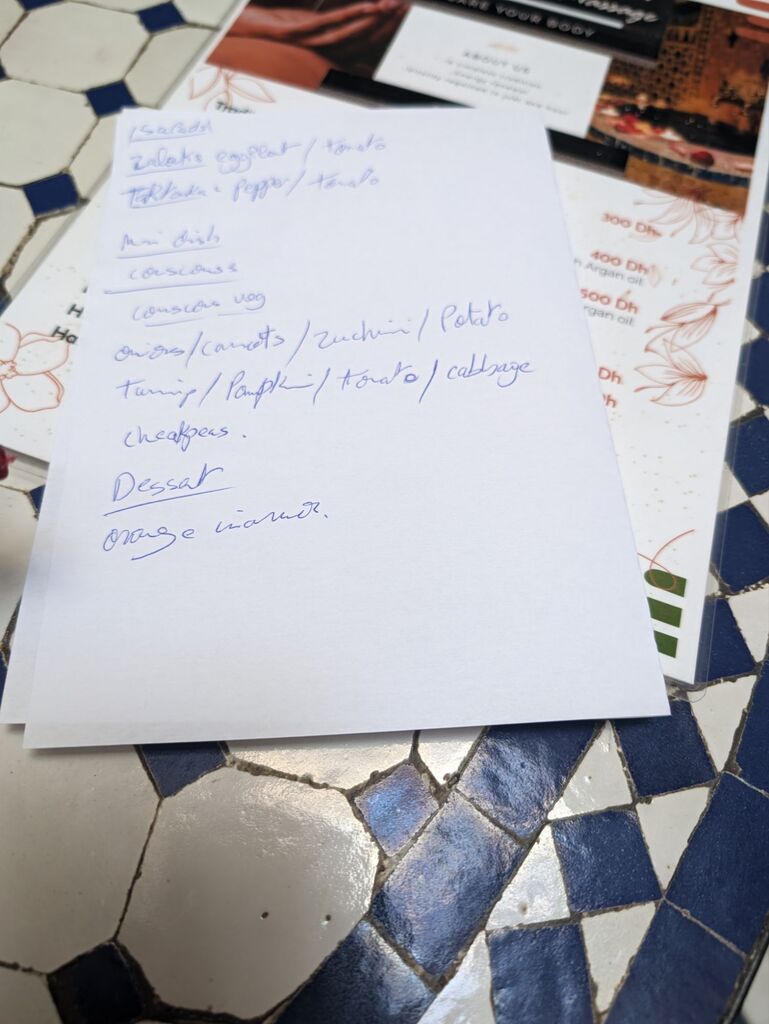
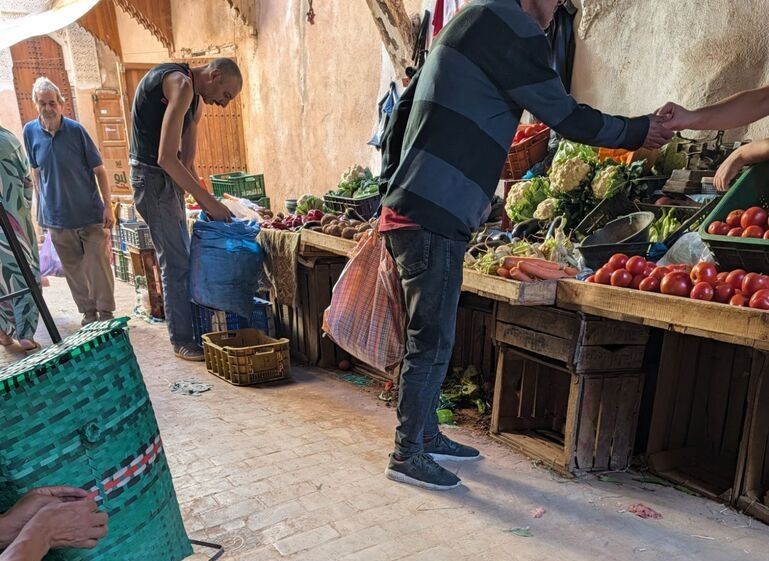
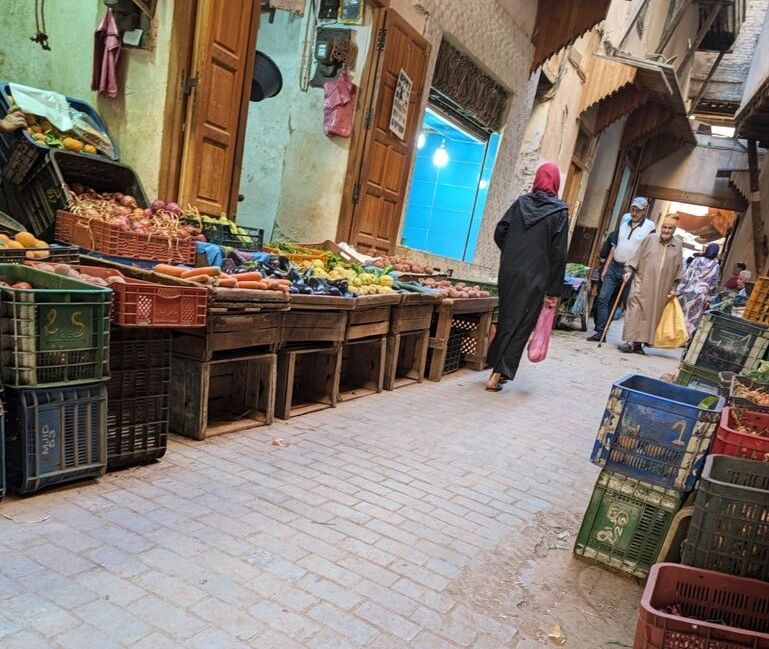
And then we went out to tour the market. We bypassed many vegetable sellers to find the one he had a personal relationship with, and he hopped behind the counter to start selecting our vegetables.
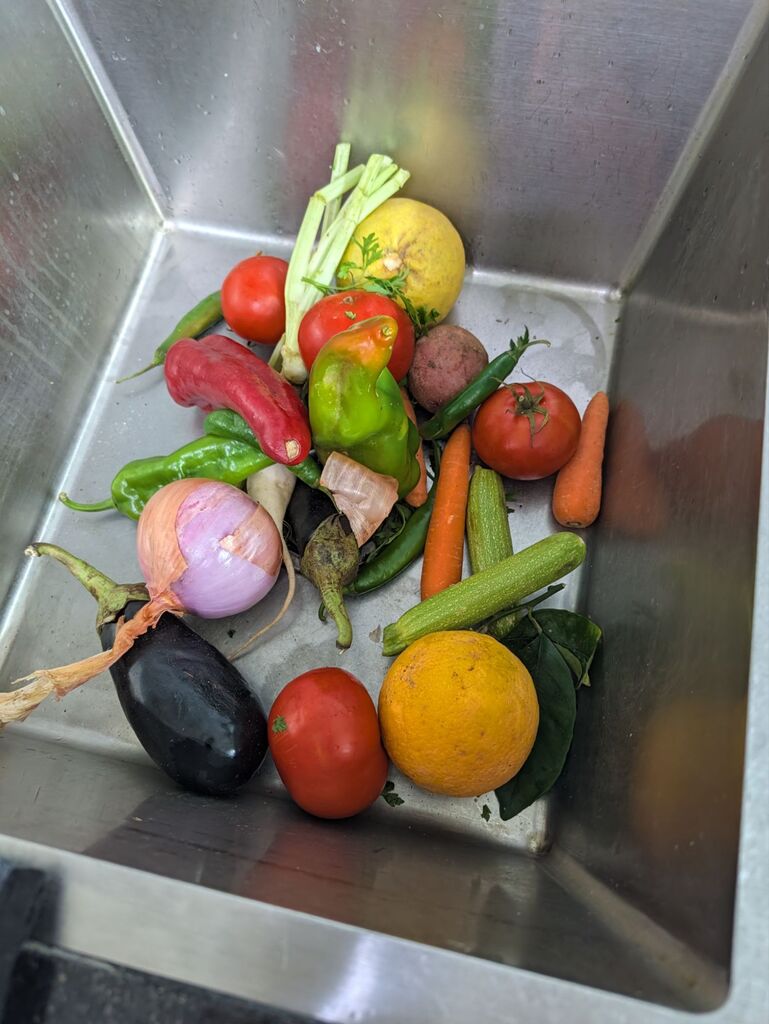
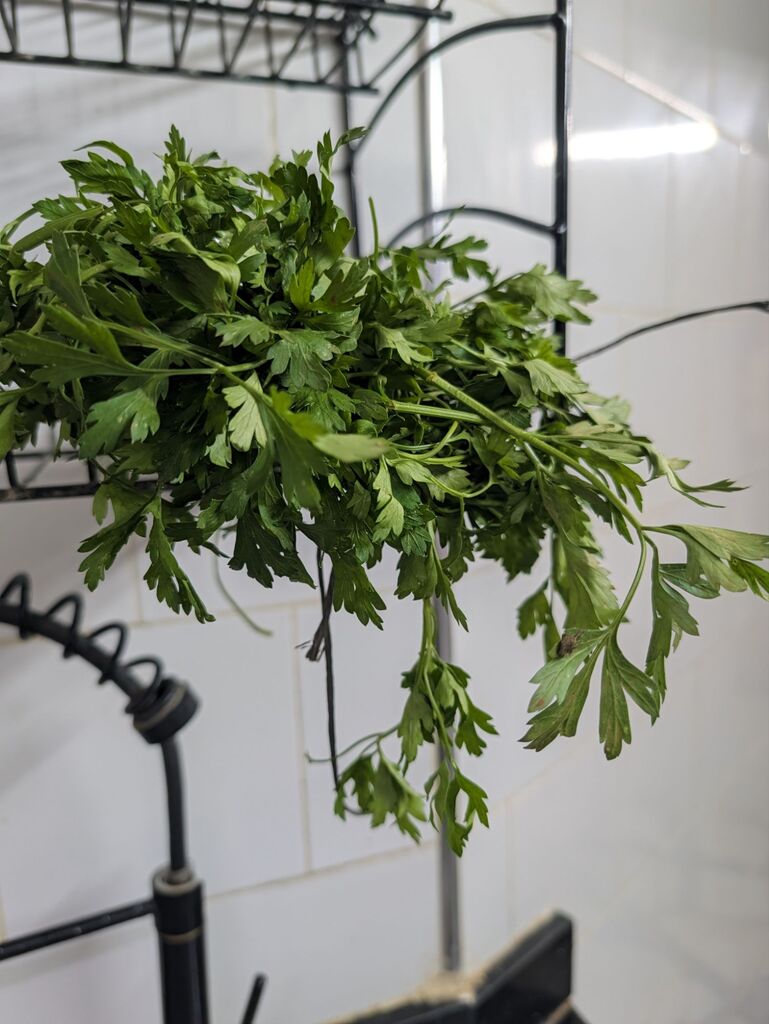
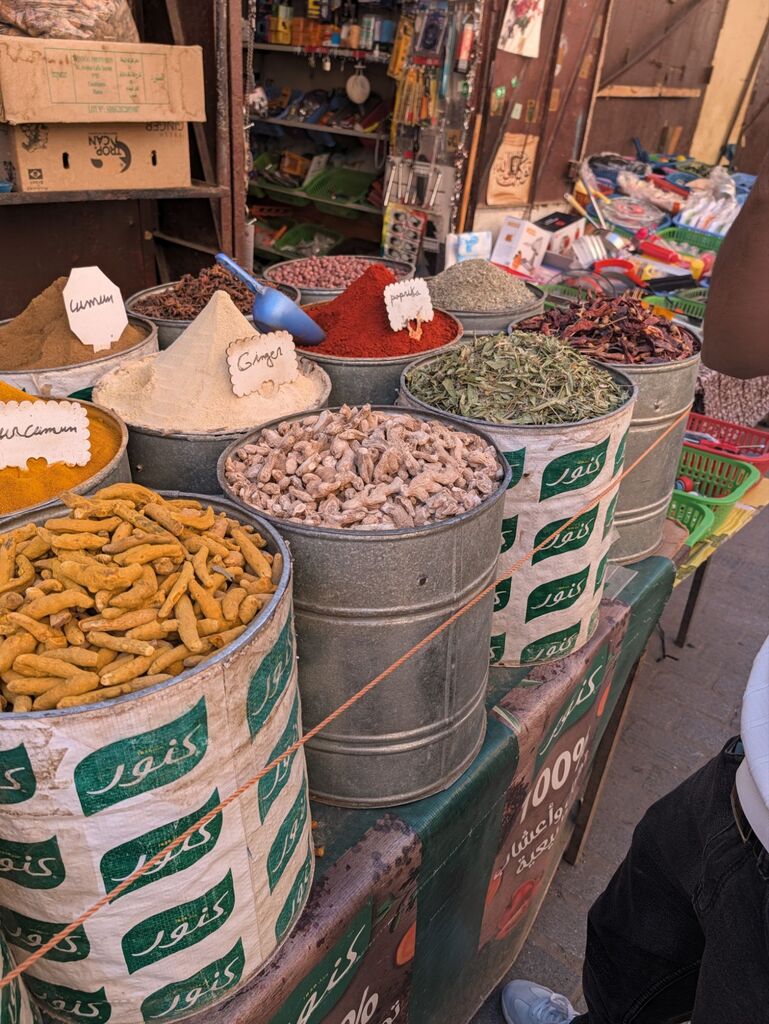
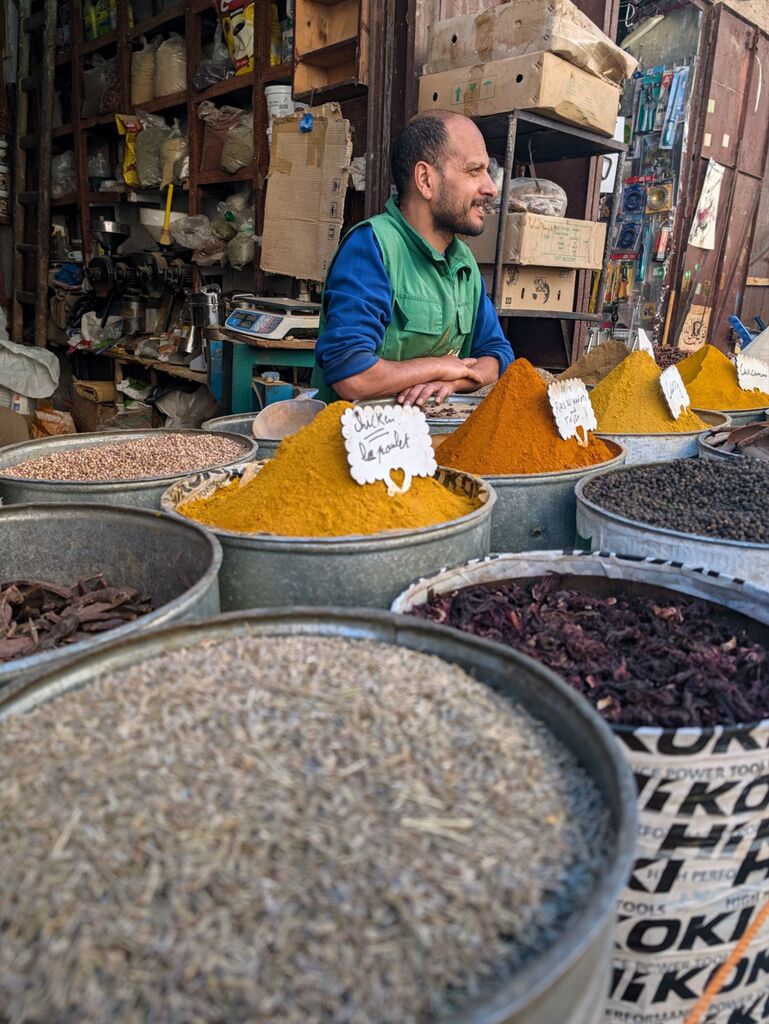
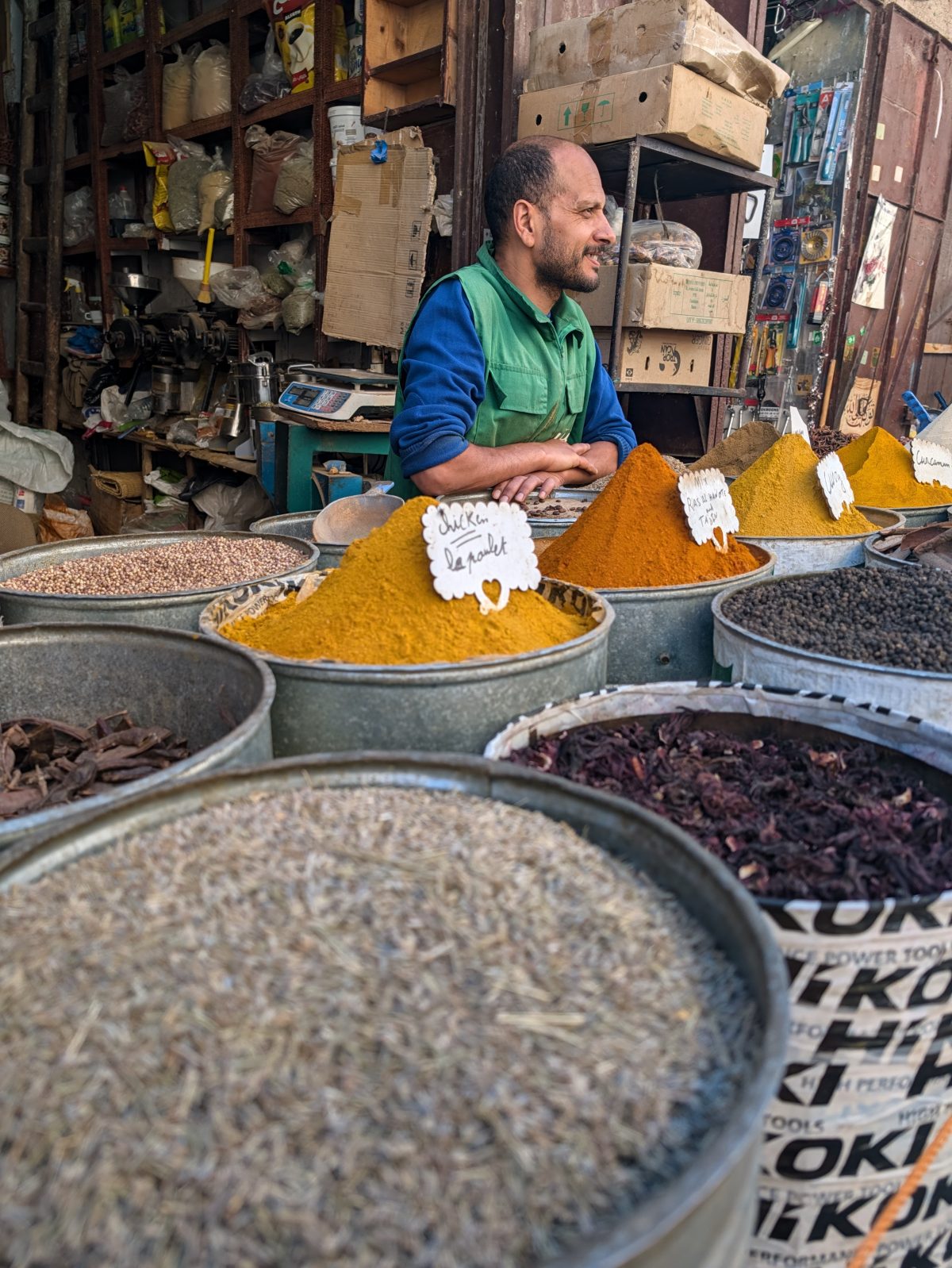
We also stopped by a spice vendor he was friendly with who had exceptionally fragrant paprika of which I regret not buying my own supply. If I remember correctly, we bought powdered ginger, ground cumin, paprika, and I think the last one was just turmeric and not ras el hanout. The cost of all of the ingredients was included with the class.
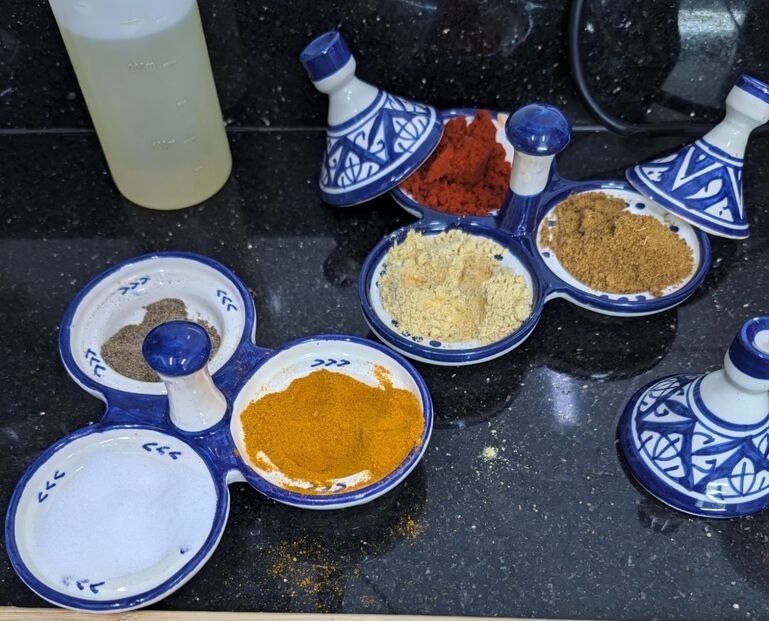
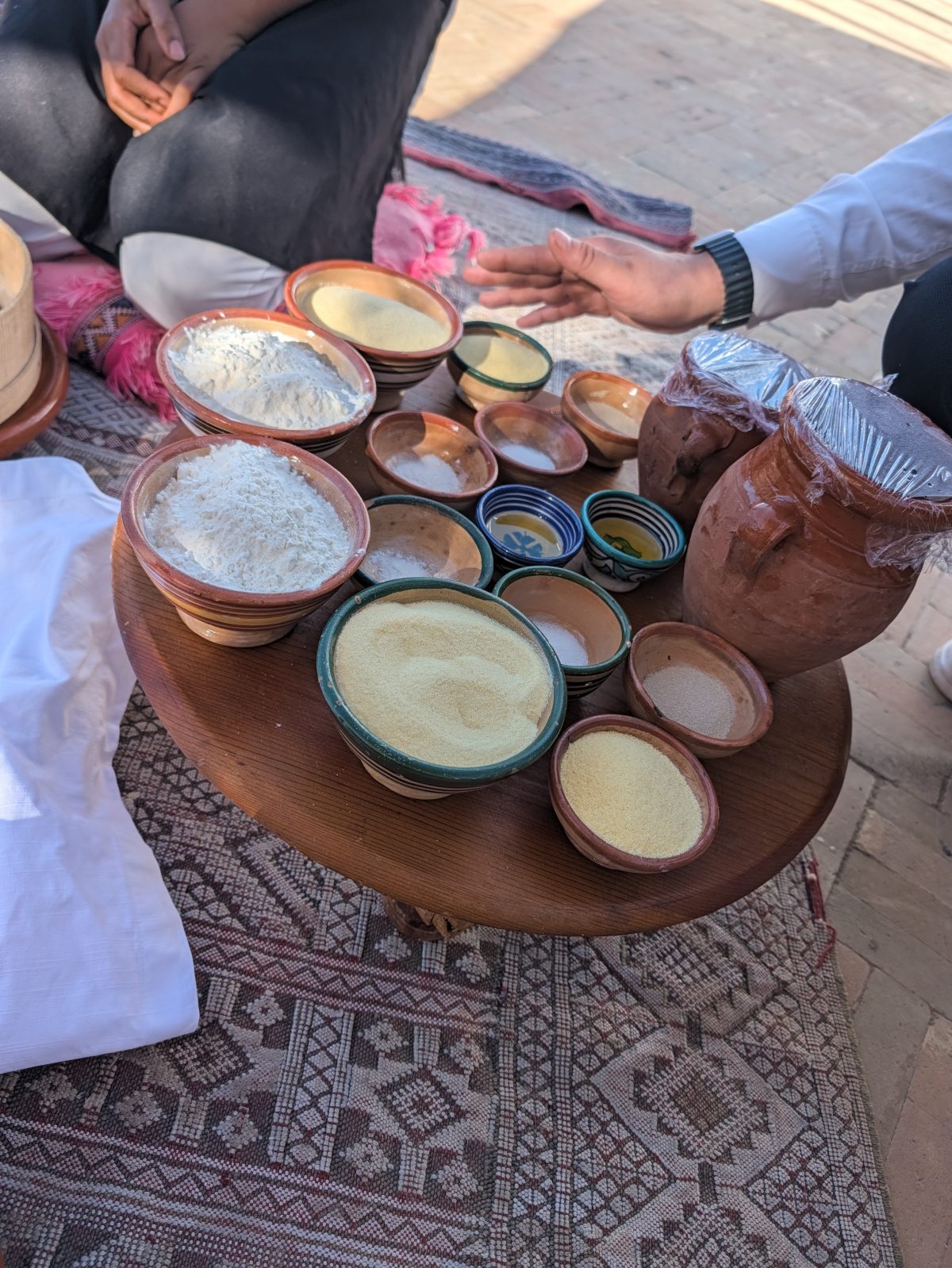
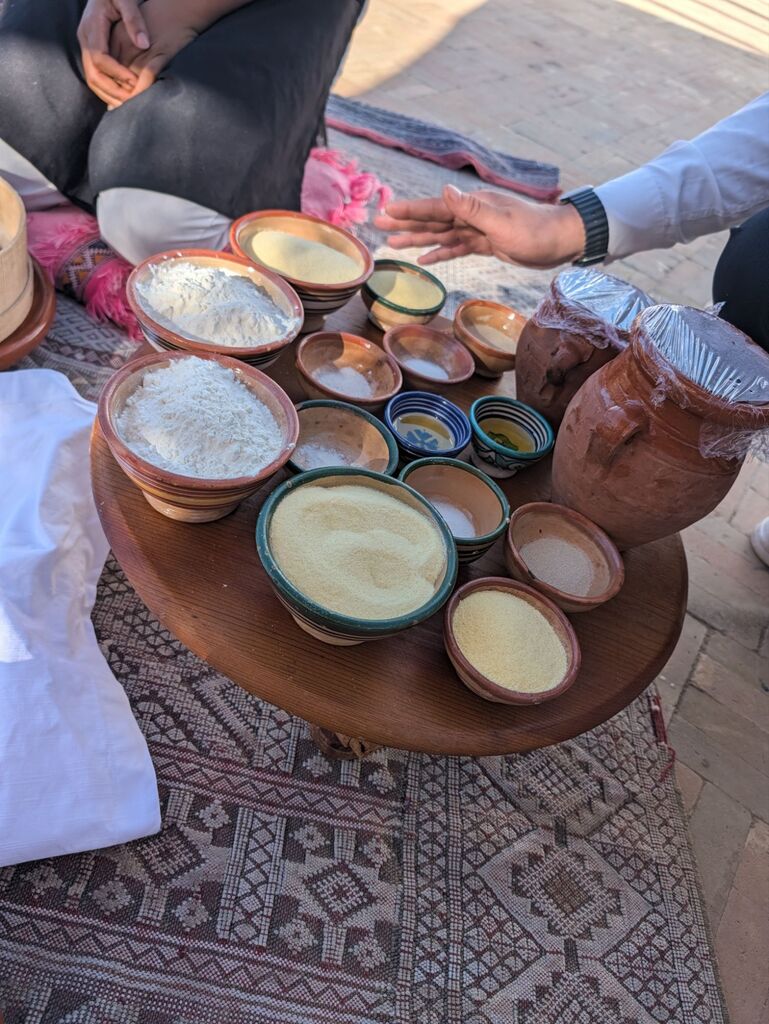
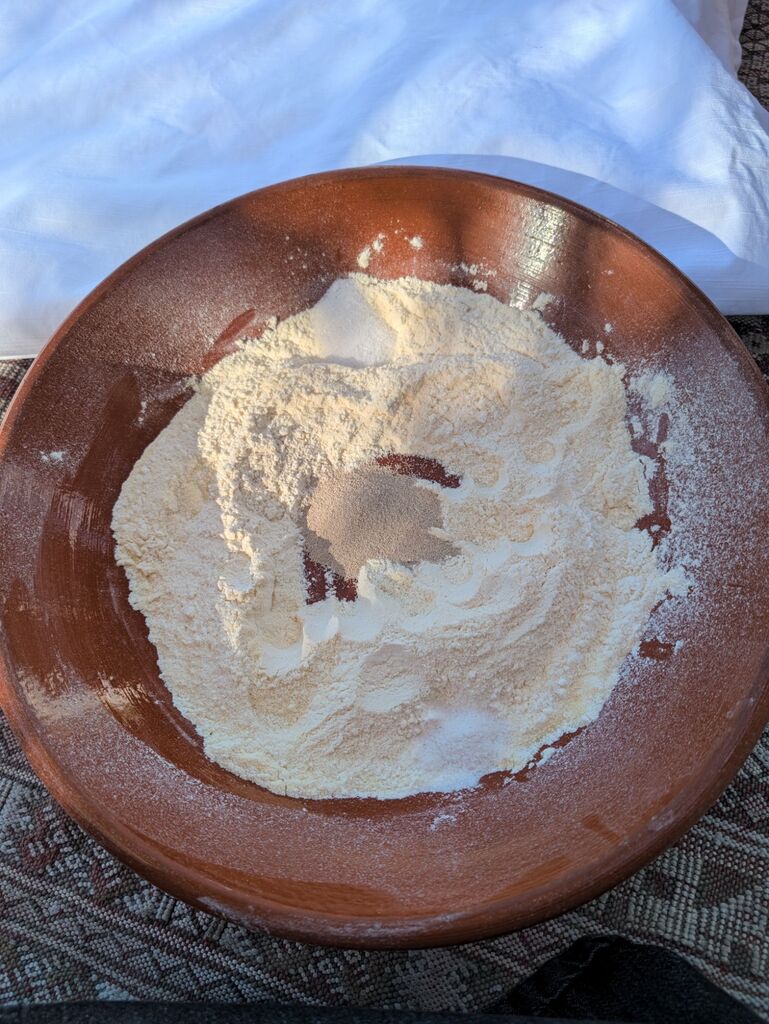
Step 1 was measuring out the couscous and some water so it could hydrate while we washed the vegetables.
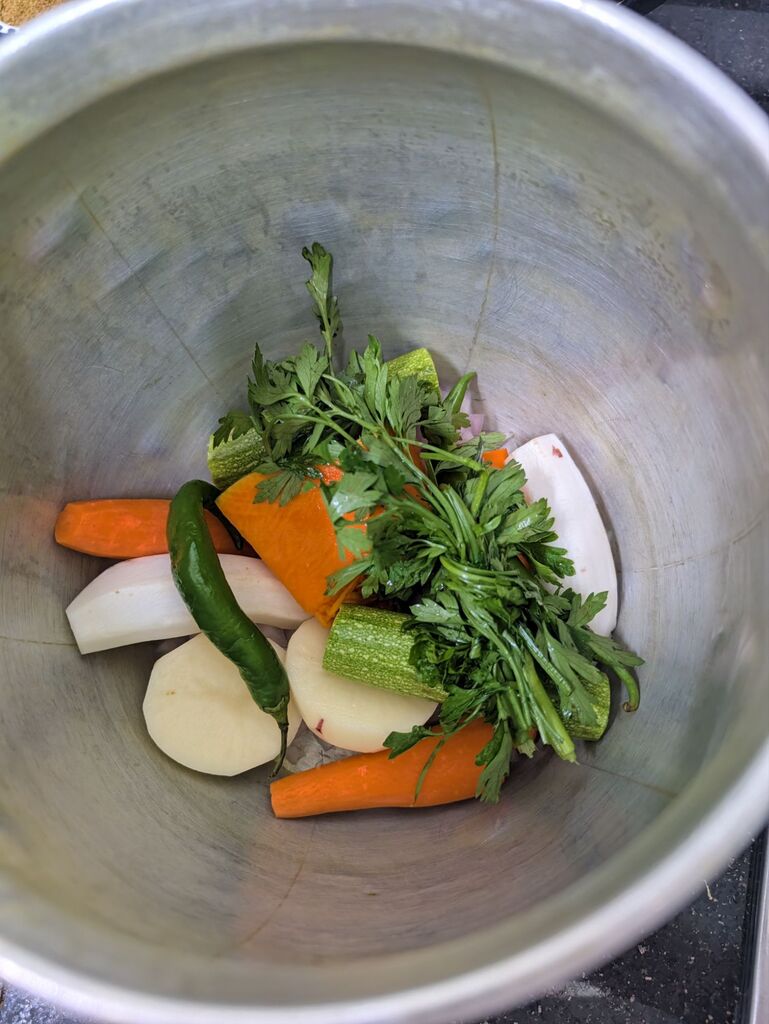
Then we started cooking the firmer vegetables (turnip, potato, carrot, pumpkin, and also the zucchini, a whole hot pepper, and a bouquet of cilantro) in some water with oil, salt, pepper, turmeric, and ginger. We also added some frozen (not dried) chickpeas. Once that was sorted, we drained the couscous and put it into the steamer over the cooking vegetables.
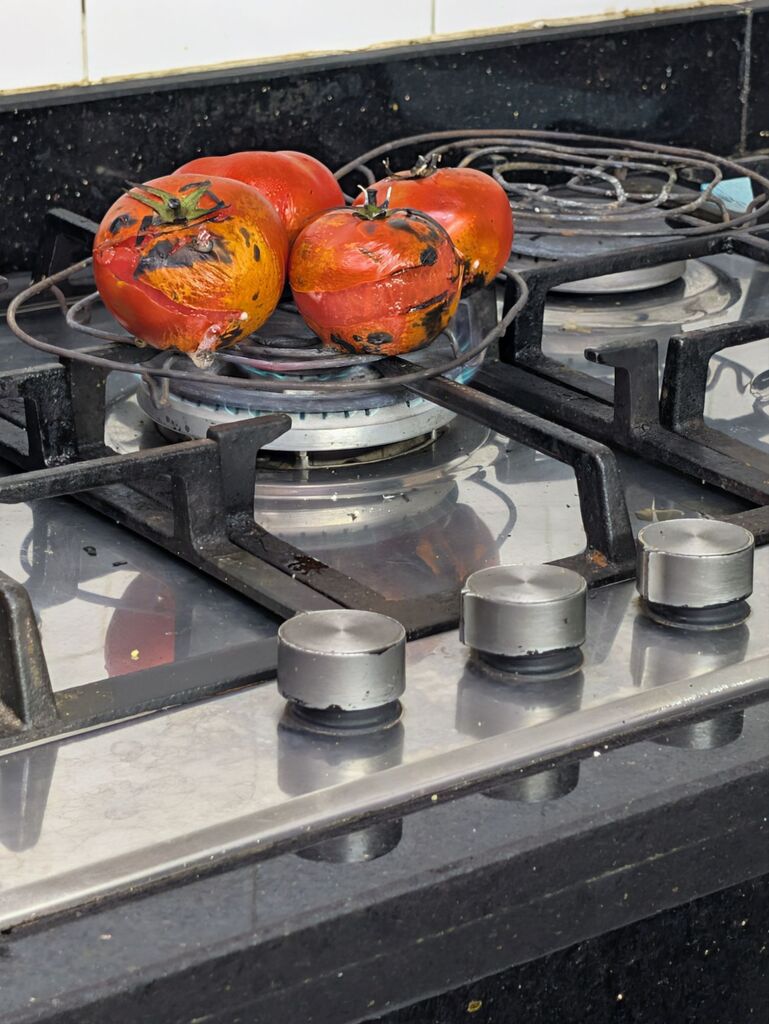
And then we charred the vegetables for the appetizers – eggplant, tomato, and peppers
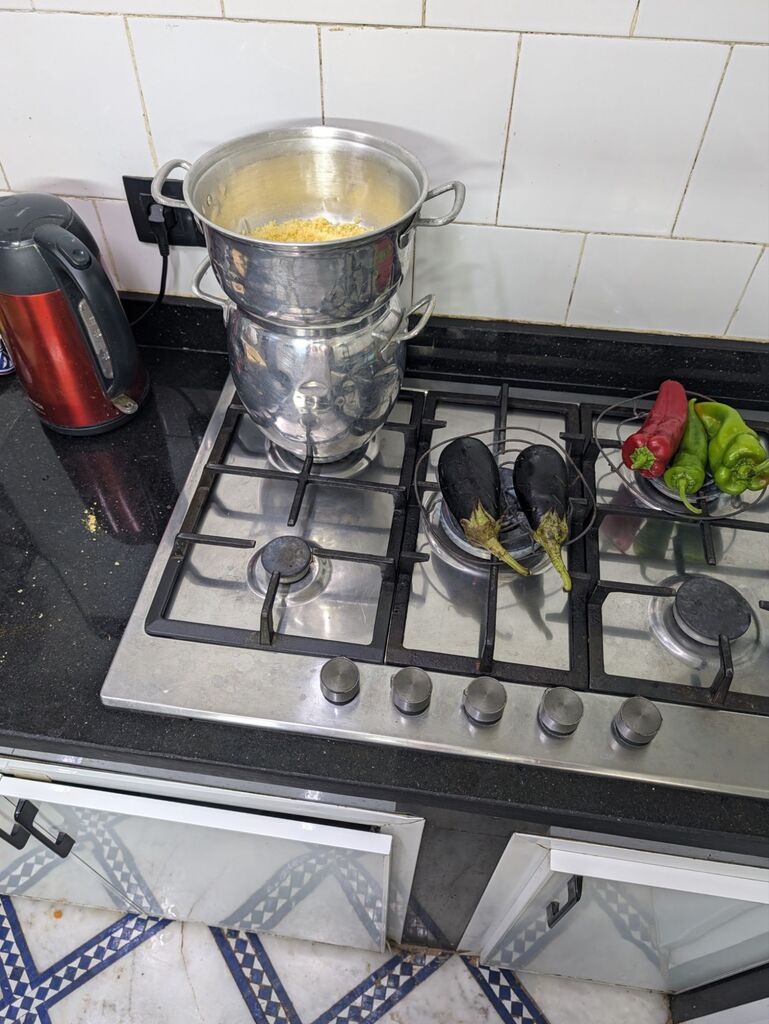
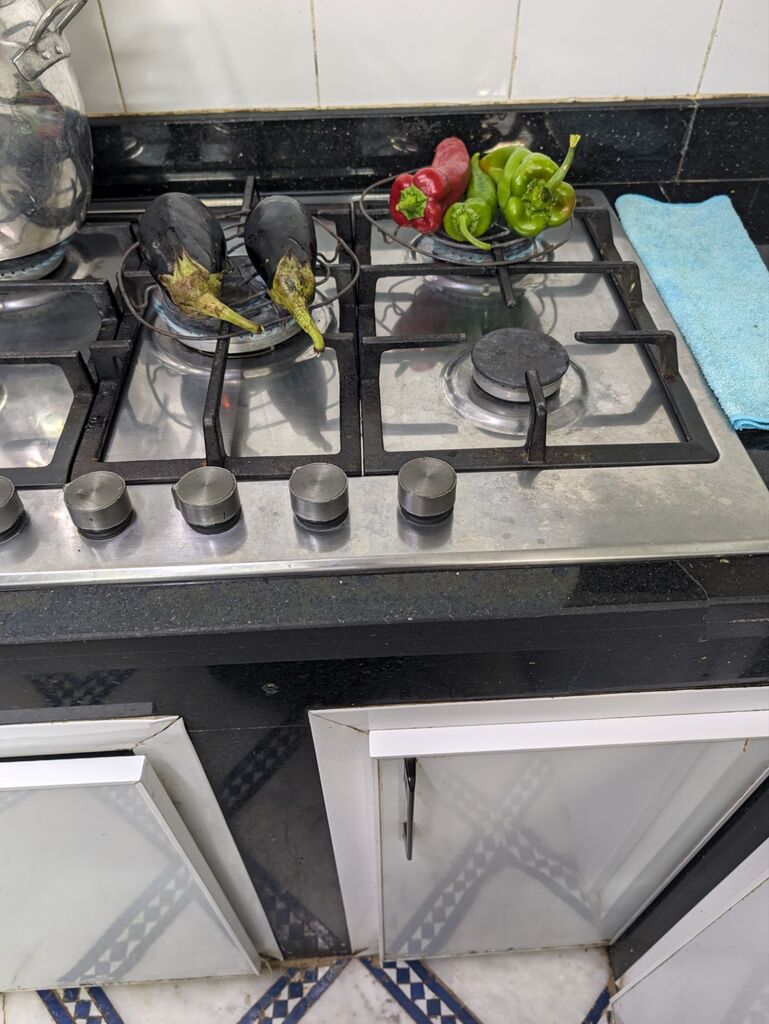
Once the couscous hits its first visible steam, you take the grains off the top and fluff them out into a clean bowl, lightly stirring the grains to break up any clumps. And then you add salt water to the couscous before gently tipping it back into the couscouserie. The vegetables below get more water or stock (enough to cover) and you can add more seasoning.
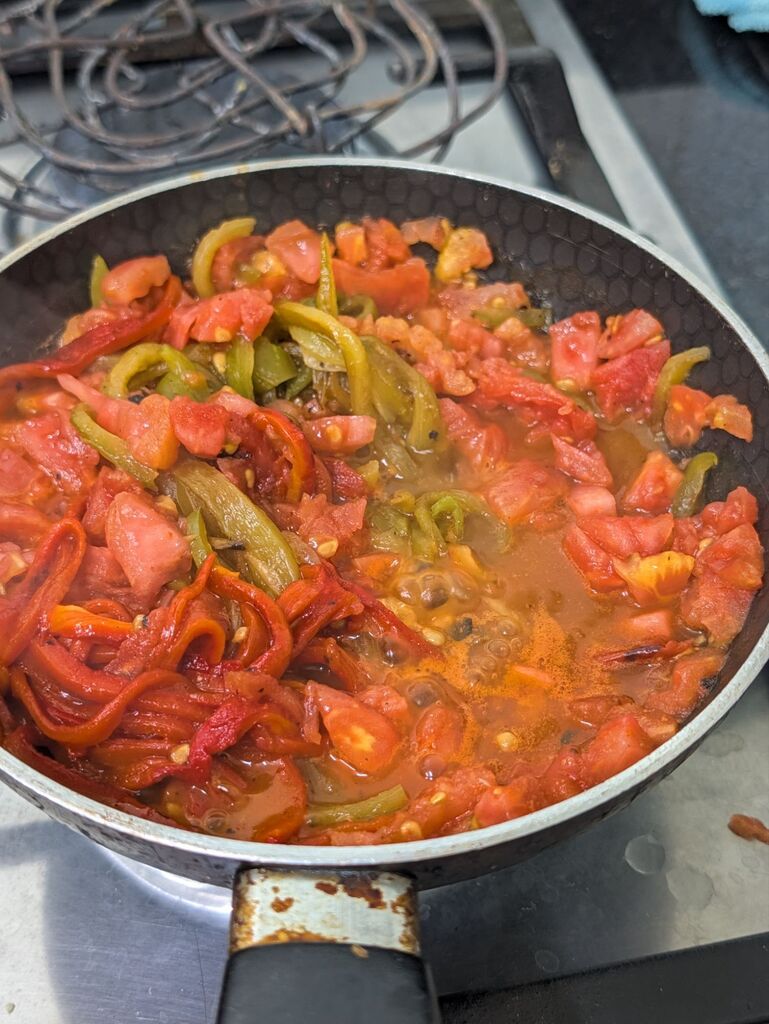
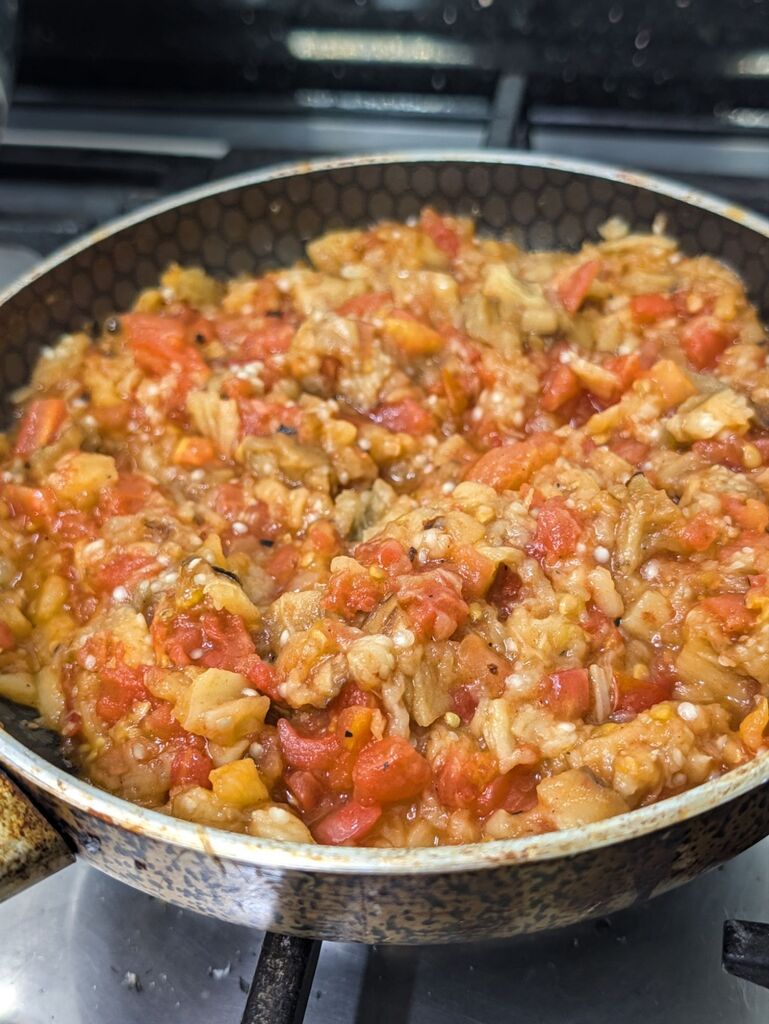
Back to the appetizers, we started two saucepans and started both of them with a peeled and diced tomato or two, minced garlic, and oil. And then I put the peeled and diced charred eggplant into one and the thinly sliced (chiffonade) peppers into the other. They both got seasoned with cumin, paprika, salt, and black pepper. The peppers were pretty well behaved to just stir occasionally, but the eggplants needed constant stirring and mashing to break them down.
And then some amount of time later – I forget how to tell / vibes – you open up the couscous for a second fluffing. This time when you put it in the bowl, you add chunks of butter to melt into the grains while you fluff them. At this time we also added the remaining tomato (cut up and it’s juices) to the vegetables and added more seasoning to the broth. But now the vegetables were close enough to being cooked that you could taste the broth to see how much the seasoning needed adjusting (and they soak up more spices than you would expect, so be generous).
Same too with the appetizers. Taste them and add more seasoning.
When the zalouk is an even texture and dry enough to pull a spatula through and leave a bare space in the skillet (but not so dry it starts to burn – keep stirring), it’s ready to plate. Finish with fresh cilantro and/or parsley and a drizzle of oil.
Go ahead and plate the Taktouka, too. It will still be juicy but not liquid. Finish with cilantro and/or parsley.
And then get out your fancy couscous bowl to plate the couscous. The grains all go in a pile at the bottom, but again make sure to fluff as you serve it and make sure there are no clumps. Then it gets shaped into a mountain. Your longer vegetables (turnip, carrot, zucchini) get sliced lengthwise and arranged evenly around the sides. The potato gets fit in decoratively (also sliced?) and a chunky one (in this case, the pumpkin) goes at the peak. Then the chickpeas are drizzled around with the broth. Remaining broth can go in small cups to be served on the side with the couscous.
And then last – the oranges! The peels were cut off and the oranges sliced. Then we generously dusted them with cinnamon.
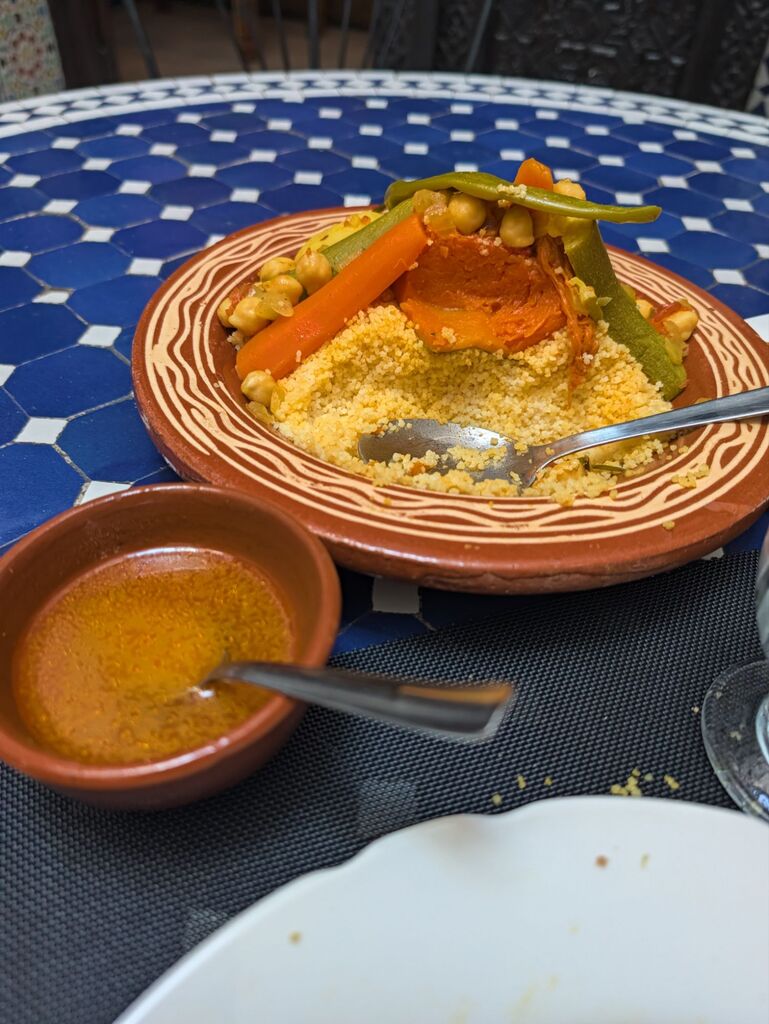
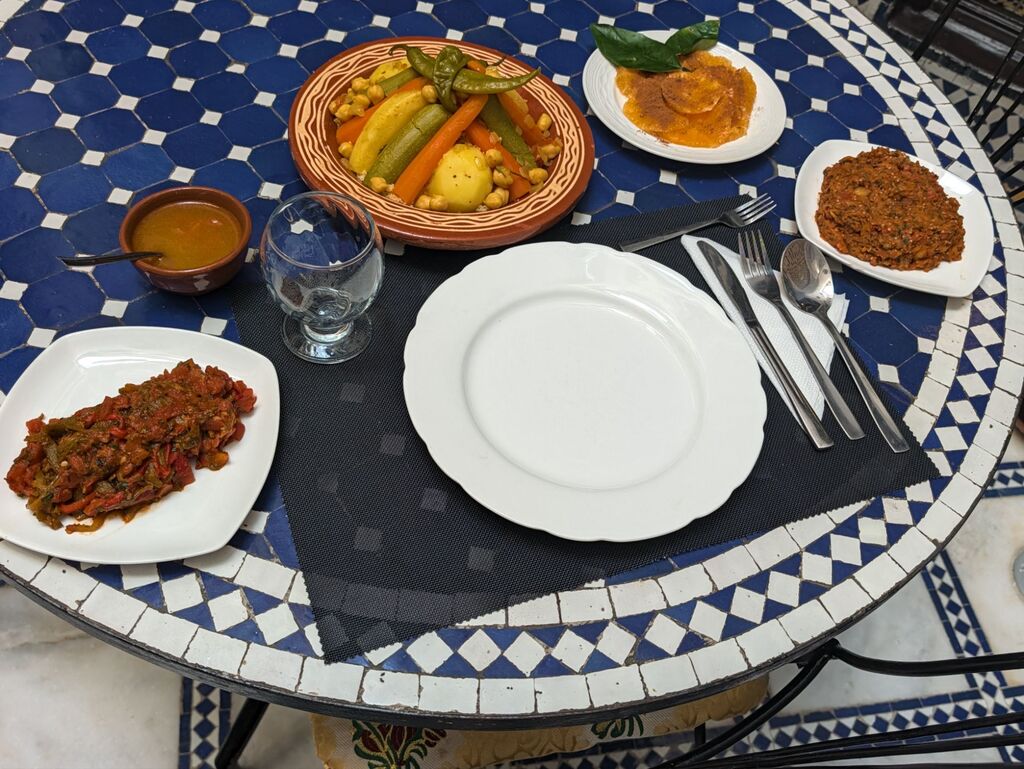
And after all that cooking, I was barely hungry at all, so the other Omar at the riad got me containers to pack everything up to take with me. Here’s the chef’s write up of the recipes. It looks like I’ll still need to look up guidance on how much salt water per couscous to add in the middle step.
Here are the recipes from our Moroccan cooking class so you can recreate them at home ❤️
Zalouk – Moroccan Eggplant Salad
Ingredients:
- Eggplant
- Tomatoes, chopped
- Garlic, chopped
- Olive oil
- Paprika
- Cumin
- Salt & black pepper
- Fresh parsley or cilantro
Method:
- Cook the eggplant until very soft, then peel and chop or mash it.
- In a pan, cook the tomatoes with garlic, olive oil, paprika, cumin, salt and pepper.
- Add the cooked eggplant and mix everything together.
- Cook over medium-low heat, stirring occasionally, until the mixture becomes soft and well combined.
- Finish with fresh parsley or cilantro and a drizzle of olive oil.
️ Taktouka – Moroccan Roasted Pepper & Tomato Salad
Ingredients:
- Green peppers
- Tomatoes
- Garlic
- Olive oil
- Paprika
- Cumin
- Salt & black pepper
- Fresh parsley or cilantro
Method:
- Roast the peppers until the skin is slightly charred, then peel and chop them.
- Cook the chopped tomatoes with garlic and olive oil until they soften and reduce.
- Add the roasted peppers.
- Season with paprika, cumin, salt and black pepper.
- Cook everything together until the mixture becomes soft and slightly dry.
- Finish with fresh parsley or cilantro and serve warm or at room temperature.
Moroccan Couscous with Vegetables
Ingredients:
- Couscous
- 1 onion, finely chopped
- Carrots, cut into large pieces
- Potatoes, cut into large pieces
- Zucchini, cut into large pieces
- Pumpkin, cut into large pieces
- Cabbage, cut into large pieces
- Turnip, peeled and cut into large pieces
- Chickpeas, cooked or soaked overnight
- Tomato sauce or grated tomatoes
- Olive oil or vegetable oil
- Salt
- Black pepper
- Turmeric
- Ginger
- Water
- Fresh cilantro or parsley
Method:
- In the bottom of a couscoussier, sauté the onion with tomato sauce, oil, salt, pepper, ginger, and turmeric.
- Add water and the chickpeas, then bring everything to a simmer to create a flavorful vegetable broth.
- Add the carrots, turnip, and cabbage first, as they take longer to cook.
- Prepare and steam the couscous according to the traditional method, fluffing it between each steaming.
- Add the potatoes, zucchini, and pumpkin to the broth as the cooking continues, adding them according to how long each vegetable needs to become tender.
- Continue cooking until all the vegetables and chickpeas are tender and the broth is rich and flavorful.
- Place the steamed couscous on a large serving plate, arrange the vegetables beautifully on top, and pour some of the broth over the couscous.
- Serve hot and enjoy together, Moroccan style! ❤️
Bsa7a!
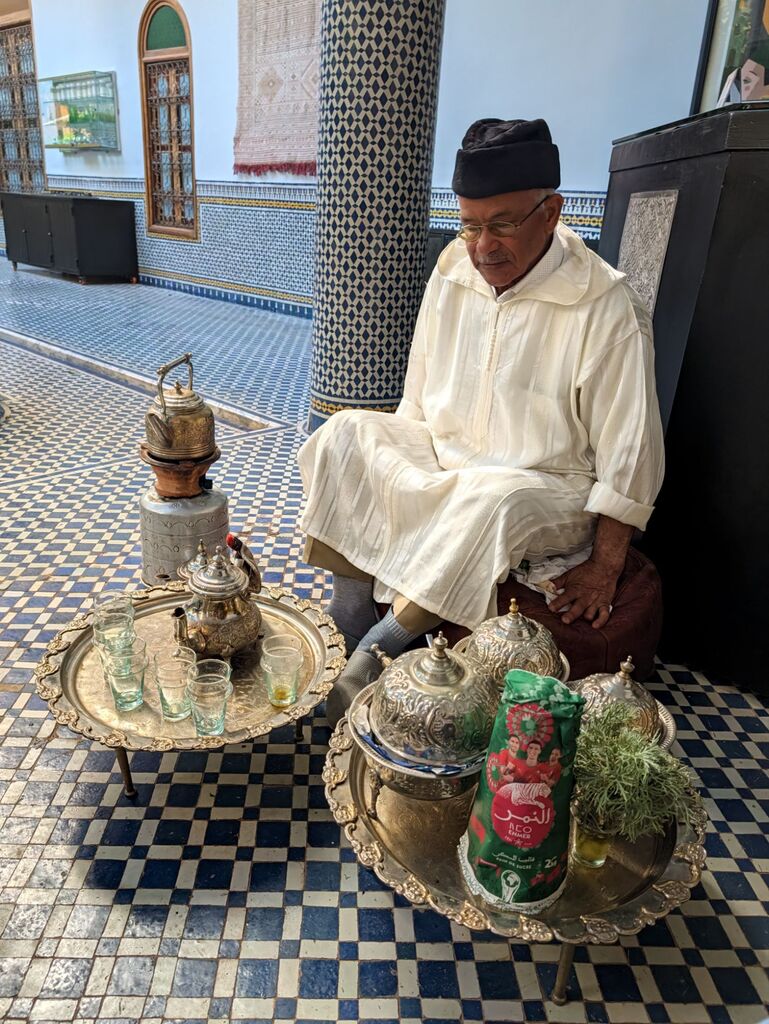
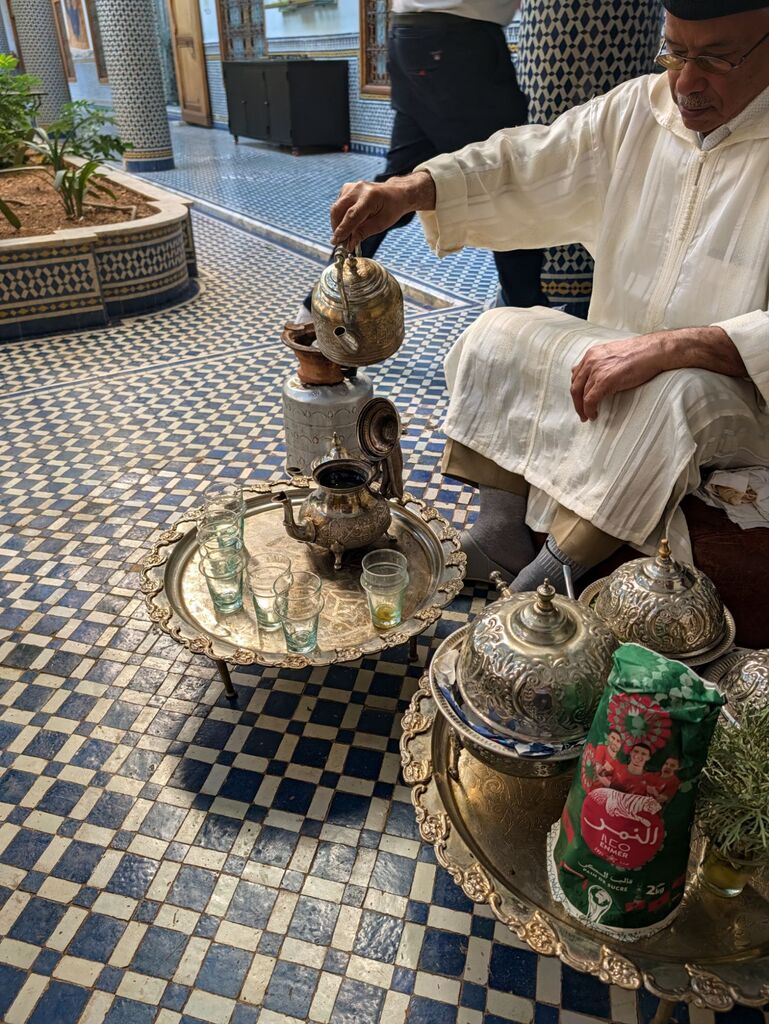
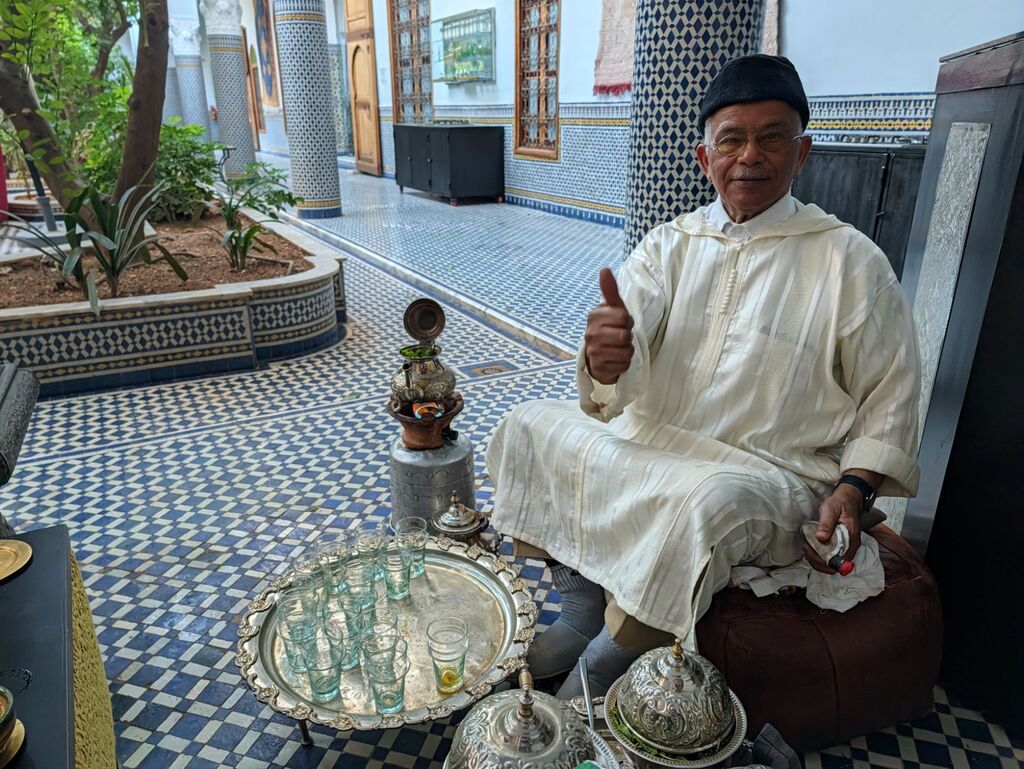
This class also included a side lesson on tea!
For Chef Omar, the quality of one’s mint tea is foremost about the quality of your tea. He’s not a fan of gunpowder tea. And while his wife prefers needle tea, he prefers a broader leaf green tea that he buys from a shop in the modern part of Fes.
He also spent a while talking about the quality of one’s teapot and why it should be a proper metal with weight to it and how to tell a cheap machine made pattern from hand work (mostly in the depth of the design, but also the tool marks and whether the design can cover the whole surface or just the parts easily imprinted).
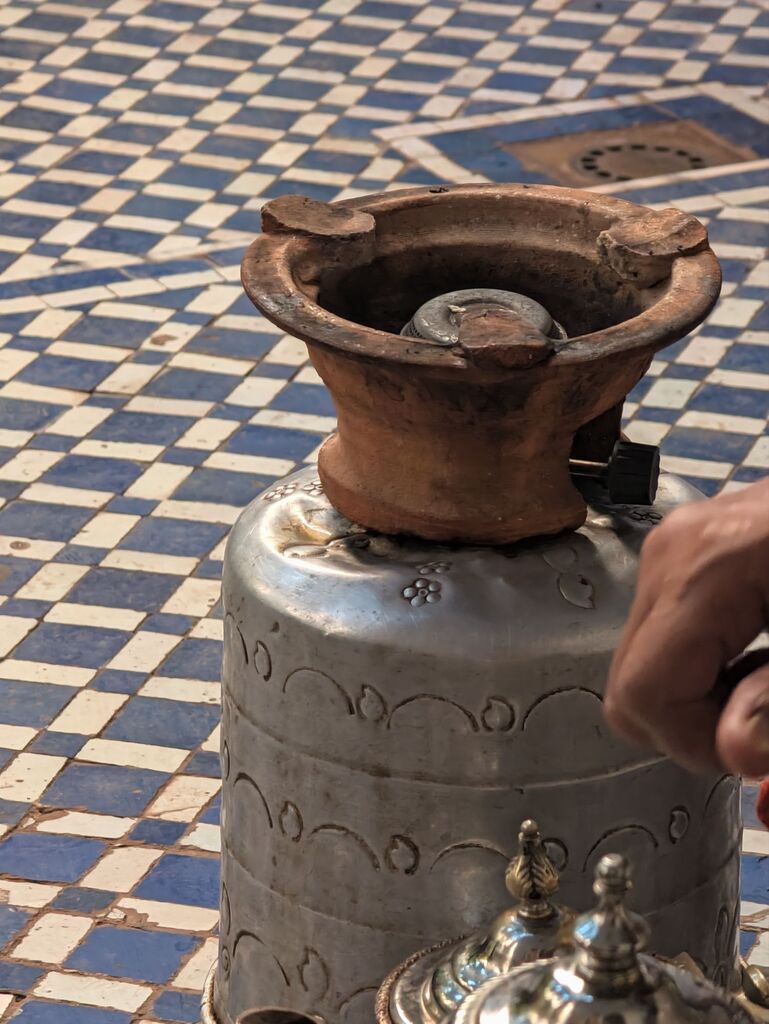
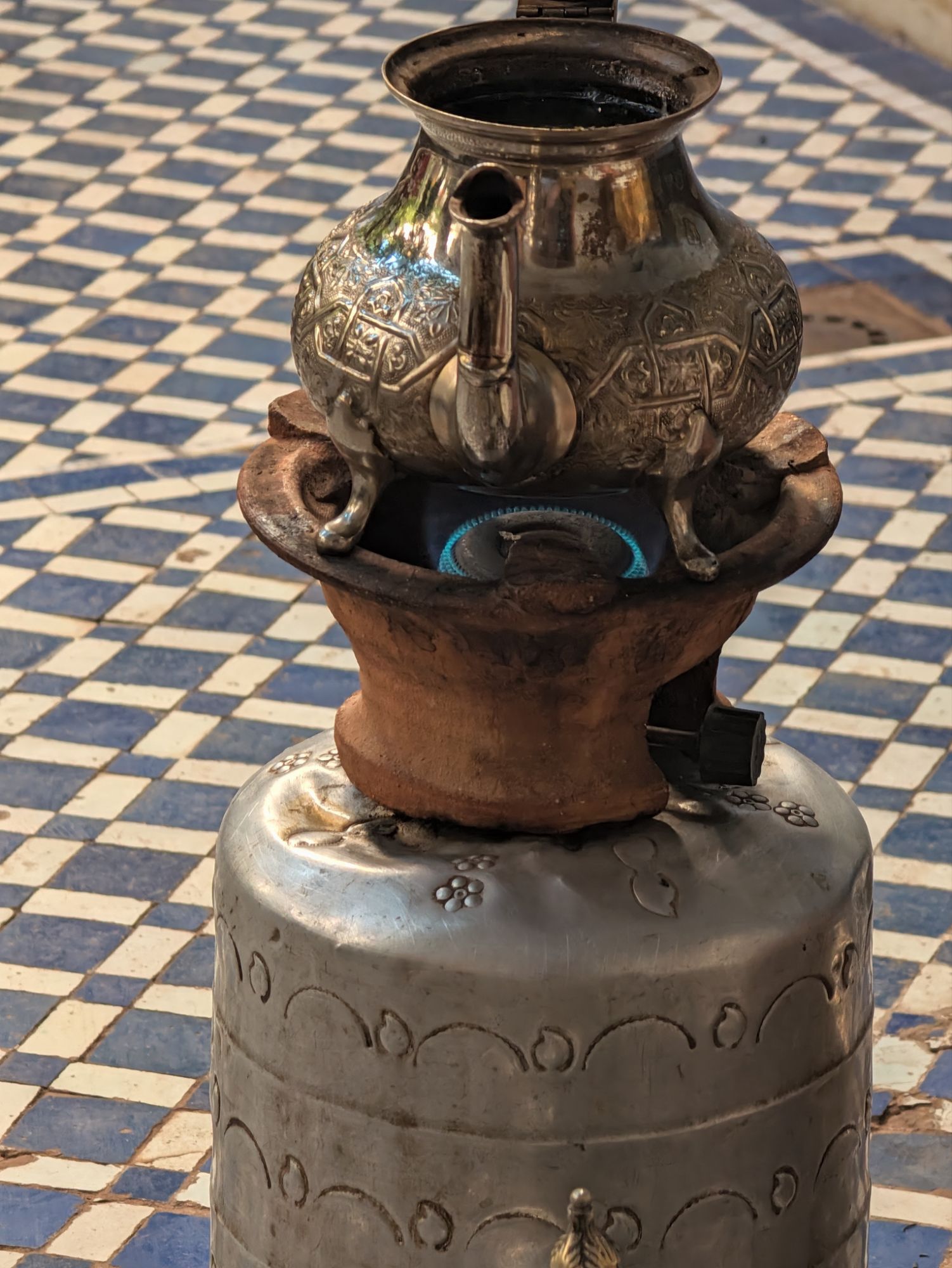
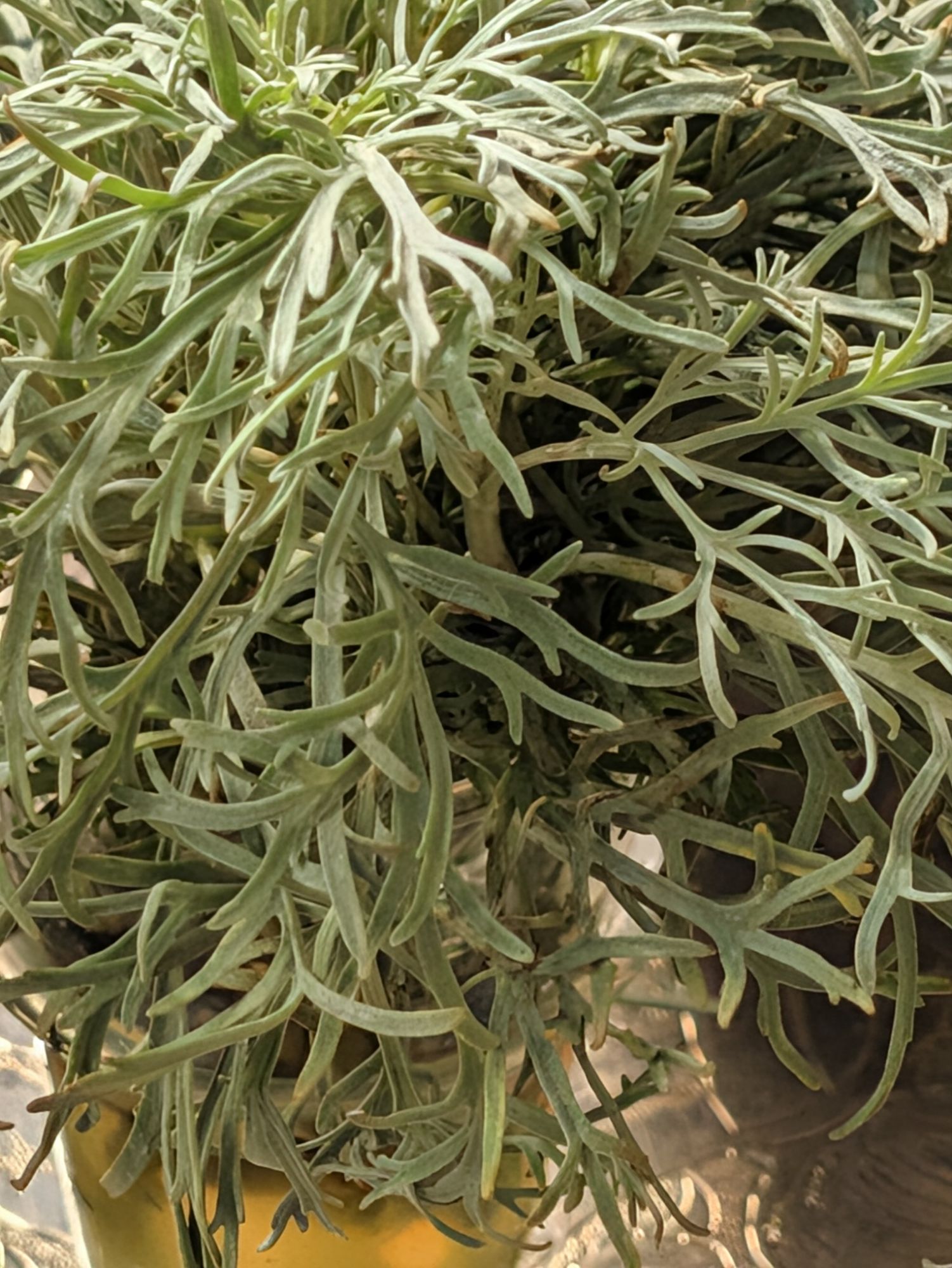
Now I’m writing this part in a month later, so hopefully I can remember all the details. But I think you started with boiling the water in a(n electric) kettle and there was a step to wash the tea with the first pour of hot water. And then you have got water and the tea in the teapot … And I think there was an additional heating it over the gas burner step to either keep it at temperature or bring it to a boil… I think the latter, but I remember it taking longer than boiling water straight from a hot kettle should have taken. After the tea has boiled, then you add the fresh mint (hand crushed/slapped to release the oils) to the teapot and as much sugar as you want and let it sit for [some additional amount of time].
After the tea is nearly ready, you pour the tea into the glass and then back into the pot several times. (The pot has the strainer built into the spout attachment) This pouring is not just to mix the flavors, but primarily to create a froth. Why a froth? Because, according to Chef Omar, when you are drinking tea in the desert it is very sandy. And if/when the wind blows sand into your teacup, it will be suspended in the froth, which parts and recovers the surface as you drink.
After the class, I wanted around a little more but mostly just went back to where I had been staying and reorganized my luggage and carryon to for all this extra food.
And then off on a wild ride through modern Fes to the airport in a van where the seat back wouldn’t stay up.
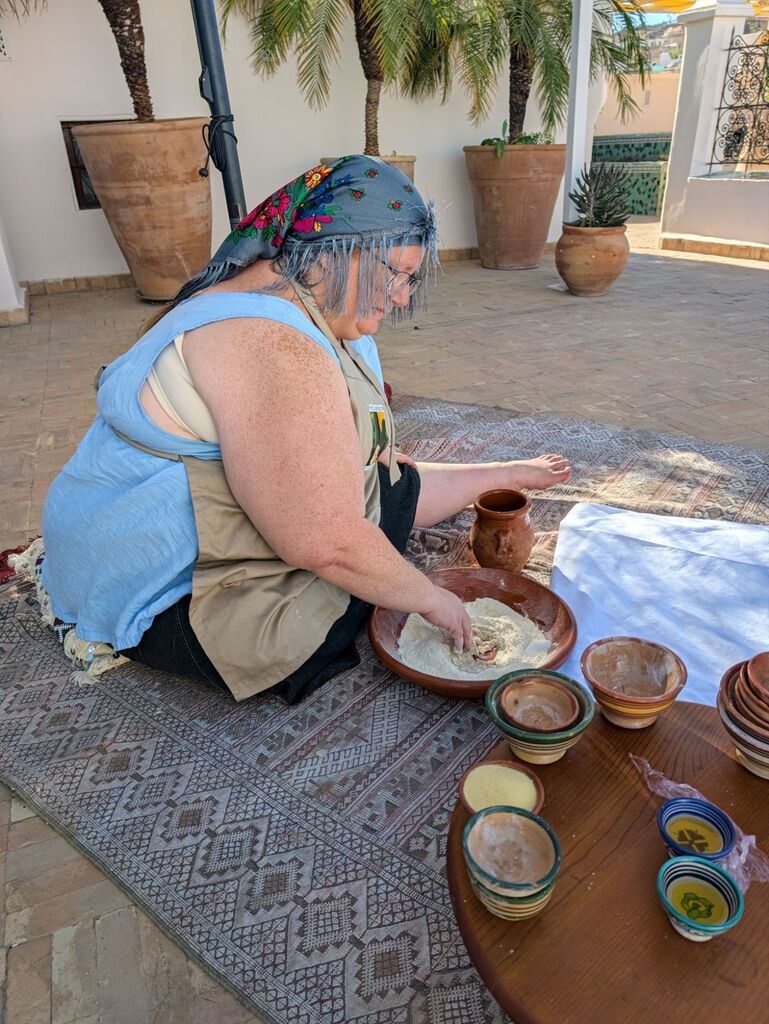
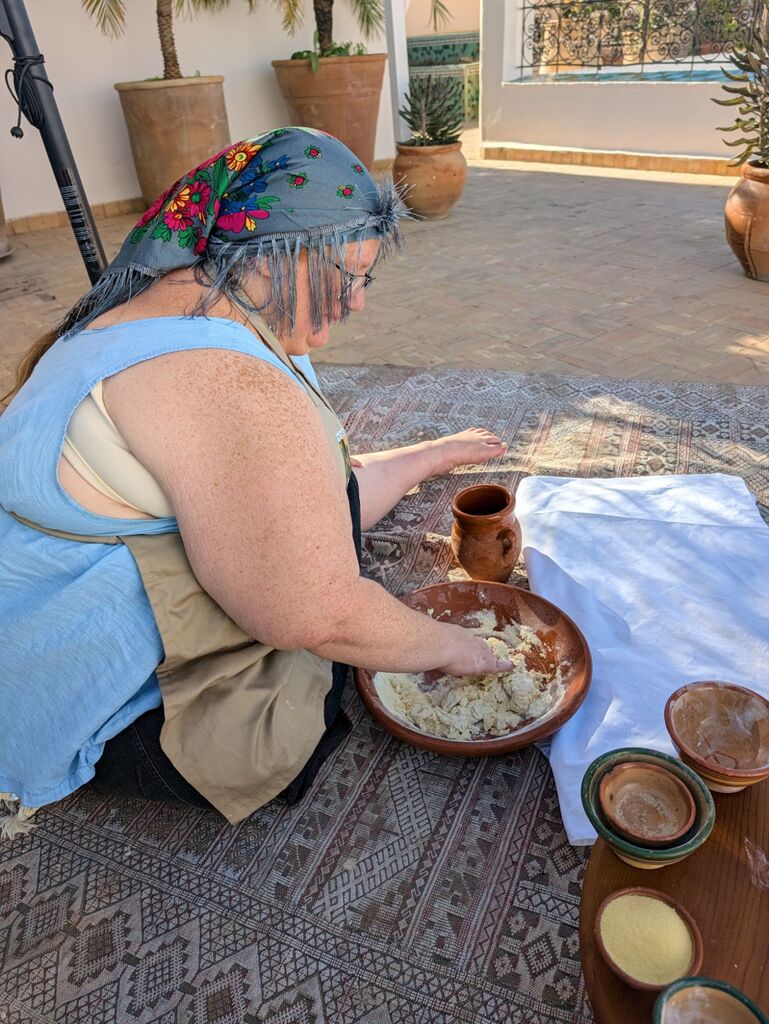
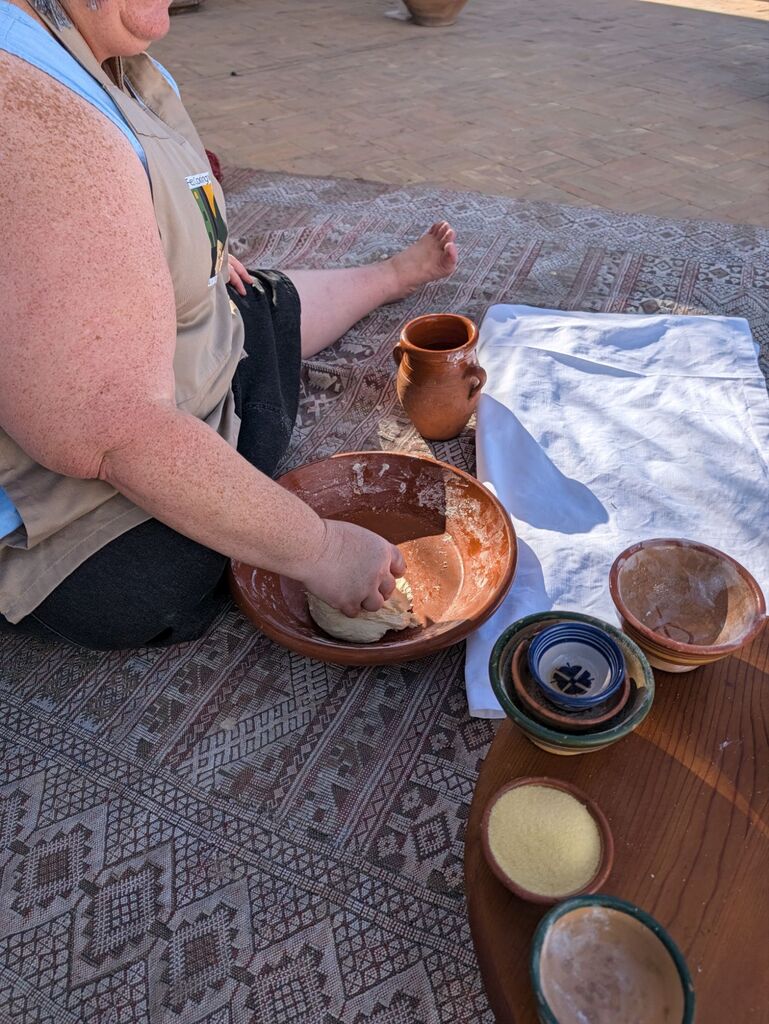
Several hours early and a delayed flight was an excellent opportunity to eat half a loaf of bread (made by me!) with the two appetizers (made by me!). It made for an excellent dinner.
And then I realized the Fes airport makes you walk up stairs to the plane, so I asked around as nicely as I could (but ended up white woman crying) to get an accommodation to take me up in the wheelchair lift. Yay! I ended up on a plane that was 80% full of rich homeschooled highschool kids from the same school who had met each other on this trip. But they settled down and got sleepy reasonably quickly.